




Dental implants give you back your smile and confidence, but they need regular care to stay healthy for years to come.
Just like your natural teeth, implants can develop problems if you don’t clean them properly. The good news is that maintaining dental implants is simple when you know what to do.
Your dental implants can last a lifetime with the right combination of daily brushing and flossing at home, plus professional cleanings every six months.
While the titanium post won’t decay, the gum tissue around it can become infected if bacteria accumulate. This condition, called peri-implantitis, can damage the bone supporting your implant and lead to failure.
Maintaining dental implants doesn’t have to be complicated or time-consuming. You’ll learn the best tools to use, the right cleaning techniques, and when to see your dentist. These small daily habits protect your investment and keep your smile looking great.
Key Takeaways
- Brush twice daily with a soft-bristled toothbrush and floss around your implants using a water flosser or special floss to prevent infection
- Schedule professional cleanings and checkups every six months so your dentist can monitor your implant health and remove stubborn buildup
- Avoid smoking and maintain healthy lifestyle habits to reduce your risk of peri-implantitis and ensure your implants last for decades
Why Proper Dental Implant Maintenance Matters
Dental implants need consistent care to avoid serious problems like infection and bone loss. Taking care of your implants protects your investment and keeps your mouth healthy for years to come.
Preventing Implant Failure and Peri-Implantitis
Peri-implantitis is a serious infection that affects the gum tissue and bone around your dental implant. Without proper cleaning, bacteria and plaque build up around the implant just like they do on natural teeth. This buildup causes inflammation that can destroy the bone supporting your implant.
Peri-implantitis can lead to implant failure if you don’t catch it early. The bone loss weakens the implant’s foundation, making it loose or causing it to fall out completely. This means you’d need costly repairs or replacement procedures.
Regular brushing and flossing remove the bacteria before they cause damage. Professional cleanings every six months help your dentist spot early warning signs like redness, swelling, or bleeding around the implant. Catching these issues early makes treatment much easier and more effective.
Preserving Oral Health and Gum Health
Your dental implants work together with your natural teeth and gums as one complete system. When you neglect implant care, the infection can spread to nearby teeth and gum tissue. This puts your entire mouth at risk.
Healthy gums create a tight seal around your implant that keeps bacteria out. Poor maintenance breaks down this protective barrier. The gums pull away from the implant, creating pockets where harmful bacteria thrive.
These infections don’t stay isolated to one area. They can damage the bone that supports both your implants and natural teeth. You could end up losing more teeth beyond the ones you already replaced with implants.
Daily cleaning with a soft-bristled toothbrush and water flosser keeps your gums pink and firm. Strong gums mean your implants stay stable and your remaining natural teeth stay healthy too.
Maximizing Implant Longevity
Dental implants can last many years with proper maintenance, often over a decade or even a lifetime. The key difference between implants that last and those that fail comes down to how well you care for them.
Your daily habits directly impact how long your implants stay functional. Brushing twice daily and using interdental brushes removes food particles that cause problems. Skipping these steps shortens your implant’s lifespan significantly.
Professional cleanings cost between $200-$300 annually but save you thousands in replacement costs later. Your hygienist uses special plastic or titanium tools that clean without scratching the implant surface. These regular visits catch small issues before they become big expensive problems.
Think of maintenance as protecting your investment. You spent money replacing missing teeth with a permanent solution. Spending a few minutes each day on care ensures you get the full value from that investment for decades to come.
Explore our dental care professional services in New Market, VA, to learn how regular dental care, cleanings, and checkups help keep your dental implants healthy for decades.
Daily Oral Hygiene for Dental Implants
Taking care of your dental implants requires specific brushing and flossing techniques, along with the right tools to protect both the implant surface and surrounding gum tissue.
Using a soft-bristled toothbrush with non-abrasive toothpaste, combined with interdental brushes or water flossers, helps prevent bacterial buildup without damaging your implants.
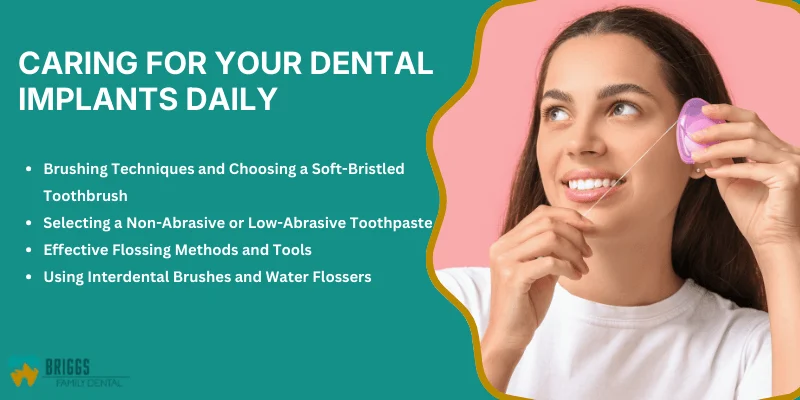
Brushing Techniques and Choosing a Soft-Bristled Toothbrush
Your brushing technique makes a big difference in implant care. Always use a soft-bristled toothbrush or soft-bristle toothbrush to avoid scratching the implant surface.
Hold your brush at a 45-degree angle to your gum line. Use gentle circular motions rather than harsh back-and-forth scrubbing. Pay extra attention to where the implant meets your gum, as this area collects the most bacteria.
An electric toothbrush with a pressure sensor can be helpful. It alerts you if you’re brushing too hard and provides a consistent clean. Daily oral hygiene with proper brushing prevents plaque buildup that can lead to complications.
Brush at least twice daily for two minutes each time. Replace your toothbrush or brush head every three months to maintain effectiveness.
Selecting a Non-Abrasive or Low-Abrasive Toothpaste
The toothpaste you choose matters for your implants. Non-abrasive toothpaste protects the titanium or ceramic surface from scratches that can harbor bacteria.
Avoid whitening toothpastes, as they often contain harsh abrasives. These products can damage the polished surface of your implant crown. Look for toothpastes specifically labeled as low-abrasive or designed for sensitive teeth.
Your dentist can recommend brands that clean effectively without being too rough. Some toothpastes contain ingredients like stannous fluoride that help fight bacteria while remaining gentle on implants.
Check the Relative Dentin Abrasivity (RDA) rating if listed. Products with an RDA below 70 are considered gentle enough for implant maintenance.
Effective Flossing Methods and Tools
Flossing around your dental implants removes plaque from areas your toothbrush can’t reach. This step is critical for preventing peri-implantitis, a gum disease that affects implants.
Use implant-specific floss designed with a stiff end for threading and a spongy middle section for cleaning. Thread the floss gently beneath the implant crown and along the sides. Move it in a C-shape motion against each surface.
Regular dental floss works too if you’re careful. Never snap the floss down hard, as this can damage delicate gum tissue around the implant. Proper flossing techniques for oral hygiene keep the area between implants and natural teeth clean.
Make sure to brush and floss at least once daily, preferably before bed.
Using Interdental Brushes and Water Flossers
Interdental brushes excel at cleaning hard-to-reach spaces around your implants. These small brushes fit between teeth and around implant abutments where regular brushes can’t access.
Choose interdental brushes with nylon-coated wire to protect your implant surface. Insert the brush gently and move it back and forth a few times. Use different sizes to match the spaces you’re cleaning.
A water flosser (also called an oral irrigator) uses pressurized water to flush out debris and bacteria. Water flossers are highly effective for cleaning beneath bridges and around multiple implants. Set the pressure to a comfortable level and aim the stream along the gum line and between teeth.
Many people find water flossers easier to use than traditional floss. You can use both methods together for the most thorough clean.
Professional Dental Care and Routine Checkups
Even with excellent home care, you need professional support to keep your dental implants healthy for decades. Your dentist or periodontist uses specialized tools and expertise to spot problems early and perform cleanings that you can’t do at home.
Regular Dental Checkups and Examinations
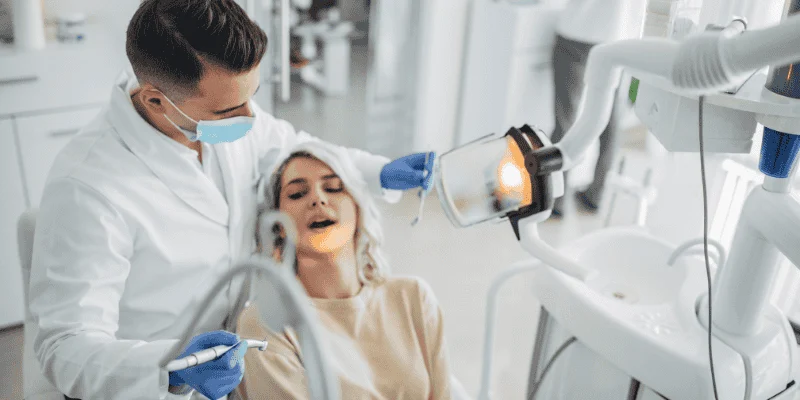
You should schedule dental checkups every 3-6 months after getting implants. Your specific schedule depends on your oral health history and how many implants you have.
During each visit your dentist will check the gum tissue around each implant for redness, swelling, or signs of inflammation. They’ll gently probe around the implant to measure pocket depths, similar to checking natural teeth. Deeper pockets can mean bone loss is occurring.
Your dentist will also check if your implant crown or the implant post itself has any movement. A healthy implant shouldn’t move at all. They’ll examine your bite to make sure pressure distributes evenly across all your teeth. Too much force on one implant can cause problems over time.
X-rays taken periodically let your dentist monitor bone levels around the implants. Any significant bone loss shows up as a warning sign that needs attention.
Professional Cleanings for Implants
Professional cleaning for implants differs from regular tooth cleaning in important ways. Your hygienist uses non-metal instruments like plastic or graphite tools designed specifically for dental implant maintenance.
Metal instruments can scratch the titanium surface of your implant post. These tiny scratches create grooves where bacteria stick more easily. The specialized tools clean thoroughly without damaging the implant surface.
Your hygienist will remove plaque and tartar buildup from areas you can’t reach at home. They’ll clean around the abutment where it connects to your gum line. This junction is critical because bacteria love to gather there.
Professional cleanings also give your dental team a chance to review your home care routine. They can show you better techniques with your specific tools or recommend new products that might work better for you.
Monitoring Bone Health and Abutment Integrity
Your jawbone supports your implants, so keeping it healthy matters tremendously. Your dentist tracks bone density around each implant through regular X-rays and examinations.
Bone loss around implants can happen slowly without obvious symptoms. That’s why professional monitoring catches problems before they become serious. Your periodontist can measure bone levels precisely and compare them to previous visits.
The abutment connects your implant post to the crown on top. Your dentist checks that this connection stays tight and secure. A loose abutment can cause clicking sounds or movement in your crown.
Your dental team will also inspect the abutments for wear or damage. Sometimes the screw holding the abutment needs tightening. Catching these mechanical issues early prevents bigger problems like a fractured crown or stress on the implant itself.
Special Implant Cleaning Techniques and Aftercare
Proper dental implant aftercare goes beyond basic brushing and flossing. Antimicrobial rinses help control bacteria around your implants, while specialized tools make it easier to clean hard-to-reach areas under bridges and full arch restorations.
Using Antimicrobial Mouth Rinse
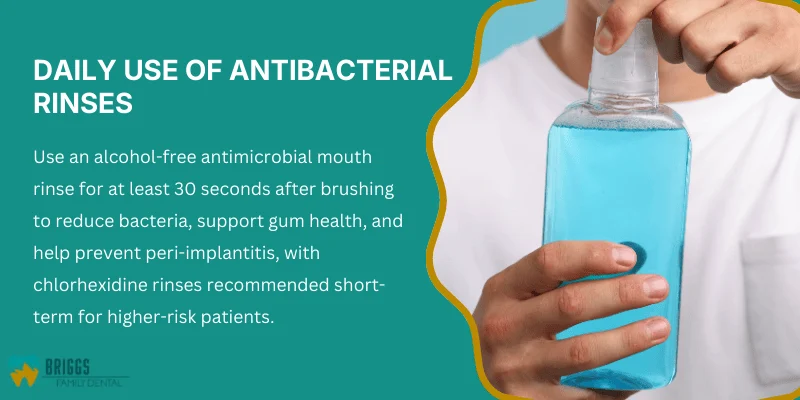
An antimicrobial mouth rinse is a key part of your implant aftercare routine. You should use an alcohol-free antiseptic rinse to minimize bacteria and help prevent infections around your implants.
Swish the rinse for at least 30 seconds after brushing. This helps reduce plaque buildup on your implant surfaces and supports healthy gum tissue. Alcohol-free formulas are important because alcohol can dry out your mouth and irritate the soft tissues around your implants.
Your dentist may recommend specific rinses that contain chlorhexidine for short-term use if you’re at higher risk for complications. Using an antimicrobial mouth rinse regularly helps with preventing peri-implantitis, which is inflammation and infection around the implant site. This protective measure works alongside your brushing and flossing to keep bacteria levels under control.
Cleaning Under Bridges and Full Mouth Dental Implants
Cleaning around full mouth dental implants requires special attention because food particles and bacteria can accumulate in areas you can’t easily see. You need specific tools to reach these spaces effectively.
A power flosser is one of the best tools for fixed full arch implants because it cleans between your gums and prosthesis. Take your time when using it to remove all debris. If you don’t have a power flosser, an angled proxy brush works well to clean between your prosthesis and natural gums.
For implant bridges, you should use shred-resistant floss or floss threaders to clean underneath the bridge. Thread the floss carefully under the bridge and gently move it back and forth along the implant posts. Interdental brushes can also fit into tight spaces where regular floss might not reach.
Your dental office may use an air polishing system during professional cleanings. This gentle method removes plaque without damaging your implant surfaces.
New to our practice? Complete your new patient forms online before your appointment so we can focus on educating you about proper implant care and personalized maintenance strategies.
Identifying Early Signs of Complications
Catching problems early helps you maintain your implants for years to come. You should watch for specific warning signs that may indicate something is wrong.
Bleeding gums around your implants during brushing or flossing isn’t normal. This may indicate early-stage gum inflammation. Swelling, redness, or tenderness around the implant site also needs attention.
Monitor any changes in how your implant feels. Looseness or movement in your implant crown or bridge requires immediate evaluation. Bad breath that doesn’t go away with regular cleaning might indicate bacterial buildup or infection.
Other signs to watch for include:
- Pus or discharge around the implant
- Pain when chewing or biting
- Recession of gum tissue exposing the implant post
- Sensitivity that develops suddenly
Contact your dentist right away if you notice any of these symptoms. Early intervention protects your investment and prevents minor issues from becoming serious problems. Most implant patients who maintain regular check-ups and practice good home care avoid major complications.
Healthy Lifestyle Choices for Implant Success
Your daily habits play a major role in how well your dental implants perform over time. Making smart choices about smoking, drinking, eating, and protecting your mouth can help your implants stay healthy for decades.
Avoid Smoking and Limiting Alcohol
Smoking is one of the biggest threats to your dental implants. When you smoke, it reduces blood flow to your gums and slows down healing around the implant area. This makes you much more likely to develop gum disease and infections near your implants.
Smokers face a much higher risk of implant failure compared to non-smokers. The chemicals in cigarettes weaken your immune system and make it harder for your body to fight off bacteria. If you currently smoke, quitting is the single best thing you can do to protect your implants and ensure their long-term success.
Alcohol also affects your implant health when consumed heavily. Large amounts of alcohol can weaken your immune system and slow down healing. Moderate drinking is usually fine, but heavy alcohol use can increase inflammation around your implants.
Diet Recommendations for Implant Patients
What you eat directly impacts the health of your dental implants. Your body needs specific nutrients to keep your gums and jawbone strong around the implant.
Important nutrients for implant health:
- Vitamin D and Calcium – Keep your jawbone dense and strong
- Vitamin C – Supports healthy gum tissue and healing
- Protein – Helps repair and maintain tissues around implants
Eat plenty of fruits, vegetables, lean meats, and dairy products. These foods give your body what it needs to maintain the bone and tissue supporting your implants.
Avoid very hard or sticky foods that could damage your implant crowns. Foods like hard candy, ice, and tough meats can crack the crown or exert excessive pressure on the implant. Your lifestyle choices and diet significantly affect how long your implants last.
Protecting Implants from Injury and Hard Objects
Physical damage can shorten the life of your dental implants. You need to protect them from excessive force and injury.
If you grind your teeth at night, ask your dentist about a custom nightguard. Grinding puts enormous pressure on your implants and can cause the crown to crack or the implant to loosen over time.
Avoid using your teeth as tools. Don’t open packages, bite your nails, or chew on pens with your implants. These habits can damage both the crown and the implant itself.
If you play contact sports, wear a mouthguard to protect your implants from impact. A direct hit to your mouth could damage the implant crown or even affect the implant post. Taking care of your implants means anticipating potential risks and taking simple steps to avoid them.
Long-Term Habits and When to Contact Your Dentist
Building healthy habits and knowing when to reach out for help protects your dental implants for years. Monitoring changes and staying connected with your dental team helps prevent small problems from becoming bigger issues.
Assessing Changes in Your Implant or Gums
Check your implants and gums regularly to catch warning signs early. Look in the mirror every few days and notice if your gums appear red or swollen around the implant area.
Healthy gums should look pink and firm. If you see puffiness or notice your gums pulling away from the implant, something might be wrong. Touch the area gently with clean fingers to see if it feels tender or painful.
Pay attention to any bleeding when you brush or floss. A little blood right after getting implants is normal, but ongoing bleeding means you need to take action. Watch for any movement or looseness in your implant too.
If your implant feels different when you bite down or seems to shift even slightly, contact your dentist right away. These changes often signal problems that need professional attention before they get worse.
When to Seek Professional Advice
Certain symptoms require immediate dental care to protect your investment. Contact your dentist if you experience persistent pain around your implant that doesn’t go away after a few days or gets worse over time.
Discharge or pus near the implant site points to infection and needs treatment quickly. Any bad taste in your mouth or foul odor coming from the implant area also signals trouble. Call your dentist if you notice your implant becoming loose or moving at all.
Regular dental visits every six months help catch issues before you even notice symptoms. Implant patients who maintain these checkups reduce their risk of complications significantly.
Don’t wait for your scheduled appointment if something feels off. Your dentist would rather check a small concern than treat a serious problem later.
Maintaining Overall Oral Health
Your daily habits make the biggest difference in how long your implants last. Brush twice a day with a soft-bristle toothbrush and gentle toothpaste to keep plaque from building up. Floss at least once daily to remove food and bacteria between your teeth and around your implants.
Good oral health extends beyond just cleaning. Eat a balanced diet rich in vitamins and minerals that support bone and gum health. Avoid smoking completely since it restricts blood flow and increases implant failure dramatically.
Drink plenty of water throughout the day to keep your mouth moist and wash away food particles. Limit sugary drinks and acidic foods that can harm the area around your implants.
Consider using an antimicrobial mouthwash to control bacteria, but skip alcohol-based versions that dry out your mouth. These simple dental implant care practices work together to protect your implants and natural teeth at the same time.
Have questions about maintaining dental implants or need professional guidance on cleaning and checkups? Contact our team today to get expert advice for a healthy, long-lasting smile.
Frequently Asked Questions
Taking care of dental implants involves specific daily routines, using the right cleaning tools, making smart food choices, and watching for warning signs. Regular dental visits and proper sports precautions also help keep your implants healthy.
What daily care routine should I follow to prolong the life of my dental implants?
You should brush your dental implants at least twice a day using a soft-bristled toothbrush. Focus on the area where the implant meets your gum line, as this is where bacteria can build up.
Daily flossing is just as important for implants as it is for natural teeth. Use a water flosser or implant-specific floss to clean around the abutments and under any bridges or crowns.
You’ll want to rinse with an antimicrobial mouthwash to help reduce bacteria in your mouth. This extra step can help prevent infections around your implants.
Can you recommend specific cleaning tools or accessories that are safe for dental implants?
A soft-bristled toothbrush is essential for dental implants, as harder bristles can scratch the implant surface. Many dentists recommend an electric toothbrush with a pressure sensor to ensure gentle cleaning.
Water flossers are highly effective for cleaning around implants, especially if you have bridges or full-arch restorations. They use a pressurized stream of water to flush out debris from hard-to-reach areas.
Interdental brushes with nylon-coated wire work well for cleaning between implants and adjacent teeth. Avoid using metal tools or abrasive toothpastes that could damage your implants.
What foods should I avoid to prevent damage to my dental implants?
You should avoid extremely hard foods like ice, hard candies, and unpopped popcorn kernels that could crack or damage your implant crown. These foods can put excessive pressure on the prosthetic tooth.
Sticky foods like caramels and taffy can pull on your implant crown or get stuck around the abutment. This makes cleaning more difficult and increases your risk of bacterial buildup.
Very crunchy foods like hard pretzels or nuts should be eaten with caution. While you don’t need to eliminate them completely, you should chew carefully and avoid biting down with excessive force.
How often should I visit my dentist for dental implant check-ups?
Most patients should schedule professional cleanings and check-ups every six months to maintain their dental implants. These visits allow your dentist to monitor the health of your implant and surrounding tissue.
Some patients may need more frequent visits if they have a history of gum disease or other risk factors. Your dentist will create a personalized schedule based on your specific needs.
During these appointments, your hygienist will use specialized plastic or titanium scalers to clean your implants safely. Regular professional care helps catch potential problems early before they become serious.
What signs of implant complications should I look out for in between dental visits?
Watch for bleeding or swelling around your implant, as this could indicate peri-implantitis. This condition is similar to gum disease and requires prompt treatment to prevent bone loss.
If you notice your implant feels loose or shifts when you touch it, contact your dentist immediately. A loose implant could mean the bone isn’t supporting it properly.
Pain, discomfort, or sensitivity around your implant isn’t normal after the initial healing period. You should also watch for pus or discharge, which may indicate an infection that requires professional attention.
Are there any special precautions I should take with dental implants during physical activities or sports?
You should wear a custom-fitted mouthguard during contact sports or activities where facial impact is possible. A mouthguard protects both your dental implants and natural teeth from trauma.
Avoid using your teeth as tools to open packages or bottles, especially during physical activities. This habit can damage your implant crown or put stress on the implant post.
If you grind your teeth at night or during stressful situations like competition, ask your dentist about a nightguard. Grinding can wear down your implant crown and put excessive pressure on the implant structure.