




Missing teeth can make biting and chewing difficult, affecting how comfortably you enjoy your meals. Dental implants restore your natural bite by acting like real tooth roots, anchoring securely in your jaw to provide strong, stable support for replacement teeth.
This helps you regain full chewing power and maintain proper bite alignment. Unlike dentures or bridges, implants bond with your jawbone, which keeps the bone healthy and preserves your facial shape.
This means your smile looks natural, and your jaw stays strong over time. Getting dental implants can also stop nearby teeth from shifting, protecting your overall oral health.
Understanding how dental implants work and what to expect can make the process less confusing and more reassuring.
Key Takeaways
- Implants provide stable support that mimics natural teeth roots.
- They help keep your jawbone healthy and maintain facial structure.
- Implants protect surrounding teeth and boost overall oral health.
How Dental Implants Restore Your Natural Bite
Dental implants give you more than just new teeth; they bring back the way your bite works naturally. They fill gaps, keep your teeth steady, and help you chew without pain or difficulty.
Here’s how implants support your bite in real, useful ways.
Replacing Missing Teeth and Restoring Function
When you lose a tooth, the space can cause problems with your bite and the way you chew. This is a common issue, as WHO-based data shows about 7% of adults aged 20+ and nearly 23% of adults aged 60+ experience complete tooth loss. Dental implants act like a new tooth root, anchoring a crown firmly in your jaw.
This helps restore the natural strength and function of your missing tooth. By replacing missing teeth with implants, you don’t just fill empty spots, but also regain the ability to chew evenly on both sides.
This supports your bite and stops other teeth from shifting into the gap. Implants keep your bite stable and allow you to use your teeth just like before.
Bite Alignment and Stability
A healthy bite means your teeth meet correctly when you close your mouth. Missing teeth can cause your bite to become uneven, which may lead to jaw pain or tooth wear.
Implants help by keeping your teeth in the right position, preventing them from moving out of place. Because dental implants are firmly fixed in your jawbone, they act as natural anchors that stabilize your bite.
They also prevent the bone loss that can happen after tooth loss, which keeps your jaw strong and supports the alignment of your teeth over time.
Chewing Efficiency and Comfort
Chewing with missing teeth or dentures can feel awkward or painful. Dental implants restore the full force of your bite, which means you can chew food more comfortably and efficiently.
With implants, you get close to the natural bite strength you had before losing teeth. A large data synthesis found dental implants have an overall survival rate of around 97.8%, with a failure rate of only 2.21%, showing they remain strong and functional long term.
Implants evenly spread chewing pressure across your teeth, reducing strain on any one tooth or part of your jaw. This not only feels better but also helps protect your remaining teeth from damage. You’ll notice food feels easier to break down and your jaw feels less tired after eating.
If you’re in New Market, VA and experiencing chewing discomfort or bite issues, schedule a dental implant consultation to explore a long-term solution.
Tooth Root Simulation and Jawbone Health
Dental implants do more than replace the visible part of your tooth. They also mimic the function of your natural tooth roots, which plays a key role in keeping your jawbone healthy and strong.
This connection helps keep your bone density intact, so your mouth stays functional and your face keeps its shape.
Role of Dental Implants as Artificial Tooth Roots
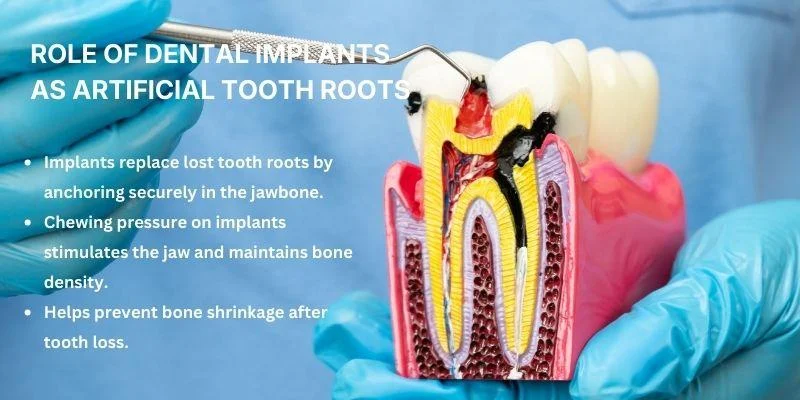
When you lose a tooth, the root that once sat firmly in your jawbone is gone. Dental implants act as artificial roots by being surgically placed into the bone.
These implants are usually made of titanium, which your body accepts well. Because the implant sits inside your jaw just like a real root, it provides the stimulation your bone needs.
When you chew, you put pressure on the implant, signaling your jawbone to stay dense and healthy. Without this, your jawbone can start to shrink or weaken over time.
Preserving Bone Density and Preventing Bone Loss
Your jawbone relies on the presence of tooth roots to stay strong. Without roots, the bone stops getting the signals it needs to maintain its density.
This can lead to gradual bone loss, which might affect your bite and change the shape of your face. Dental implants prevent this by fusing with the bone through a process called osseointegration.
This means your bone cells grow around the implant, locking it in place and keeping the bone active. This stops or slows down bone loss and helps maintain your natural bite and facial structure.
Long-Term Impact on Facial Structure
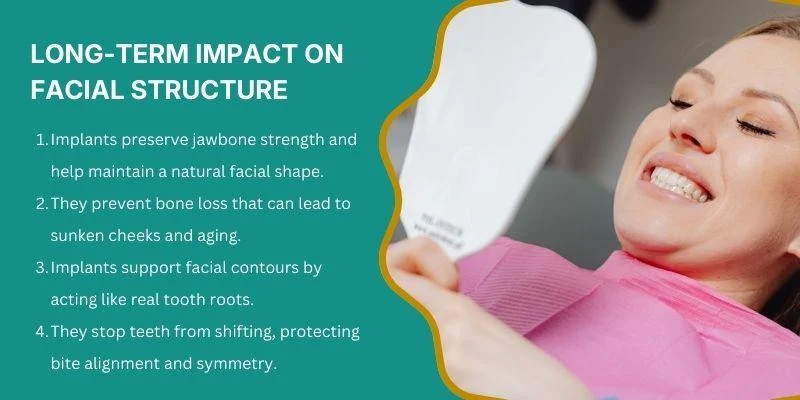
Dental implants do more than replace teeth; they also help keep your face looking natural and support your jawbone. By treating missing teeth properly, you protect your bite and the shape of your face for years to come.
Maintaining Facial Appearance
When you lose teeth, your jawbone can start to shrink because it no longer gets the natural stimulation from chewing. This shrinkage can make your cheeks look sunken and your face appear older.
Dental implants act like real tooth roots that keep your jawbone active and healthy. This prevents your face from losing its natural support.
Implants help keep your facial contours full by preserving the bone. This means your cheeks, lips, and jawline maintain their shape.
Unlike dentures, which can cause bone loss by resting on the gums, implants protect your facial structure and give you a more youthful appearance over time.
Preventing Shifting and Tooth Movement
When teeth are missing, the surrounding teeth can start to shift into the empty spaces. This movement changes your bite and can lead to problems with jaw alignment.
An uneven bite might cause muscle tension, jaw pain, and even affect how your face looks. Dental implants fill the gaps left by missing teeth, keeping your bite balanced.
This supports proper jaw function and stops other teeth from moving. By maintaining your original bite alignment, implants help you avoid issues like jaw joint pain and uneven facial muscle use, which can impact your overall facial symmetry.
Dental Implants Versus Other Tooth Replacement Options
When replacing missing teeth, you want a solution that feels secure and works well for eating and speaking. Different options vary in how they look, how long they last, and how much care they need.
Differences Between Implants and Dentures
Dentures are removable and can replace several teeth at once. You take them out to clean and they may shift slightly when you eat or talk.
Implants, on the other hand, are fixed into your jawbone. This gives you much better stability.
With dental implants, you don’t have to worry about slipping or messy adhesives. Implants also help keep your jawbone healthy because they act like natural tooth roots.
Dentures don’t offer this benefit and may lead to bone loss over time. If you want more freedom in eating and a natural feel, implants are usually the better choice.
For those who need a less invasive or lower-cost solution, dentures might be worth considering.
Advantages Over Bridges and Traditional Solutions
Traditional bridges rely on nearby teeth for support. This means those teeth have to be filed down, which can weaken them.
Implants don’t affect other teeth since they stand alone. Bridges typically last 7 to 15 years before needing replacement.
Implants, made from strong materials like titanium, can last much longer, often a lifetime with proper care. Implants also provide better chewing force.
This means you can enjoy more foods and keep a natural bite. Plus, they’re easier to clean because you brush and floss them just like real teeth.
Choosing implants helps protect your oral health in the long run and avoids many problems traditional bridges might cause.
Residents in New Market, VA can schedule a consultation to compare dental implants with dentures or bridges based on comfort, function, and long-term results.
Oral Health Benefits Beyond the Bite
Dental implants do more than help you chew better. They also play a big role in keeping your mouth healthy in other important ways.
You get benefits that can lower your chances of gum disease and protect your other natural teeth from damage or shifting.
Reducing Risk of Gum Disease
When you have missing teeth, food particles and bacteria can get trapped in the gaps. This buildup creates a perfect place for gum disease to start.
Gum disease can cause inflammation, bleeding, and even bone loss if left untreated. It can also make brushing and flossing harder, which makes the problem worse.
Dental implants fill those empty spaces and act like real tooth roots. This blocks food and bacteria from settling in the gaps.
Because implants are easy to clean with regular brushing and flossing, you reduce plaque buildup around them. This helps keep your gums healthier and lowers your risk of infections.
Protecting Remaining Natural Teeth
Your natural teeth work together to support each other when chewing. If a tooth is missing, the surrounding teeth have to take extra pressure.
This can make them move, wear down faster, or even crack. Dental implants stop this chain reaction.
They take on the chewing forces evenly, so your natural teeth don’t have to do extra work. Implants also hold space to prevent nearby teeth from drifting out of place.
This keeps your teeth lined up properly, which helps you avoid bite problems and makes it easier to clean between them.
Implant Surgery Process and Personalization
Getting a dental implant involves careful steps designed to fit your unique mouth and restore your bite naturally. From precise planning to surgery and adjusting your new teeth, every stage focuses on how your implant will look and work with your smile.
Initial Assessment and Digital Planning
Before surgery, your dentist will examine your teeth and jawbone closely. This helps ensure your jaw can support the implant securely.
You may have X-rays or 3D scans taken to get a clear picture of your oral structure. Using digital tools, your dentist maps out exactly where the implant should go.
This planning aims to match your natural bite and facial shape. Sometimes, a digital wax-up is created, which is a virtual model showing what your new tooth will look like.
This helps you see the expected result and allows for any changes early on. Personalized planning reduces risks and makes the implant fit better.
It’s the key step for a successful, natural-feeling bite and smile.
Step-by-Step Implant Surgery Journey
The surgery itself is usually done in an outpatient setting. First, the titanium implant post is placed into your jawbone where the missing tooth root used to be.
This requires a small incision in the gum, but it is typically painless with local anesthesia or sedation. After the implant is set, your jaw needs time to heal.
This healing period, called osseointegration, can last several months. During this time, the implant fuses with your bone, creating a strong foundation.
Once healed, an abutment, which is a small connector, is attached to the implant. This will hold your new crown, which looks and fits like a natural tooth.
The final crown is custom-made based on your bite and tooth shade, ensuring it blends seamlessly.
Adapting to Your New Natural Bite
After your implant crown is placed, your mouth will adjust to the new bite feel. It’s important to monitor how your teeth come together when you chew and speak.
If you notice any discomfort or changes, your dentist can make small adjustments. Your new implant should restore chewing ability and support surrounding teeth, helping prevent bone loss.
You might also practice specific sounds or test how your bite feels during different activities to ensure comfort. Nightguards or other protective gear might be suggested if you grind your teeth.
Regular dental visits will help keep your implant and bite in good condition for years to come.
Planning matters when restoring your bite. Contact Briggs Family Dental in New Market, VA to discuss dental implant planning, treatment steps, and expected outcomes.
Frequently Asked Questions
Dental implants offer many benefits, from restoring your bite to supporting your jawbone. The process involves healing time, and there are specific requirements to be a good candidate.
Once placed, implants need proper care to last well.
What are the benefits of getting dental implants?
Dental implants help you chew better and keep your bite balanced. They look and feel like natural teeth, so you can eat and speak confidently.
Implants also stop nearby teeth from shifting and help maintain your facial shape.
How long does it take for dental implants to heal and function like natural teeth?
The healing process usually takes a few months, often around 3 to 6. During this time, the implant fuses with your jawbone.
Once healed, implants work just like your natural teeth, giving you strong chewing power.
Is everyone a candidate for dental implants, or are there certain requirements?
Not everyone can get implants right away. You need healthy gums and enough jawbone for support.
Your dentist may check for other health issues before recommending implants. Sometimes, bone grafting is needed to prepare your jaw.
What kind of maintenance is required for dental implants?
Caring for implants is similar to caring for natural teeth. You should brush twice a day and floss regularly.
Visit your dentist for checkups. Good oral hygiene helps prevent problems around the implant.
Can dental implants help if I have partial or complete tooth loss?
Implants can replace single teeth or support dentures if you’ve lost many teeth. They provide a stable foundation for crowns, bridges, or full-arch prostheses.
How do dental implants contribute to jawbone health?
Implants stimulate your jawbone when you chew, keeping it strong and preventing bone loss. This helps maintain your facial structure and avoids problems like sagging or shifting teeth.
Keeping your jaw healthy supports a natural bite.