



You may think removing a tooth solves the problem. In reality, your jawbone starts to change right away. Once the tooth is gone, the bone no longer gets the pressure it needs from chewing.
Bone loss begins within weeks after an extraction because your jaw no longer receives daily stimulation from the missing tooth.
The fastest changes often happen in the first few months, and you may not notice them at first. Over time, this shrinkage can affect your bite, your facial shape, and your options for dental implants.
The good news is you can slow or stop this process. Simple steps taken at the time of extraction, or soon after, can protect your bone and keep future treatment easier and more predictable.
Key Takeaways
- Your jawbone can start shrinking soon after a tooth is removed.
- Early action helps prevent long-term changes to your bite and bone shape.
- Modern treatments can preserve or rebuild bone when you act in time.
The Rapid Timeline of Bone Loss After Tooth Extraction
Bone loss after tooth extraction starts sooner than most people expect. Your body begins bone remodeling right away, and the biggest changes often happen within the first year.
How Soon Bone Loss Begins
The process starts the day your dentist removes the tooth. Your body forms a blood clot in the socket within the first 2–3 days to protect the area and begin healing.
By days 4–5, soft tissue and early healing cells fill the space. Around one week, young connective tissue and early bone material begin to form. New bone becomes more visible by about 6 weeks.
At the same time, bone resorption begins. Research shows that bone deterioration starts immediately after removal, not months later.
Your alveolar bone shrinks because it no longer supports a tooth root. Without that stimulation, your body starts to remove unused bone.
Progression in the First Year
The most dramatic post-extraction bone loss happens in the first 3 to 12 months. During this time, your jawbone changes in both width and height.
Studies report that the alveolar ridge can shrink by about 30% in width within the first 3 months and up to 50% within 12 months.
Another review found horizontal bone loss between 29% and 63% and vertical loss between 11% and 22% within 6 months. This means your ridge resorption can move quickly, even if your gums look healed on the surface.
You may not feel these changes. But your dentist can see reduced bone volume on X-rays.
Long-Term Changes in Alveolar Bone
If you do not replace the tooth, bone remodeling continues for years. The rate slows after the first year, but jawbone loss does not fully stop.
The outer wall of the socket, often called the buccal bone, tends to shrink more than the inner side. This uneven loss can affect how your gums look and how future implants fit.
Over time, ridge resorption can:
- Reduce bone height and width
- Change your bite alignment
- Make implant placement more complex
- Increase the need for bone grafting
These long-term changes show why early planning matters. When you understand how fast bone loss after tooth extraction can occur, you can take steps to protect your alveolar bone before major volume disappears.
Schedule an appointment in New Market, VA for preventing bone loss after a tooth extraction.
What Drives Accelerated Jawbone Loss
Jawbone loss starts right after a tooth comes out because your bone no longer gets pressure from chewing or signals from the root.
Bone resorption moves fastest in the first few months, and certain health and lifestyle factors can speed it up even more.
The Role of Tooth Roots and Chewing Stimulation
Your tooth roots do more than hold teeth in place. They send pressure into the jaw every time you chew.
That pressure keeps bone remodeling in balance. Bone cells break down old tissue and build new tissue based on how much force they feel. When you lose a tooth, that force drops right away.
Without regular chewing pressure, the body removes bone it no longer sees as needed. This process is called bone resorption, and it affects the thin outer wall of the socket first.
Tthe biggest drop in bone width and height often happens within the first 3–6 months.
If you want to protect jawbone health, replacing the root with a dental implant helps restore that lost stimulation and can slow alveolar ridge resorption.
Impact of Loss of Periodontal Ligament
The periodontal ligament (PDL) is a thin layer of tissue that connects your tooth root to the bone. It contains blood vessels and cells that help maintain healthy bone.
When the tooth is removed, the PDL disappears. That loss cuts off local signals that tell your bone to stay strong.
Your body then shifts toward more breakdown than rebuilding. This imbalance speeds up alveolar ridge resorption, especially along the cheek side of the socket where the bone is already thin.
Bone deterioration begins immediately after removal, not months later.
Because the PDL plays such a direct role in jawbone health, its sudden absence explains why changes can begin before you see or feel anything unusual.
Risk Factors for Rapid Bone Deterioration
Some factors make jawbone loss happen faster and more severely. You cannot control all of them, but you can manage several.
Common risk factors include:
- Smoking
- Uncontrolled diabetes
- Gum disease
- Thin facial bone around the tooth
- Delayed tooth replacement
Smoking reduces blood flow and slows healing. Gum disease increases inflammation, which can boost bone resorption.
If you wait too long to replace a missing tooth, you allow bone remodeling to continue unchecked. Over time, this can reduce both height and width of the ridge.
Signs of Bone Loss to Watch For
Bone loss often happens without pain. You may not notice early changes in your jawbone health.
As months pass, you might see or feel:
- A shrinking or flattening of the gum ridge
- Changes in how your teeth fit together
- Food trapping in new spaces
- Dentures feeling loose
- A sunken look in the lower face
These are common signs of bone loss after extraction. In more advanced cases, shifting teeth and bite changes can develop.
You cannot see bone remodeling directly, but your dentist can track it with exams and X-rays. Regular follow-up visits help catch jawbone loss early, when options to slow or stop it are simpler and more predictable.
Consequences of Untreated Bone Loss
When you ignore jawbone loss after a tooth extraction, changes happen fast. Your face shape, bite, and future treatment options can all suffer.

Facial Structure and Appearance
Your jawbone supports your cheeks and lips. When jawbone loss begins, that support shrinks.
You may notice your face looks thinner near the extraction site. Over time, your cheeks can sink inward. Your lips may lose support and wrinkle more easily.
Bone loss in the lower jaw can also reduce chin definition. In the upper jaw, it can flatten the area under your nose. These changes may make you look older than you are.
Jawbone loss can start soon after a tooth is removed. Bone tissue shrinks because it no longer receives pressure from chewing. Without steps to prevent bone loss, your body continues to break down unused bone.
Procedures that support bone regeneration, such as bone grafting, help preserve your natural facial shape. Acting early protects both your smile and your overall appearance.
Dental Implant Complications
Dental implants depend on strong, healthy bone. Without enough bone, implant placement becomes harder or even impossible.
An implant must fuse with your jaw in a process called osseointegration. This process requires solid bone around the implant post. If jawbone loss has already occurred, the implant may not anchor well.
You may need extra procedures before getting dental implants, such as:
- Bone grafting
- Sinus lift surgery (for upper jaw loss)
- Ridge augmentation
These steps add time, cost, and healing periods to your treatment.
If bone loss becomes severe, some patients are no longer good candidates for traditional dental implants. Early care after extraction helps prevent bone loss and protects your future treatment options.
Shifting, Misaligned, or Loose Teeth
Your teeth rely on each other for stability. When one tooth is removed and bone shrinks, nearby teeth begin to move.
Teeth next to the gap can tilt inward. The opposing tooth may grow longer because nothing stops it from moving. This affects how your upper and lower teeth meet.
You may notice:
- Food getting trapped more often
- Changes in your bite
- Jaw soreness
- Teeth that feel loose
As jawbone loss continues, the support around nearby teeth can weaken. This makes them more likely to shift or loosen over time.
Replacing a missing tooth early, often with dental implants, keeps pressure on the bone. That pressure supports bone regeneration and helps maintain alignment.
When you act quickly, you protect not just one tooth, but your entire bite.
Modern Prevention and Preservation Techniques
You can slow or limit bone loss if you act at the time of extraction. Dentists use grafts, implants, and biologic materials to protect the socket and support bone regeneration.
Socket Grafting and Ridge Preservation
When your dentist removes a tooth, the empty space starts to shrink right away. Studies show that bone width can shrink by up to 50% in the first year, with most loss in the first three months.
Socket grafting fills that space with a bone graft material. This may include:
- Your own bone (autograft)
- Donor bone (allograft)
- Animal-derived bone (xenograft)
- Synthetic material (alloplast)
Your dentist places the graft into the socket right after extraction. This process, often called socket preservation or ridge preservation, helps maintain the height and width of your jaw.
The graft does not “save” all bone, but it reduces collapse. It also lowers the chance you will need more complex bone grafting later.
Immediate and Early Implant Placement
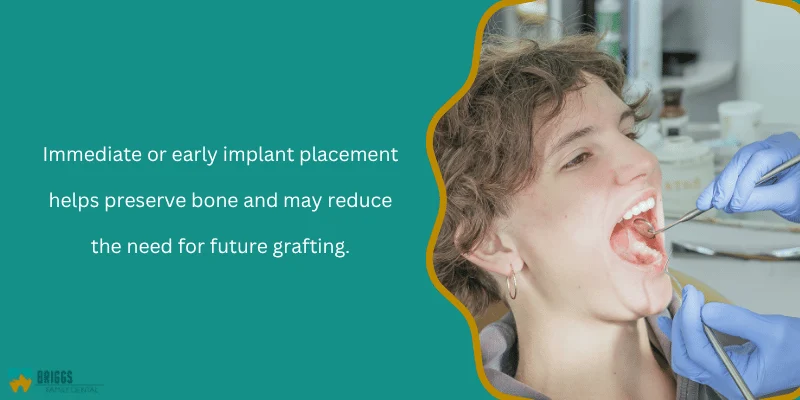
You can also reduce bone loss by placing an implant soon after extraction. With immediate implant placement, your dentist inserts the implant on the same day the tooth comes out.
This approach helps support the surrounding bone. The implant acts like a root and gives the bone a reason to stay.
If same-day placement is not possible, early implant placement may occur within a few weeks to a few months. This timing allows soft tissue healing while limiting bone shrinkage.
When no socket preservation is done, patients often need more hard tissue grafting later.
Platelet-Rich Fibrin and PRF Therapy
Your body already has tools that support healing. Platelet-rich fibrin (PRF) uses your own blood to boost that process.
Your dentist draws a small blood sample and spins it in a centrifuge. This creates a fibrin clot rich in growth factors. These growth factors support wound healing and bone regeneration.
PRF therapy can be used alone or mixed with a bone graft during socket grafting. It may improve soft tissue healing and help form better quality bone.
Because PRF comes from your own blood, it does not carry a risk of rejection. It works best as part of a full plan that includes proper grafting and careful surgical technique.
Guided Bone Regeneration and Ridge Augmentation
If bone loss has already occurred, you may need guided bone regeneration or ridge augmentation.
Guided bone regeneration uses a bone graft plus a barrier membrane. The membrane keeps fast-growing soft tissue out of the space. This allows slower-growing bone cells to fill the area.
Ridge augmentation rebuilds lost width or height in your jaw. Your dentist places bone graft material along the thin or collapsed ridge to increase volume.
These procedures fall under bone augmentation. They often require several months of healing before implant placement.
While they add time and cost, they can restore enough bone to support a stable implant and improve long-term results.
Advanced Solutions for Severe Bone Loss
Severe bone loss does not always block you from getting dental implants. Modern surgery can rebuild bone height, use stronger anchor points, and restore full arches even after major ridge resorption.
Sinus Lift Procedures
When you lose upper back teeth, bone often shrinks into the sinus space. This leaves too little height for standard dental implants.
A sinus lift raises the sinus membrane and places bone graft material under it. Over time, your body replaces that graft with new bone through natural bone regeneration.
You may need this procedure if scans show limited vertical bone in the upper jaw. It often helps when ridge resorption affects molar areas.
Key facts:
- Adds bone height in the upper jaw
- Often requires healing time before implant placement
- Uses your bone, donor bone, or synthetic material
Some clinics explain this as part of broader bone loss dental implant solutions, especially when standard implants would not hold securely.
Healing can take several months, but the goal stays simple: create stable support so your implant can fuse properly with your jaw.
All-on-4 and Full-Arch Implants
If you have lost most or all teeth in one arch, you may not need an implant for every missing tooth. The All-on-4 method uses four carefully angled implants to support a full bridge.
Your surgeon places the back implants at an angle to use stronger existing bone. This often avoids large grafts and shortens treatment time.
All-on-4 can:
- Reduce the need for extensive bone grafting
- Support a fixed, non-removable bridge
- Restore chewing strength and speech
Many practices describe this among the top solutions for dental implants with bone loss, especially when moderate to advanced ridge resorption affects the jaw.
You still need enough healthy bone for stability. A 3D scan helps your provider plan exact implant positions and avoid nerves or sinus spaces.
Reversing Ridge Resorption
After a tooth extraction, the jaw ridge can shrink in both height and width. This process, called ridge resorption, often starts within months.
You can slow or reverse this loss with bone grafting or guided bone regeneration. These treatments rebuild the ridge so it can support dental implants later.
Common steps include:
- Cleaning the site
- Placing graft material
- Covering it with a membrane to guide healing
If you act early, you can reduce long-term damage. Many dentists stress the importance of preventing bone loss after tooth extraction to protect your future implant options.
Rebuilding the ridge takes time, but it restores shape and strength. That stronger foundation makes implant placement safer and more predictable.
Protecting Your Jawbone for the Future
Your jawbone starts to shrink soon after a tooth comes out. You can slow or stop this change with the right care and timely treatment.
Maintaining Jawbone Health After Extraction
You protect your jawbone health best when you act early. After an extraction, your dentist may suggest a bone graft to fill the empty socket. This step helps preserve jawbone shape and width.
Shrinkage can begin within months. The body removes bone when it no longer feels pressure from a tooth root.
You can also choose a dental implant. An implant sends pressure into the bone when you chew. That pressure helps prevent bone resorption because the bone stays active.
If you wait too long, the bone may become too thin for simple implant placement. Early planning keeps your options open and protects your bite and facial balance.
Role of Oral Hygiene and Regular Care

You support your jawbone every day with good oral care. Brush twice daily and clean between teeth to reduce plaque.
Gum disease is a major cause of bone loss. It damages the tissues that hold your teeth and can weaken the bone underneath. Learning about the causes of jaw bone loss helps you see why clean teeth and healthy gums matter.
You should also see your dentist for regular exams and cleanings. X-rays can show early bone changes before you feel pain. Early treatment can slow or stop further damage.
Avoid smoking if you can. Tobacco reduces blood flow and slows healing, which makes it harder to preserve jawbone after extraction or surgery.
Partial Extraction Therapy (PET) as Prevention
Partial Extraction Therapy (PET) is a newer method that may help preserve jawbone in some cases. Instead of removing the whole tooth, your dentist keeps part of the root in place.
The remaining root section supports the thin outer bone wall. This helps prevent bone resorption that often follows full extraction.
PET does not work for every patient. You need healthy surrounding bone and no active infection. Your dentist will check with imaging and a full exam before suggesting it.
When PET fits your case, it can maintain natural bone shape and support better implant results. This approach focuses on long-term jawbone health and stable tooth replacement.
Frequently Asked Questions
Bone loss can begin within weeks after a tooth is removed, and the biggest changes often happen in the first few months. Quick action, the right treatment, and healthy habits can help protect your jaw and keep future implant options open.
How can I prevent bone loss after a tooth extraction?
You can limit bone loss by planning ahead before the tooth is removed. Ask your dentist about socket preservation, which places a bone graft in the empty socket right after the extraction.
A graft helps hold the shape of the ridge while your body forms new bone. This step reduces the shrinkage that often happens in the first 3 to 6 months.
You can also replace the tooth with a dental implant. An implant places a root-like post in the jaw, which keeps the bone active during chewing.
How fast does jawbone loss happen after a tooth is removed?
Bone loss starts right after the tooth and root come out. The jaw no longer receives the pressure and signals it needs to stay strong.
Research and clinical reports show that the most rapid changes happen in the first few months. Many dentists explain that the jaw begins shrinking quickly, often within months.
The rate slows after about six months, but it does not fully stop.
How long does it take for noticeable bone loss to occur after an extraction?
Your body begins reshaping the socket in the first few weeks. You may not see changes in your face right away, but bone inside the ridge is already shrinking.
Most of the visible and measurable loss tends to happen within the first 3 to 6 months. In many cases, the most significant changes occur within the first year and a half.
If you wait a year or longer to replace the tooth, you may need a bone graft before getting an implant.
Can the jawbone grow back after a tooth extraction?
Your body does form new bone in the empty socket as it heals. However, this natural healing does not fully restore the original height and width of the ridge.
If bone has already shrunk, your dentist can rebuild it with a bone graft. A graft adds material that your body uses as a scaffold to create new bone.
In some cases, guided bone regeneration or a sinus lift may be needed to restore enough structure for an implant.
What helps encourage bone growth after an extraction?
Placing a bone graft at the time of extraction gives your body a framework to build on. Dentists often recommend this step when you plan to get an implant later.
Good nutrition also supports healing. You should get enough protein, vitamin D, and calcium while the site heals.
Avoid smoking, because it slows blood flow and reduces bone healing. Keep the area clean and attend follow-up visits so your dentist can check how the bone is forming.
Is bone loss different after an upper tooth extraction compared to a lower one?
Yes, the pattern can differ. In the upper jaw, bone near the molars often sits close to the sinus, and bone height can drop faster after long-term tooth loss.
In the lower jaw, the bone can become narrower over time, especially on the cheek side. Both areas lose bone without stimulation, but upper back teeth may require a sinus lift if bone height becomes too thin.
Your dentist can use 3D imaging to measure bone levels and decide what type of graft or implant timing fits your situation.