




When you lose a tooth, you might worry about how your smile looks. But there’s a bigger problem happening beneath the surface that you can’t see.
Missing teeth cause the jawbone to break down because tooth roots normally stimulate the bone tissue, and without this stimulation, the bone gradually shrinks and weakens.
This bone loss doesn’t just affect one spot in your mouth. It can change the shape of your face, make your other teeth shift out of place, and create problems with eating and speaking.
The good news is that you can take steps to prevent this damage if you act quickly.
Understanding how missing teeth and jawbone loss help you make better choices about your dental health.
Whether you’ve already lost a tooth or you’re facing the possibility, knowing what happens to your jawbone and what you can do about it can protect your smile for years to come.
Key Takeaways
- Missing teeth causes jawbone loss because the bone needs stimulation from tooth roots to stay healthy
- Bone deterioration can lead to facial changes, shifting teeth, and difficulty with future dental treatments
- Dental implants and early treatment can prevent bone loss and restore your jawbone health
How Missing Teeth Lead to Jawbone Loss
When you lose a tooth, the jawbone underneath begins to break down because it no longer receives the signals it needs to stay healthy. This process affects your facial appearance and makes everyday activities like eating more difficult.
The Role of Tooth Roots in Jawbone Health
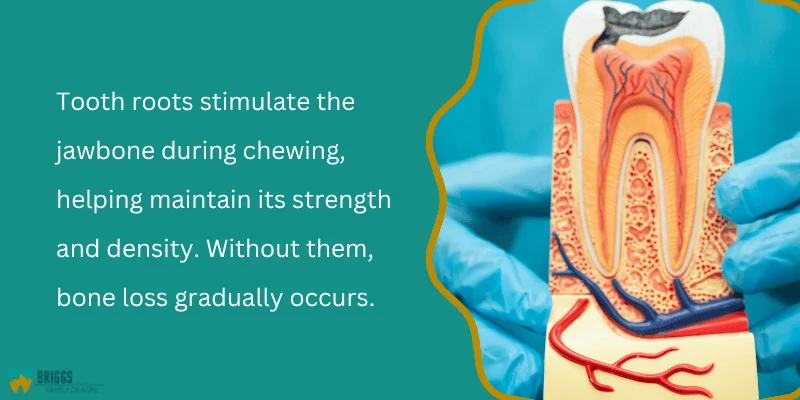
Your tooth roots do more than just hold teeth in place. They send important signals to your jawbone every time you chew or bite down. This stimulation tells your body to keep sending nutrients to the bone tissue in your jaw.
When you experience tooth loss, that stimulation stops completely. Your body interprets this as a sign that the bone is no longer needed in that area. Think of it like a muscle that gets weaker when you stop using it.
The connection between missing teeth and jawbone health shows that even a single missing tooth can trigger changes. Without the pressure and movement from chewing, your jawbone doesn’t get the workout it needs to maintain its density and volume.
Bone Resorption and Its Timeline
Bone resorption can start just a few months after you lose a tooth. During this process, your body gradually absorbs the bone tissue that once supported the missing tooth. The bone becomes thinner and weaker over time.
The speed of bone loss varies from person to person. Some factors that affect how quickly you lose bone include your age, overall health, and which tooth you lost. Molars typically cause more bone loss because they handle more chewing force.
In the first year after tooth loss, you might lose up to 25% of your bone width in that area. The bone loss after tooth loss continues at a slower rate in the following years, but it never completely stops on its own.
Changes in Facial Structure and Oral Function
Jaw bone loss changes how your face looks and how your mouth works. Your face may develop a sunken or aged appearance as the bone shrinks. Your cheeks might look hollow, and your lips may appear thinner.
You’ll likely notice practical problems too. Difficulty chewing becomes common because your remaining teeth don’t line up properly anymore. Your neighboring teeth may shift into the empty space, creating bite issues that affect how you eat.
Facial pain can develop as your jaw adjusts to the missing tooth. You might also experience trouble speaking clearly or feel self-conscious about your appearance.
Talk to our dental team to prevent bone loss and restore your smile with long-term solutions.
Key Risk Factors for Jawbone Deterioration
Several factors can put your jawbone at risk, with gum disease being one of the most common causes. Poor oral care and tooth removal also play major roles in bone breakdown.
Gum Disease and Periodontitis
Gum disease starts as a mild infection but can turn into periodontitis if left untreated. When bacteria build up along your gum line, they create pockets between your teeth and gums.
These pockets get deeper over time and allow bacteria to reach the bone underneath.
Periodontitis causes bacteria to eat away at the jawbone that connects your teeth to your jaw. The bone breaks down slowly, which makes your teeth loose and unstable. This same process happens with dental implants, called peri-implantitis.
The bone loss from gum disease doesn’t stop on its own. It keeps getting worse until you treat gum disease with professional help. Regular dental cleanings and good oral hygiene at home can prevent this type of bone loss from starting.
Tooth Extraction and Its Consequences
When you lose a tooth or have one removed, your jawbone loses the stimulation it needs to stay healthy. The bone that once supported that tooth starts to break down through a process called resorption.
About 25% of the bone around a missing tooth disappears in the first year alone. The bone loss continues over time, which is why your face can start to look sunken in areas where teeth are missing.
An estimated 20% of adults are missing at least one tooth, putting them at risk for this type of bone loss.
Replacing missing teeth quickly helps protect your jawbone from deteriorating further.
Impact of Oral Hygiene Habits
Your daily oral hygiene routine plays a big role in preventing jawbone loss. Brushing twice a day and flossing daily removes the plaque that causes gum disease.
Poor oral hygiene lets bacteria multiply in your mouth. These bacteria attack your gums first, then move deeper to damage the bone. Skipping regular dental checkups means problems go unnoticed until they become serious.
Good habits include:
- Brushing for two minutes twice daily
- Flossing between all teeth once per day
- Getting professional cleanings every six months
- Treating any gum problems right away
Taking care of your teeth and gums every day is the easiest way to protect your jawbone from damage.
Recognizing the Signs and Impacts of Bone Loss
Your body sends clear signals when bone loss begins to affect your jaw. These changes show up in how your teeth fit together, how dentures feel, and how comfortable eating becomes.

Bite Changes and Shifting Teeth
When you lose bone in your jaw, your remaining teeth start to move into the empty spaces. Your bite feels different because teeth that used to line up perfectly now meet at odd angles.
You might notice gaps appearing between teeth that were once close together.
Adjacent teeth often tilt toward the missing tooth area as the bone shrinks underneath. This movement can make your front teeth stick out more or create spacing issues you never had before.
Your bite feeling different is often one of the first things people notice with bone loss.
The shifting doesn’t stop on its own. As more bone disappears, teeth become looser and may eventually fall out. This creates a cycle where losing one tooth leads to problems with others.
Denture and Partial Denture Fit Problems
Full dentures and partial dentures rely on the shape of your jawbone to stay in place. As bone loss progresses, your dentures start to slip and slide when you talk or eat. The fit becomes loose because the ridge that once supported them has shrunk.
You may need more denture adhesive than before, or find that even adhesive doesn’t help much anymore. Food particles get trapped under your dentures more often, causing sore spots on your gums.
Many people notice their dentures clicking or making noise when they speak.
Partial dentures can put extra pressure on the teeth they clip onto, which may loosen those teeth over time. Your dentist might need to reline or remake your dentures every few years as the bone continues to change shape.
Chewing Difficulties and Pain
Difficulty chewing becomes a daily struggle as your jawbone deteriorates. Foods that were once easy to eat, like apples or steak, now require extra effort or cause discomfort. You might start avoiding certain foods altogether because they’re too hard to manage.
Facial pain and dental pain can develop as your jaw tries to compensate for the missing bone structure. Your jaw muscles work harder during chewing, leading to soreness and fatigue. Some people experience headaches or pain near their jaw joints.
The uneven pressure from shifting teeth affects how you chew and can strain your jaw muscles. You might notice clicking sounds or feel your jaw getting tired after eating just a small meal.
Preventing and Managing Jawbone Loss
Taking action early and maintaining good oral habits can significantly reduce your risk of jawbone deterioration. Regular care and prompt treatment of dental issues are your best defenses against bone loss.
Dental Checkups and Early Diagnosis

Regular dental visits help catch problems before they become serious. Your dentist can spot early signs of bone loss during routine exams through visual inspection and X-rays.
Professional cleanings every six months remove plaque and tartar that contribute to gum disease, which is one of the main causes of jawbone deterioration. During these visits, your dentist measures the depth of pockets around your teeth to check for gum disease progression.
Early detection allows for less invasive treatments. If your dentist notices minor bone loss, they can recommend treatments like deep cleanings or medications to stop it from getting worse.
Catching issues early means you have more options and better outcomes for preventing jawbone loss.
Importance of Addressing Missing Teeth Promptly
Replacing missing teeth immediately helps prevent bone loss from starting or getting worse. Each day a tooth remains missing, your jawbone loses the stimulation it needs to stay healthy.
Dental implants are the most effective replacement option because they act like natural tooth roots. They provide the pressure and stimulation your jawbone needs to maintain its density.
Other options like bridges and dentures can restore function but don’t stimulate the bone the same way.
Waiting too long to replace missing teeth makes treatment harder and more expensive. As bone deteriorates, you may need bone grafting procedures before you can get implants.
Acting quickly gives you simpler treatment options and better long-term results.
Maintaining Bone Density with Good Practices
Daily oral hygiene forms the foundation of bone health. Brushing twice daily and flossing once removes bacteria that cause gum disease and bone loss.
Good practices to maintain bone density include:
- Brushing for two minutes with fluoride toothpaste
- Flossing between all teeth daily
- Using an antibacterial mouthwash
- Avoiding tobacco products
- Eating a balanced diet rich in calcium and vitamin D
- Limiting sugary foods and drinks
Your lifestyle choices directly affect your jawbone health. Smoking reduces blood flow to your gums and weakens bone tissue. A diet with adequate calcium and vitamin D supports bone strength throughout your body, including your jaw.
If you already have some bone loss, your dentist might recommend specific treatments like bone grafting or regenerative procedures. These help restore lost bone volume and prepare your jaw for dental implants if needed.
Treatment Options to Restore Jawbone Health
When you experience jawbone loss from missing teeth, several effective treatments can help restore your bone density and prepare your jaw for tooth replacement.
These procedures range from surgical bone grafts to advanced implant techniques that stimulate natural bone regeneration.
Dental Implants and Osseointegration
Dental implants are the most effective long-term solution for preventing and treating jawbone loss. Unlike traditional dentures, implants function like natural tooth roots by providing the stimulation your jawbone needs to maintain its density.
The key to implant success is osseointegration. This is the process where your jawbone fuses directly with the titanium implant post over several months. During this time, bone cells grow around the implant and hold it firmly in place.
Once osseointegration is complete, your dentist attaches an abutment to the implant. This connector piece holds the replacement tooth or crown.
The entire structure works together to distribute chewing forces into your jawbone, which keeps the bone healthy and strong.
Dental implants play a vital role in preventing jawbone resorption while giving you a permanent solution that looks and feels natural. They can replace single teeth, multiple teeth, or even support full arch restorations.
Bone Grafting and Ridge Preservation
When you’ve already experienced significant bone loss, bone grafting can rebuild the necessary bone volume before dental implant placement. This procedure uses bone material from your own body, a donor, or synthetic sources to encourage new bone growth.
Ridge preservation is a specific type of bone graft performed immediately after tooth extraction. Your dentist fills the empty socket with grafting material to maintain the width and height of your jawbone. This prevents the collapse that typically occurs after tooth loss.
Socket preservation and regenerative graft techniques help maintain bone volume in areas where teeth are missing. The grafted material acts as a scaffold, allowing your natural bone cells to grow and eventually replace the graft material with your own healthy bone.
Most bone grafts need three to six months to heal before you can proceed with implant placement. Your periodontist will monitor the healing process to ensure adequate bone density develops.
Socket and Sinus Lift Procedures
Socket preservation treats the immediate bone loss that happens right after tooth extraction. Your dentist places bone grafting material into the empty socket and covers it with a protective membrane. This keeps the socket’s shape intact while new bone forms.
A sinus lift is a specialized procedure for the upper jaw. When you lose upper back teeth, your sinus cavity can expand downward into the space where bone used to be. This leaves insufficient bone height for implants.
During a sinus lift, your oral surgeon gently lifts the sinus membrane upward and places bone grafting material in the created space. This builds up the bone height needed for successful implant placement in your upper jaw.
The procedure typically requires four to nine months of healing before implants can be placed. However, in some cases, your surgeon can place the implant during the same appointment as the sinus lift.
Implant-Supported Solutions vs. Traditional Dentures
Traditional dentures sit on top of your gums without providing any stimulation to the underlying jawbone. This means bone loss continues even after you replace your missing teeth with dentures.
Over time, your dentures become loose and uncomfortable as your jaw shrinks.
Implant-supported dentures offer a better solution. These use four to six dental implants to anchor a full arch of replacement teeth. The implants transfer chewing forces into your jawbone, which helps preserve bone density.
Key differences include:
- Stability: Implant-supported options stay firmly in place, while traditional dentures can slip during eating or speaking
- Bone preservation: Implants maintain jawbone health; traditional dentures allow continued bone loss
- Comfort: Fixed implant solutions feel more natural and don’t require adhesives
- Longevity: Implants can last decades with proper care; dentures need frequent adjustments and replacement
You can also choose between fixed implant-supported dentures that only your dentist can remove, or removable options that snap onto the implants.
Both provide much better bone stimulation than traditional dentures while giving you improved chewing function and facial support.
Frequently Asked Questions
Missing teeth can lead to bone loss that affects your smile and oral health. Understanding the warning signs and treatment options helps you take action to protect your jawbone.
What are the indications of bone loss in teeth?
You might notice your face looks different or appears sunken if you’re experiencing bone loss. Changes in your facial features and chewing difficulties can signal jawbone loss is occurring.
Your teeth may start to feel loose or shift position in your mouth. You could also experience discomfort when wearing dentures because the bone underneath keeps shrinking.
Early detection of jaw bone loss can save your smile. Your gums might recede or pull away from your teeth, making them look longer than before.
How can someone prevent further jawbone loss after tooth extraction?
You need to replace missing teeth as soon as possible to prevent your jawbone from breaking down. Dental implants work best because they stimulate your jawbone just like natural teeth do.
The implant acts as a replacement root that keeps your bone active and healthy. Without this stimulation, your jawbone volume and the surrounding gum tissue will decrease over time.
Regular dental checkups help catch problems early before they get worse. Your dentist can monitor your bone health and recommend the right treatment for your situation.
Is it possible to restore jawbone density after tooth loss?
Yes, you can rebuild lost bone through procedures like bone grafting. Bone grafting procedures like socket preservation and regenerative graft techniques help maintain or regrow bone volume where teeth are missing.
These procedures prepare your jawbone to support dental implants. A sinus lift is another option that creates space for implants in your upper jaw by lifting the sinus membrane and adding bone grafting material.
Your periodontist will assess how much bone you’ve lost and create a treatment plan for your needs. The amount of bone you can regrow depends on how long you’ve had missing teeth and your overall health.
Are there any symptoms of jawbone deterioration to look out for?
Your face might develop a sunken or aged appearance as your jawbone shrinks. This happens because the bone that once supported your teeth starts to break down without proper stimulation.
You may find it harder to speak clearly or chew food properly. Jawbone loss can lead to functional issues that affect your daily life.
Your dentures might feel loose or uncomfortable even though they fit well before. In severe cases, your jaw could become weak enough that fractures become a risk.
What happens to your jaw when you have multiple missing teeth?
Each lost tooth accelerates bone resorption and increases your risk of losing more teeth. Your jawbone needs the pressure from chewing to stay strong and healthy.
Multiple missing teeth mean larger areas of your jaw aren’t getting the stimulation they need. This causes your jaw ridge to shrink and decreases the bone height available for dental restorations.
Your mouth and cheeks will start to shrink inward as the jawbone weakens. The bone loss can spread to affect the teeth next to the gaps, causing them to loosen over time.
How does the absence of teeth impact jawbone health over time?
Your jawbone can lose up to 25 percent of its width in the first year after tooth loss. The bone keeps breaking down without the stimulation that comes from your teeth when you chew.
Bridges and dentures don’t stop this process because they sit on top of your gums. They don’t replace the tooth root that provides the necessary stimulation to maintain bone density.
The deterioration can impair speaking and chewing as it continues. Your facial structure changes over the years, giving you an older appearance than your actual age.