

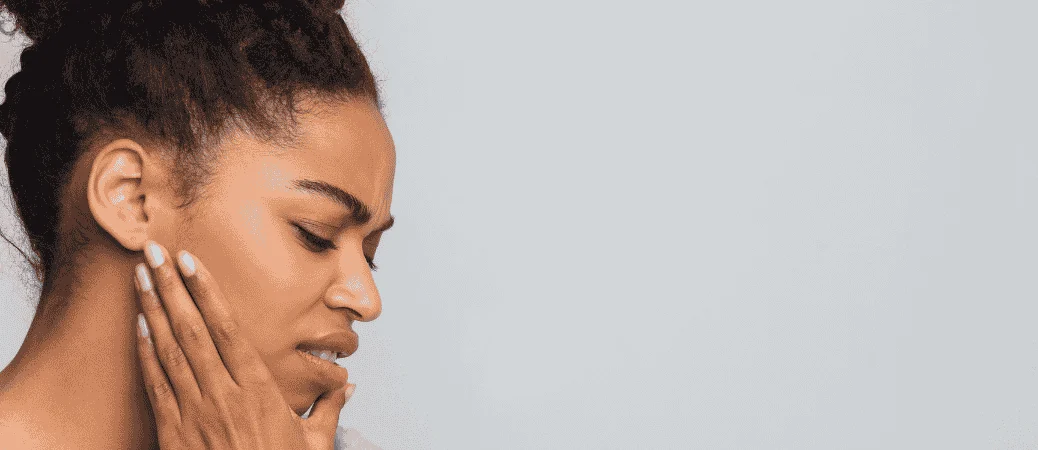
That sound of jaw clicking when chewing isn’t just annoying; it’s your jaw trying to tell you something.
Jaw clicking happens when the cartilage disk in your temporomandibular joint (TMJ) slides out of place as you open and close your mouth, or when the joint itself isn’t moving smoothly.
Many people live with a mild click for years without problems. But jaw clicking can signal TMJ disorder, which affects the hinge joint connecting your lower jaw to your skull.
The good news is that catching the warning signs early can help you avoid more serious issues with bruxism treatment.
Understanding why your jaw clicks and knowing when to take action can make a real difference in your comfort and health.
This guide will walk you through what’s happening in your jaw, what causes the clicking, and how to tell if you need professional help.
Key Takeaways
- Jaw clicking occurs when the cartilage disk in your TMJ moves out of position or when the joint doesn’t work smoothly
- Early signs of TMJ disorder include clicking sounds, pain around your jaw or ear, headaches, and difficulty opening your mouth fully
- As a result of teeth grinding, jaw clicking can be managed with lifestyle changes and gentle care, but you should see a specialist if you experience pain or jaw locking
TMJ Anatomy: Understanding How the Jaw Joint Works
Your jaw joint is one of the most complex joints in your body, combining both hinge and sliding movements to help you talk, chew, and yawn.
The temporomandibular joint connects your lower jaw to your skull through a carefully balanced system of bones, cartilage, muscles, and a special cushioning disc.
Structure of the Temporomandibular Joint
The temporomandibular joint works as a complex hinge that sits on both sides of your head, just below your ears. Your mandible (lower jaw) connects to the temporal bone of your skull at two points.
The joint has three main parts working together. First, the mandibular fossa is a shallow depression in your temporal bone where the jaw fits.
Second, the condylar process is the rounded end of your mandible that moves within this space. Third, cartilage covers these bone surfaces to reduce friction during movement.
What makes your TMJ unique is that it can both rotate like a hinge and slide forward and backward. This dual action lets you open your mouth wide and move your jaw from side to side when you chew.
Role of the Articular Disc and Muscles
A small shock-absorbing disc called the articular disc sits between your jaw bone and skull. This disc normally keeps your jaw movement smooth and prevents the bones from grinding against each other.
The disc divides your TMJ into two separate compartments that allow different types of motion. When the disc shifts out of place or wears down, you may hear clicking or popping sounds.
Several muscles control your jaw movement. The masseter is your strongest chewing muscle, running from your cheekbone to your lower jaw. The temporalis muscle spreads across the side of your head like a fan.
The pterygoid muscles help you move your jaw side to side and forward.
These muscles, along with ligaments and tendons, work together to support your joints and create coordinated jaw movements.
Differences Between TMJ, TMD, and TMJ Dysfunction
The terms TMJ, TMD, and TMJ dysfunction mean different things, though people often use them interchangeably. TMJ simply refers to the temporomandibular joint itself—the actual physical structure in your body.
TMD stands for temporomandibular disorder. This is the correct medical term for problems with your jaw muscles or joints.
TMD describes the actual condition or disease affecting your jaw.
TMJ dysfunction means your temporomandibular joint isn’t working properly. This term describes when your jaw joint has problems functioning normally, whether from muscle issues, disc problems, or joint damage.
When you say “I have TMJ,” you’re technically just saying you have a jaw joint, which everyone does. What you likely mean is “I have TMD” or “I have TMJ dysfunction.
” Understanding these differences helps you communicate more clearly with your dentist or doctor about your symptoms.
Why Jaw Clicks and Pops: Common Causes Explained
Jaw clicking happens for several reasons, from simple disc problems inside your joint to habits like grinding your teeth at night.
Understanding what causes these sounds can help you figure out if you need treatment or just need to change some daily habits.
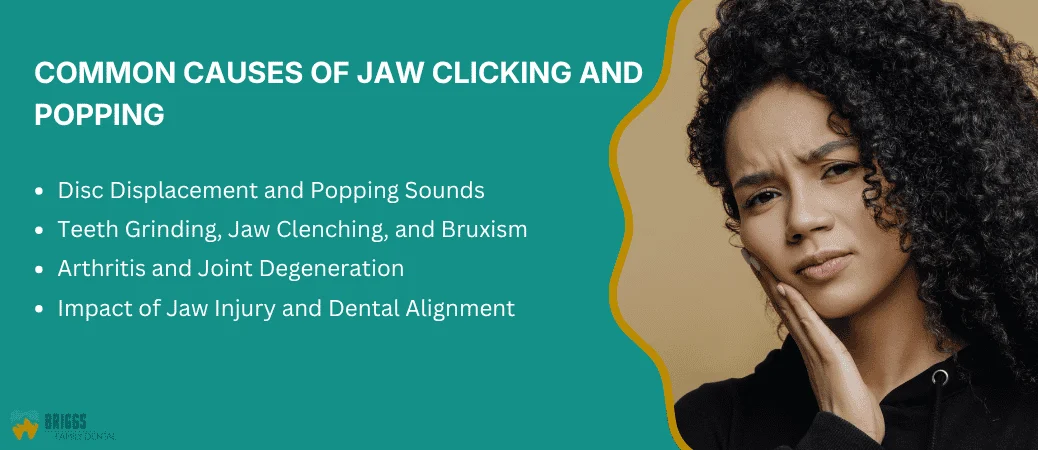
Disc Displacement and Popping Sounds
Your jaw has a small disc inside the joint that acts like a cushion between the bones. When this disc slips out of place, it creates clicking or popping sounds when you chew or open your mouth.
Disc displacement is one of the most common reasons for jaw popping and clicking. The disc can slide forward when your mouth is closed, then snap back into place when you open it.
This creates the pop or click you hear.
Sometimes the disc stays out of place. This is called disc displacement without reduction. When this happens, your jaw might feel stuck or limited in how far it can open.
The displaced disc can cause pain in your jaw, face, or ear. You might also notice the clicking gets worse over time if the disc keeps moving out of position.
Teeth Grinding, Jaw Clenching, and Bruxism
Grinding your teeth or clenching your jaw puts extra stress on your temporomandibular joint. This habit, called bruxism, often happens during sleep when you’re not aware of it.
Teeth grinding wears down the surfaces of your teeth and strains the muscles around your jaw. Over time, this can lead to jaw clicking and pain. Many people clench their jaw during stressful situations without realizing it.
Jaw clenching tightens the muscles that control your jaw movement. This constant tension can pull the jaw joint out of alignment. The result is often popping sounds when you finally relax your jaw or try to eat.
Signs of bruxism include:
- Worn or flat tooth surfaces
- Jaw soreness in the morning
- Headaches near your temples
- Tight jaw muscles
Arthritis and Joint Degeneration
Like other joints in your body, your jaw joint can develop arthritis. Osteoarthritis breaks down the cartilage that protects the bones in your jaw joint.
When cartilage wears away, the bones can rub together. This creates grinding sounds and makes your jaw click when you move it. The joint might also feel stiff, especially in the morning.
Arthritis in your jaw gets worse with age. The worn cartilage doesn’t grow back, so the joint damage continues over time. You might notice your jaw clicks more often or sounds different as the condition progresses.
Other types of arthritis, like rheumatoid arthritis, can also affect your jaw. These conditions cause inflammation that damages the joint and surrounding tissues.
Impact of Jaw Injury and Dental Alignment
A bad bite means your upper and lower teeth don’t fit together properly. This misalignment forces your jaw to work harder when you chew. The extra strain can cause clicking and pain in your temporomandibular joint.
Past injuries to your jaw can lead to clicking years later. A hit to the face, car accident, or sports injury can damage the disc or bones in your joint.
Even after the injury heals, the joint might not work the same way.
Dental work that changes how your teeth come together can also trigger jaw problems. New fillings, crowns, or orthodontic treatment sometimes affect your bite alignment.
Your jaw has to adjust to these changes, which can cause clicking.
Missing teeth create gaps that shift your bite over time. Your jaw compensates for these gaps by moving differently, which can lead to temporomandibular joint disorder and clicking sounds.
Recognizing TMD Symptoms Before They Worsen
TMJ disorder affects your jaw joint and the muscles that control jaw movement, creating a range of symptoms that can start mild but may progress over time.
Catching these warning signs early helps you get treatment before the condition becomes more serious.
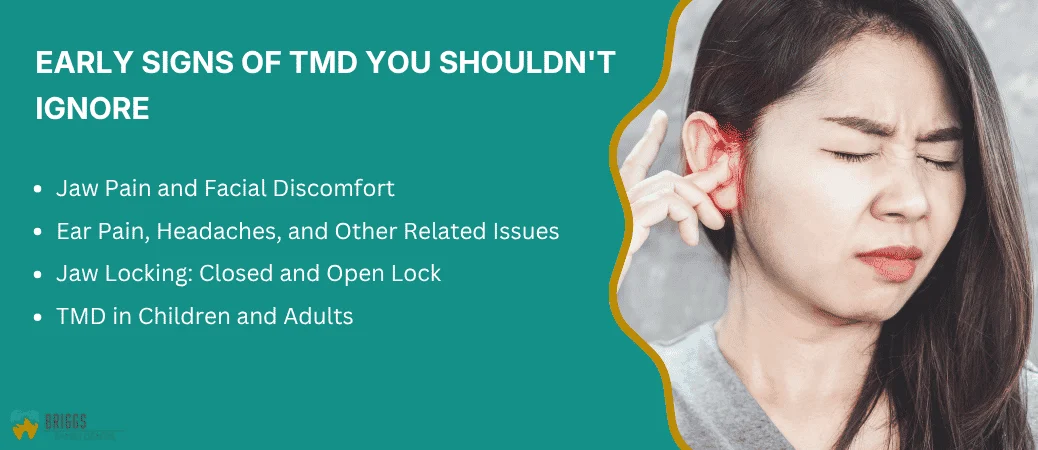
Jaw Pain and Facial Discomfort
TMJ pain often starts as a dull ache around your jaw joint. You might notice it when you wake up or after chewing tough foods.
The pain can spread beyond your jaw. Many people feel soreness in their cheeks, temples, or along the side of their face.
This facial pain might feel worse on one side than the other.
Your jaw muscles may feel tired or tight, especially after eating or talking for long periods. Some people describe it as a constant ache that doesn’t go away.
The discomfort can range from mild to severe depending on how much stress you’re putting on your jaw joint.
Ear Pain, Headaches, and Other Related Issues
Ear pain is a common symptom that surprises many people with TMD. The pain feels like an earache, but your doctor won’t find an ear infection.
This happens because your jaw joint sits very close to your ear canal.
Headaches around your temples occur frequently with temporomandibular disorders. These tension-type headaches often start in the morning and get worse throughout the day.
You might also notice clicking, popping, or grinding noises when you move your jaw.
Other symptoms include:
- Ringing in your ears
- Dizziness or balance problems
- Neck and shoulder pain
- Difficulty chewing certain foods
Jaw Locking: Closed and Open Lock
Jaw locking is one of the more serious tmd symptoms that requires attention. A closed lock means your jaw gets stuck in a partially closed position.
You can’t open your mouth fully, which makes eating and talking difficult.
An open lock happens when your jaw gets stuck in a wide-open position and you can’t close it. This is considered a dental emergency because it’s painful and prevents normal function.
Both types of locking occur when the disc inside your jaw joint moves out of place. You might experience temporary locking that fixes itself, but repeated episodes mean the problem is getting worse.
If your jaw locks even briefly, you should see a healthcare provider.
TMD in Children and Adults
Adults typically develop TMJ disorder from teeth grinding, stress, or jaw injuries. Women between ages 20 and 40 experience it more often than men. Adult symptoms tend to develop gradually over months or years.
Children can also get temporomandibular disorders, though it’s less common. Kids might complain of jaw soreness, have trouble chewing, or avoid hard foods.
Young patients often develop TMD from grinding their teeth at night or from jaw injuries during sports.
The good news is that TMD symptoms in both age groups respond well to early treatment. Most people find relief through conservative approaches like physical therapy, mouth guards, and lifestyle changes.
Surgery is rarely needed if you address the problem early.
Diagnosing TMJ Problems: When and How to Seek Help
Getting a proper diagnosis involves a physical exam and possibly imaging tests, and knowing when to see a specialist can prevent your symptoms from getting worse.
Physical Examination and Imaging
Your doctor or dentist will start by listening to and feeling your jaw when you open and close your mouth. They’ll watch how far your jaw can move and press around the joint to find painful spots.
If your healthcare provider suspects a problem, you may need additional tests. Dental X-rays can show issues with your teeth and jaw bones.
A CT scan provides detailed images of the bones in your joint. An MRI can reveal problems with the disc inside your joint or the soft tissue around it.
In some cases, doctors use TMJ arthroscopy to diagnose the problem. This involves inserting a small camera into the joint space to see what’s happening inside.
The same procedure can sometimes treat the condition by removing scar tissue or inflammatory material.
When to See a TMJ Specialist or Oral Surgeon
You should see a specialist if your symptoms don’t improve with basic home care after a few weeks. A TMD specialist or oral surgeon can offer more advanced treatment options than your regular dentist.
Surgery is usually a last resort after other conservative treatments have failed. An oral surgeon might recommend procedures like arthrocentesis, which removes debris from the joint, or corticosteroid injections.
More serious cases involving disc displacement with reduction may need arthroscopic surgery or open-joint surgery.
If you have constant pain, can’t open your mouth normally, or your jaw locks in place, you need to see a specialist right away. These signs mean your condition could be getting worse.
Differentiating TMJ Disorders from Other Conditions
TMJ problems can look like other health issues, so getting the right diagnosis matters. Your doctor will ask about headaches, neck pain, and toothaches that happen often.
Some dental problems like gum disease can cause jaw pain that feels similar to TMJ. Orthodontic issues with your bite alignment can also create jaw discomfort.
Your healthcare provider needs to rule out ear infections, sinus problems, and nerve pain.
TMJ symptoms include pain behind your eyes and down your neck that gets worse when you move your jaw or chew.
If you don’t feel pain near your jaw joint itself, your doctor will look for other signs like clicking, popping, or limited movement before making a diagnosis.
Treatment Options for Jaw Clicking and TMD
Most jaw clicking improves with simple at-home care and lifestyle changes, though some cases need professional treatment.
Your options range from basic jaw exercises to specialized dental devices or medical procedures for more severe symptoms.
Self-Care and Home Remedies
You can start managing your jaw clicking at home with several proven methods. Jaw exercises help strengthen the muscles around your temporomandibular joint and improve its movement.
Try gently opening and closing your mouth while placing your tongue on the roof of your mouth.
Jaw stretches can reduce tension and increase flexibility. Place your thumb under your chin and push down gently while opening your mouth, holding for a few seconds before releasing.
Apply ice packs to your jaw for 10 minutes when you feel pain or swelling. After a day or two, switch to warm compresses to relax tight muscles.
Eat soft foods like yogurt, soup, and mashed vegetables to give your jaw a break from heavy chewing.
Avoid chewing gum, biting your nails, or clenching your teeth during the day. These habits put extra stress on your jaw joint and can make clicking worse.
Medical and Dental Treatments
Your dentist or doctor may recommend several treatment options based on your symptoms. A custom mouth guard protects your teeth and jaw if you grind or clench during sleep.
These custom-fitted devices cushion your jaw and reduce pressure on the joint.
Occlusal splints work similarly but are designed for specific bite problems. Your dentist will create an occlusal splint that fits over your upper or lower teeth to realign your jaw position.
Anti-inflammatory medication like ibuprofen reduces swelling in the jaw joint and surrounding tissues.
Pain relievers such as acetaminophen help manage discomfort while your jaw heals. Your doctor might prescribe muscle relaxants if your jaw muscles are very tight.
Some dentists recommend corticosteroid injections directly into the jaw joint for stubborn inflammation. These shots provide temporary relief and work best when combined with other treatments.
Manual Therapy and Physical Rehabilitation
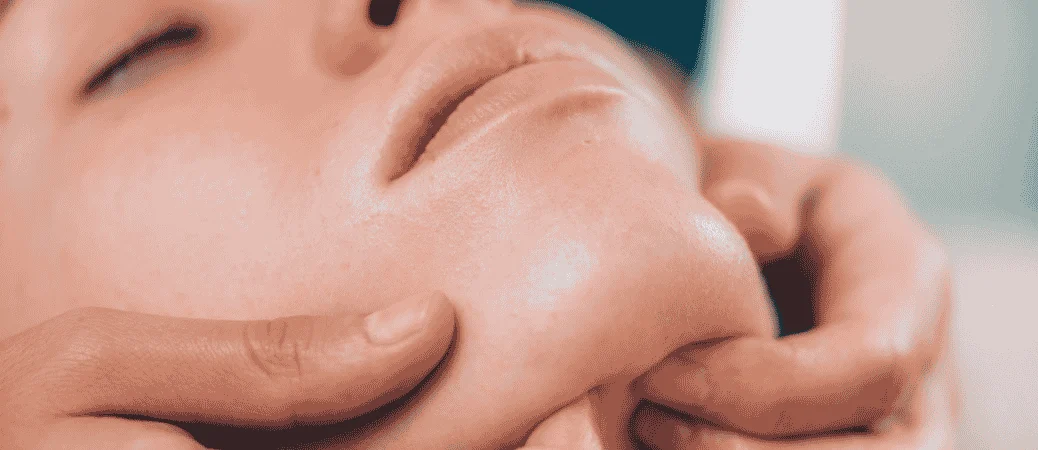
Manual therapy performed by trained physical therapists can improve jaw function through hands-on techniques.
Your therapist will massage the muscles around your jaw, neck, and shoulders to release tension and improve movement.
Transcutaneous electrical nerve stimulation (TENS) uses small electrical pulses to relax jaw muscles and block pain signals. The therapist places electrodes on your skin near the affected area during treatment sessions.
Trigger point injections deliver medication directly into tight muscle knots that contribute to jaw clicking. These injections contain local anesthetics or saline solution to release muscle tension.
Physical therapists also teach you proper posture and body mechanics. Poor neck and shoulder alignment can affect your jaw, so correcting your posture helps reduce symptoms.
Advanced Interventions for Severe Cases
Arthrocentesis is a minimally invasive procedure where your doctor inserts small needles into the jaw joint. They flush out inflammatory chemicals and debris with sterile fluid, which can improve joint movement immediately.
TMJ arthroscopy involves inserting a tiny camera and surgical tools into your joint through small incisions. Your surgeon can remove scar tissue, realign the disc inside your joint, or repair damaged structures.
Open joint surgery is reserved for the most severe cases that don’t respond to other treatments. This option carries more risks and requires longer recovery time, so most healthcare providers try conservative measures first.
Your doctor will help you decide which treatment makes sense based on how severe your clicking is, how much pain you have, and whether your jaw locks or gets stuck.
Frequently Asked Questions
Jaw clicking typically happens when the disc inside your temporomandibular joint shifts out of place, and it affects people differently depending on their chewing habits, jaw alignment, and stress levels.
What causes a clicking sound in my jaw when I chew?
The clicking sound happens when the small disc inside your temporomandibular joint moves out of its normal position. This disc usually sits between your jawbone and skull to help your jaw move smoothly.
When you open your mouth or chew, the disc can slip forward or to the side. As your jaw moves, it pops back into place, which creates that clicking sound you hear.
Several factors contribute to this problem, including teeth clenching, gum chewing, nail biting, and stress. An injury to your jaw or changes in how your teeth fit together can also cause the disc to move incorrectly.
Why does my jaw click on only one side when I’m eating?
Your jaw might click on one side because that’s where the disc has shifted out of place. This is especially common among adults 20-50 years old.
How you chew can make this worse. If you favor one side when eating, you put more pressure on that joint, which can cause or worsen clicking.
Your jaw alignment matters too. If one side of your jaw is slightly misaligned, the disc on that side is more likely to slip out of position when you chew.
Is it normal for my jaw to pop without any pain?
Yes, some jaw popping without pain is fairly common and doesn’t always mean you have a serious problem. Many people experience occasional clicking that goes away on its own.
However, painless clicking can still be an early warning sign that something is wrong with your joint. The disc inside your TMJ may be shifting, even if it hasn’t caused pain yet.
Pay attention to whether the clicking gets more frequent or if other symptoms develop. If left untreated, painless clicking can eventually turn into a painful condition.
What can I do at home to reduce or stop jaw clicking on one side?
You can start by avoiding habits that put extra stress on your jaw. Stop chewing gum, biting your nails, and eating very hard or chewy foods.
Try to chew evenly on both sides of your mouth instead of favoring one side. This helps distribute pressure more evenly across both joints.
Apply a warm compress to your jaw for 10-15 minutes several times a day to relax the muscles. You can also gently massage the area around your jaw joint.
Practice stress-reduction techniques like deep breathing or meditation. Stress often causes people to clench their teeth, which makes clicking worse.
Why does my jaw click when I move it side to side or open wide?
Your jaw clicks during these movements because the disc inside your joint moves even further out of position.
When you open your mouth wide or move your jaw side to side, you’re putting the joint through its full range of motion.
These larger movements make it easier for the disc to slip. As your jaw reaches certain positions, the disc pops back into place, creating the clicking sound.
If you notice clicking during these specific movements, your joint may already be experiencing some disc displacement. The clicking tells you that your jaw isn’t moving as smoothly as it should.
How can I tell if my jaw clicking is getting worse or turning into a TMJ problem?
Watch for additional symptoms that develop alongside the clicking. These include jaw pain, headaches, earaches, or neck pain that wasn’t there before.
Pay attention if your jaw starts to lock or gets stuck in certain positions. This is a sign that the disc displacement is getting worse.
Notice if the clicking becomes more frequent or happens during more activities than it used to. If you need to open your mouth wider or move your jaw a certain way to avoid clicking, your condition may be progressing.
Swelling around your jaw joint, difficulty chewing, or changes in how your teeth fit together are all warning signs. If you experience any of these symptoms along with clicking, it’s time to choose a family dentist for you.