



Picking a family dentist affects your whole family’s health and comfort for years to come.
The right family dentist should offer comprehensive services for all ages, maintain a welcoming environment, accept your insurance, and communicate clearly with both adults and children. This decision goes beyond just finding someone to clean teeth twice a year.
Choosing a family dentist involves looking at several important factors. You need to think about location, office hours, the services they offer, and whether your kids will feel comfortable there. The good news is that with some research and a few visits, you can find a dentist who meets all your family’s needs.
This guide walks you through everything you need to know. You’ll learn what questions to ask, what red flags to watch for, and how to make sure the dentist you choose is the best fit for your family.
Key Takeaways
- Check the dentist’s qualifications, experience with different age groups, and range of services before making your choice
- Visit the office to evaluate the environment, technology, location convenience, and how staff interact with patients
- Confirm insurance acceptance, payment options, and emergency care policies to avoid surprises later
Why the Right Family Dentist Matters
Selecting the right family dentist affects more than just your next cleaning appointment. It shapes your family’s long-term oral health, creates a foundation of trust that reduces anxiety, and ensures everyone gets the care they need at every stage of life.
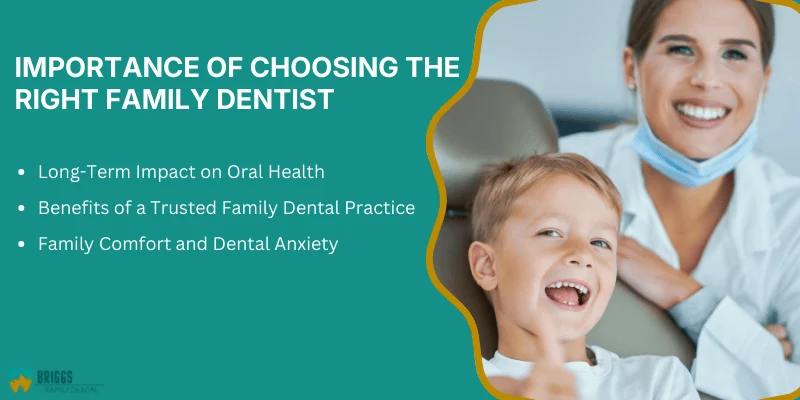
Long-Term Impact on Oral Health
Your choice of a family dentist creates the foundation for your family’s dental health for years to come. When you find a trusted family dentist, they become familiar with your family’s unique dental history, genetic tendencies, and specific needs.
This continuity of care means your dentist can spot potential problems early. They’ll notice subtle changes in your children’s tooth development or shifts in your gum health that a new dentist might miss.
A family dental practice that knows your history can provide better preventive care. They track patterns over time and create personalized treatment plans based on what works for your family. This approach helps maintain healthy smiles and prevents costly procedures down the road.
Regular visits to the same dentist also mean consistent care standards. Your family builds healthy dental habits when they see the same team who reinforces proper brushing techniques and dietary advice at every visit.
Benefits of a Trusted Family Dental Practice
A family dental practice offers convenience that individual dentists cannot match. You can schedule appointments for multiple family members on the same day, saving time and reducing the hassle of coordinating different schedules.
These practices typically provide comprehensive dental care under one roof. This means your toddler’s first checkup, your teenager’s braces consultation, and your own cosmetic work all happen at the same location.
Key benefits include:
- One dental record system for your entire family
- Simplified insurance processing and billing
- Familiarity with your family’s dental history
- Age-appropriate care from pediatric to geriatric needs
The patient experience improves when staff members know your name and remember your preferences. This personal connection makes appointments feel less clinical and more comfortable for everyone.
Family Comfort and Dental Anxiety
Dental anxiety affects both children and adults, but the right dentist makes a significant difference. A family dentist who understands how to work with anxious patients creates a welcoming environment that puts everyone at ease.
Children especially benefit from dentists trained in pediatric care techniques. These professionals know how to explain procedures in simple terms and use positive reinforcement to build confidence.
When your kids see you comfortable with the dentist, they learn that dental visits are normal and nothing to fear. This modeling behavior helps break the cycle of dental anxiety that often passes through generations.
A trusted family dental practice takes time to address concerns and answer questions without rushing. They offer sedation options for severe anxiety and create calming office environments with amenities that help patients relax.
Looking for a trusted family dentist in New Market? Schedule a visit with Briggs Family Dental to find care that fits every stage of your family’s needs.
Assessing Qualifications and Experience
A dentist’s credentials and background tell you a lot about the quality of care your family will receive. Looking at education, certifications, practice experience, and patient feedback helps you make a confident choice.
Education and Professional Certifications
Start by checking where your potential dentist went to dental school. All dentists must complete a Doctor of Dental Surgery (DDS) or Doctor of Dental Medicine (DMD) degree from an accredited program.
Beyond basic dental education, seek additional certifications that demonstrate ongoing learning. Many dentists pursue advanced training in specific areas of dentistry. Board certifications demonstrate a dentist’s commitment to maintaining high standards in their field.
Membership in professional organizations like the American Dental Association indicates a dentist stays current with the latest techniques and research. You can usually find this information on the dentist’s website or by calling their office directly.
Years of Practice and Expertise
When evaluating credentials and experience, the number of years a dentist has been practicing matters. A dentist with extensive experience has likely handled a wide range of dental issues and developed refined skills over time.
However, years of practice aren’t everything. A newer dentist may bring fresh knowledge of modern techniques and technology. The key is finding someone with enough dental experience to handle your family’s specific needs confidently.
Ask about the dentist’s experience treating patients of different ages. A true family dentist should be comfortable working with young children, teenagers, adults, and seniors. Each age group has unique dental needs that require different approaches.
Specializations: Pediatric, Orthodontics, and More
Some dentists focus on specific areas that might benefit your family. A pediatric dentist receives extra training to treat children from infancy through their teenage years. They understand how to make kids feel comfortable and address developmental dental issues.
Orthodontics is another common specialization that corrects bite problems and straightens teeth. While some family dentists offer basic orthodontic services, complex cases may require a specialist.
Other specializations include:
- Endodontics (root canals)
- Periodontics (gum disease treatment)
- Prosthodontics (dental prosthetics and implants)
- Oral surgery
Consider what services your family might need now or in the future. Finding the right dentist for your family means matching their expertise to your requirements.
Reviewing Patient Experiences
Reading what other patients say gives you insight into the patient experience at a dental practice. Check online reviews on Google, Yelp, and health care rating sites to see common themes.
Look for comments about how the dentist communicates with patients and handles anxious children. Positive feedback about staff friendliness and wait times matters too. A few negative reviews among many positive ones is normal, but watch for repeated complaints about the same issues.
Ask friends, family, and coworkers for their personal recommendations. People you trust can share honest opinions about their dentist’s skill and chairside manner. Your primary care doctor might also have suggestions based on other patients’ feedback.
Choosing a family dentist is easier with expert guidance. Book an appointment that works for your family’s schedule.
Evaluating Range of Dental Services
A family dentist who offers comprehensive dental care means fewer appointments at different offices and better coordination of your family’s oral health. Look for practices that handle everything from routine teeth cleaning to urgent situations so everyone gets the treatment they need in one place.
General and Preventive Treatments
Preventive treatments form the foundation of good oral health for your entire family. Your dentist should offer regular dental check-ups every six months to catch problems early. These visits typically include professional teeth cleaning to remove plaque and tartar that brushing at home can’t eliminate.
Beyond basic cleanings, look for practices that provide fluoride treatments and dental sealants. These services protect teeth from decay, especially for children. X-rays help detect cavities and other issues beneath the surface.
Your family dentist should also screen for gum disease and oral cancer during routine visits. Early detection makes treatment easier and more effective. Some practices offer nutritional counseling to help you make better choices for your teeth.
Orthodontics and Cosmetic Dentistry Options
Many family practices now offer orthodontics alongside traditional dental services. Clear aligners like Invisalign provide a discreet option for straightening teeth without metal braces. Traditional braces remain effective for complex alignment issues.
Cosmetic dentistry can boost confidence through treatments like teeth whitening and veneers. Whitening removes stains from coffee, tea, and aging. Veneers cover chips, gaps, and discoloration with thin porcelain shells.
Look for dentists who offer bonding to repair minor damage and contouring to reshape uneven teeth. These procedures often require just one visit. Dental implants replace missing teeth with permanent, natural-looking results that function like real teeth.
Emergency Dental Care
Dental emergencies happen without warning and need immediate attention. Your family dentist should offer same-day appointments for urgent situations like knocked-out teeth, severe toothaches, or broken crowns. Quick treatment can save a tooth and prevent complications.
Ask about after-hours availability or an emergency contact number. Some practices have extended hours or weekend slots for urgent cases. Others partner with emergency dental clinics to ensure you’re never left without care.
Common emergencies include abscesses, lost fillings, and injuries from sports or accidents. A dentist who handles these situations knows your family’s dental history and can provide better care than an unfamiliar emergency room.
Pediatric Dentistry Services
Pediatric dentistry requires special training and patience to work with children. Your family dentist should create a comfortable environment that reduces anxiety for young patients. Child-friendly waiting areas and gentle communication help kids feel safe.
Look for practices that see children starting from their first birthday. Early visits establish good habits and catch developmental issues. Dentists trained in pediatric care know how to explain procedures in age-appropriate ways.
Services for kids should include cavity prevention, growth monitoring, and education about proper brushing techniques. Some dentists offer sedation options for anxious children or complex procedures. A practice that treats all ages means your kids won’t need to switch dentists as they grow up.
Office Technology, Environment, and Patient Experience
The dental office you choose should make everyone in your family feel comfortable while using up-to-date tools that improve care. Modern equipment, a welcoming space, and caring staff all play important roles in creating positive visits.
Dental Technology and Modern Equipment
Advanced dental technology makes visits faster, safer, and more accurate. Digital x-rays use up to 90% less radiation than traditional film x-rays and provide instant images your dentist can review with you right away. An intraoral camera lets you see exactly what your dentist sees on a screen, making it easier to understand any issues with your teeth.
Look for offices that use laser tools for gentler gum treatments and digital scanners instead of messy impression molds. These modern tools show that a family dental practice invests in quality care. Clean, well-maintained equipment and paperless check-in systems also signal a practice that values your time and safety.
Child-Friendly and Comfortable Atmosphere
A welcoming environment helps everyone relax during dental visits. When you visit a potential dental office, notice if the waiting room has toys, books, or activities for kids. Bright colors and friendly decorations can help young patients feel less nervous.
The staff should greet you warmly and interact kindly with children. TVs in treatment rooms or headphones with music give patients something to focus on during procedures. Clean spaces with comfortable seating make waiting easier for parents and kids alike.
Communication and Approach to Dental Anxiety
Managing dental anxiety starts with clear, honest communication. Your dentist should explain procedures before starting and answer all your questions without rushing. Good communication means discussing treatment options with their benefits and costs so you can make informed choices.
Staff members who notice signs of nervousness and offer reassurance make a big difference in patient experience. For anxious children, dentists might use tell-show-do techniques where they explain, demonstrate, then perform each step. Some offices offer sedation options for severe anxiety.
A practice that takes your concerns seriously creates trust and encourages regular visits.
New to our practice? Complete your new patient forms online before your visit to save time and ensure a smooth start to your family’s dental care.
Accessibility, Location, and Office Policies
Finding a dentist nearby with hours that fit your schedule makes regular care easier for your whole family. You also need to know how the practice handles last-minute appointments and dental emergencies.
Practice Location and Office Hours
A dentist close to your home saves you time and makes it simpler to get care when someone needs it quickly. Look for a practice within 10 to 15 minutes of where you live or work. This becomes even more important if you have young children who need regular checkups.
Check what office hours the practice offers. Many families need evening or weekend appointments because of school and work schedules. Some dental offices open as early as 7 AM or stay open until 7 PM on certain days. Saturday hours can be helpful if weekday appointments don’t work for your family.
Pay attention to parking availability too. You don’t want to waste time searching for a spot when you’re running late for an appointment.
Flexibility for Busy Families

Your family dentist should understand that schedules change. Ask if they can see multiple family members during the same visit. This saves you from making several trips to the office throughout the week.
Find out how far in advance you need to book appointments. Some popular practices fill up weeks ahead, while others have more flexibility. You should also ask about their cancellation policy and how much notice they require if you need to reschedule.
Look for practices that offer online scheduling or appointment reminders through text or email. These features make it easier to manage your family’s dental care.
Scheduling and Emergency Policies
Dental emergencies like a knocked-out tooth or severe toothache can happen at any time. Ask what the practice does when emergencies occur outside regular office hours. Some family dentists provide an emergency phone line or partner with urgent care facilities.
You need to know if the dentist reserves time slots for same-day emergency appointments. Find out how quickly they can see you if your child chips a tooth or you develop sudden pain.
Ask whether they charge extra fees for emergency visits. Understanding these policies ahead of time helps you avoid surprises when you need urgent care.
Insurance, Payment, and Financial Considerations
Understanding your financial options helps you make smart decisions when choosing a dentist for your family. Checking insurance coverage, payment plans, and long-term costs ensures you can afford quality dental care without unexpected bills.

Understanding Dental Insurance Coverage
Before selecting a dentist, check if they accept your dental insurance plan. Call the office directly to confirm they are in-network providers. In-network dentists have agreements with your insurance company that usually mean lower out-of-pocket costs for you.
Ask the office staff if they will file insurance claims on your behalf. This saves you time and hassle. Some practices verify your benefits before your appointment so you know what to expect.
Find out what services your plan covers. Most dental insurance pays for preventive care like cleanings and exams at 100%. Basic procedures like fillings typically get 70-80% coverage. Major work such as crowns or root canals may only be covered at 50%.
Understanding your coverage limits matters too. Many plans have annual maximums between $1,000 and $2,000. When choosing a dentist, pick one who explains these details clearly.
Transparent Fee Structures and Payment Options
The best family dentist provides clear pricing before you agree to any treatment. They should give you a written estimate that breaks down costs for each procedure. This transparency helps you plan your budget and avoid surprise bills.
Ask about payment methods during your first visit. Most offices accept credit cards, debit cards, and cash. Some offer financing through third-party companies that let you pay for larger treatments over time.
Payment plans can make expensive procedures more manageable. Look for practices that offer:
- Interest-free payment options for treatments over $500
- Flexible monthly installments
- Discounts for paying in full upfront
- In-house membership plans if you don’t have insurance
Maximizing Long-Term Value
When choosing a dentist, think beyond just the lowest price. A practice focused on preventive care can save you money over time by catching problems early. Regular cleanings and checkups cost less than emergency treatments for advanced decay or gum disease.
Consider the range of services offered. A dental practice that handles everything from kids’ checkups to adult crowns means fewer referrals to specialists. This saves you time and money on multiple appointments at different offices.
Ask about preventive programs for your family. Some practices offer sealants for children or fluoride treatments at reduced rates. These small investments protect teeth and reduce the need for costly repairs later.
Visit the Briggs Family Dental to learn more about our family-focused approach, preventive services, and long-term dental care designed for children, adults, and seniors alike.
Frequently Asked Questions
Picking the right family dentist involves looking at practical details like location and insurance, understanding how they work with children, and making sure their experience matches what your family needs.
What should I consider when selecting a family dentist?
Location matters more than you might think. A dental office close to school or work makes it easier to keep appointments without disrupting your day.
Check if they accept your dental insurance plan. Knowing what you’ll pay upfront removes stress and helps you budget for cleanings, fillings, and other treatments.
Look at their office hours too. Extended hours or weekend appointments mean you won’t have to miss work or pull kids out of school for routine visits.
Can you recommend some tips for finding a dentist who’s great with kids?
Visit the office before you book an appointment. A kid-friendly waiting room with toys, books, or games shows the practice thinks about young patients.
Watch how the staff talks to children. The best dentists explain procedures in simple terms and never rush or talk down to kids.
Ask if they offer rewards or stickers after visits. Small touches like these help children feel positive about dental care and reduce fear over time.
What questions should I ask a new dentist to ensure they’re a good fit for my family?
Start by asking what services they provide. You want a dentist who offers general dentistry plus extras like cosmetic work or emergency care under one roof.
Find out how they handle dental emergencies. You need to know if they can see you quickly for a cracked tooth or sudden pain, especially outside normal hours.
Ask about their approach to dental anxiety. A good dentist will explain sedation options or other ways to help nervous patients feel calm.
Is it important for a family dentist to have experience with pediatric dentistry?
Yes, experience with kids makes a big difference. Children have different dental needs than adults, from dealing with baby teeth to spotting early alignment issues.
A dentist trained in pediatric care knows how to make exams gentle and fast. They understand that keeping a child still requires patience and the right technique.
They also know how to teach good brushing and flossing habits in ways kids actually remember. This early education sets up a lifetime of healthy smiles.
How can I evaluate the quality of care provided by a family dental practice?
Check online reviews from other families. Look for comments about how the dentist explains treatments, handles emergencies, and treats both adults and children.
Ask about the technology they use. Digital X-rays and modern equipment often mean faster, more comfortable visits with better results.
Schedule a consultation before committing to treatment. This gives you a chance to see if the dentist listens to your concerns and answers questions clearly.
What are the advantages of having a single family dentist for all family members?
One dentist means one place to track everyone’s dental history. They’ll remember your last filling, your child’s first tooth, and any family patterns like weak enamel or gum sensitivity.
It simplifies scheduling when you can book multiple family members in one trip. You save time and gas while keeping everyone on track with regular checkups.
Kids also learn by example when they see parents getting cleanings. Going to the same family dental office helps build trust and makes dental care feel normal instead of scary.