




Many people want a brighter smile but worry about discomfort from whitening treatments. If you have sensitive teeth, choosing the right teeth whitening for sensitive teeth can help you whiten safely without increasing sensitivity.
The good news is that understanding how whitening affects your teeth can help you make smart choices.
Teeth whitening can temporarily increase tooth sensitivity because the whitening agents penetrate your enamel and can reach the sensitive layer underneath, but this discomfort usually goes away within a few hours to a few days after treatment.
The level of sensitivity you experience depends on several factors, including the strength of the whitening product, how long you use it, and the current health of your enamel.
You don’t have to give up on a whiter smile just because you have sensitive teeth. There are specific products designed for sensitive teeth and simple steps you can take to reduce discomfort during and after whitening.
Learning about your options and how to protect your teeth will help you achieve the results you want without unnecessary pain.
Key Takeaways
- Teeth whitening can cause temporary sensitivity that typically subsides within a few days after treatment
- Using products made for sensitive teeth and desensitizing toothpaste before and after whitening helps reduce discomfort
- Consulting with your dentist and limiting how often you whiten your teeth prevents enamel damage and manages sensitivity
How Teeth Whitening Affects Sensitive Teeth
Whitening products work by penetrating your tooth’s outer layers, which can expose the inner parts of your teeth and cause discomfort. The bleaching agents in these treatments interact with your tooth structure in ways that can temporarily increase sensitivity.
The Science Behind Tooth Sensitivity
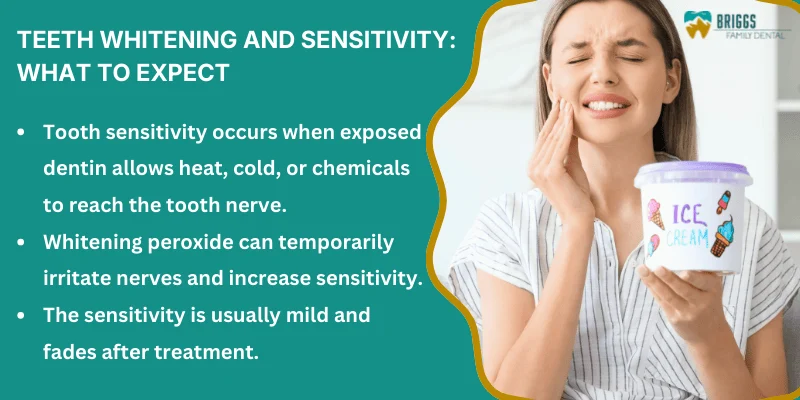
Your teeth become sensitive when certain parts get exposed that normally stay protected. Tooth sensitivity happens when the inner layer of your tooth, called dentin, becomes exposed to outside triggers like hot or cold temperatures.
Dentin contains thousands of tiny tubes that connect to the nerve center of your tooth. When these tubes are exposed, substances and temperatures can reach the nerves inside.
This creates that sharp, temporary pain you feel when eating ice cream or drinking hot coffee. Your teeth naturally protect these sensitive areas, but certain conditions can compromise this protection.
Enamel, Dentin, and Whitening Products
Your teeth have three main layers that work together. The outer layer is enamel, which is the hardest substance in your body and protects everything underneath. Below that sits dentin, a softer layer with microscopic channels. The innermost part is the pulp, which contains nerves and blood vessels.
Problems start when your enamel becomes thin or wears down. Thin enamel or gum recession can expose the dentin layer, leaving those tiny tubes vulnerable.
When you have existing sensitivity issues, whitening treatments can make things worse because they affect these already compromised areas.
Why Whitening Triggers Sensitivity
The main culprits in whitening products are hydrogen peroxide and carbamide peroxide. These bleaching agents penetrate through your enamel and into the dentin layer to break up stains.
Higher concentrations of these chemicals cause more sensitivity. Research shows that professional treatments using 35% hydrogen peroxide caused tooth sensitivity in all patients studied, even those without previous sensitivity issues.
When peroxide reaches the dentin, it irritates the nerve center of your tooth. This is why you might feel pain during treatment or when consuming hot or cold beverages afterward. The good news is that this whitening sensitivity is usually temporary and goes away after you stop treatment.
Concerned about sensitivity? Learn how professional teeth whitening for sensitive teeth can brighten your smile safely and comfortably.
Whitening Agents and Their Effects on Sensitivity
The chemicals in whitening products directly affect how your teeth react during and after treatment. Different agents work at varying strengths, and understanding their impact helps you choose products that minimize discomfort.
Hydrogen Peroxide and Carbamide Peroxide
These two whitening agents are the main ingredients in most teeth whitening products. Hydrogen peroxide works quickly and is often used in professional treatments at concentrations between 15% and 40%.
Carbamide peroxide breaks down into hydrogen peroxide when applied to your teeth, but it works more slowly at about one-third the strength.
In a clinical trial of in‑office bleaching, 37% carbamide peroxide produced slightly less color change than 35% hydrogen peroxide but resulted in significantly lower tooth sensitivity, suggesting that different peroxide agents influence both whitening and comfort.
Both chemicals penetrate your tooth enamel to reach the dentin layer underneath. This is where sensitivity occurs after whitening treatments because the dentin contains tiny tubules connected to your tooth nerves. When these agents reach the dentin, they can trigger sharp pain or discomfort.
Higher concentrations mean faster results but also increase your risk of sensitivity. Products with lower concentrations take longer to work but are gentler on your teeth.
Role of Desensitizing Ingredients
Many whitening products now include ingredients that help protect your teeth during treatment. Potassium nitrate is one of the most common desensitizing agents found in whitening gels and toothpastes. It works by blocking pain signals from traveling through the nerve pathways in your teeth.
Fluoride strengthens your enamel and helps reduce sensitivity by creating a protective barrier. Stannous fluoride is particularly effective because it not only strengthens teeth but also blocks the tubules in your dentin that cause pain.
Using products with these ingredients before and after whitening can make a significant difference. You can apply desensitizing gel for several days before your treatment to prepare your teeth. Some professional treatments apply these agents right before the whitening gel to minimize discomfort during the procedure.
Impact of Bleaching Agents
The strength and duration of exposure to bleaching agents determine how sensitive your teeth become. Leaving whitening products on longer than recommended increases enamel penetration and raises your sensitivity risk.
Your natural enamel thickness also plays a role. If you have thin enamel or existing sensitivity issues, bleaching agents will affect you more intensely. The frequency of treatments matters too—multiple sessions close together give your teeth less time to recover between applications.
Most sensitivity from bleaching agents is temporary and fades within a few hours to several days. However, overuse can lead to longer-lasting discomfort and potential enamel damage.
Teeth Whitening Options for Sensitive Smiles
People with sensitive teeth can choose from several whitening methods that balance effectiveness with comfort. Professional treatments offer the strongest results with built-in safeguards, while at-home options provide more control over the pace of whitening.
Professional Whitening for Sensitive Teeth
Professional teeth whitening at your dentist’s office gives you the fastest and most dramatic results. Your dentist can lighten your teeth by several shades in just one visit.
The main advantage of professional whitening is the personalized care you receive. Your dentist applies desensitizing agents before, during, and after treatment to keep you comfortable. They also coat your gums with a protective barrier that prevents the whitening gel from touching sensitive tissue.
Key benefits of in-office whitening:
- Custom strength levels based on your sensitivity
- Shorter treatment sessions to reduce discomfort
- Modern LED or laser technology that activates gel gently
- Professional monitoring throughout the process
Your dentist can also provide custom take-home trays that fit your teeth perfectly. These trays come with professional-grade gel and let you control the timing of treatments. You can start slowly and build up your tolerance while avoiding the gum irritation that comes with poorly fitting products.
At-Home Whitening Kits and Toothpaste
At-home whitening kits include strips, trays, and LED devices you can use yourself. Whitening strips are convenient and affordable, but their one-size-fits-all design can cause problems for sensitive teeth. The gel may touch your gums unevenly or not distribute properly across your teeth.
If you want to try strips, look for products specifically labeled “for sensitive teeth.” These contain lower concentrations of peroxide and gentler formulas.
Whitening toothpaste offers the most gradual approach. These products remove surface stains slowly over weeks or months without causing much sensitivity. Many contain potassium nitrate or other desensitizing ingredients that actually help reduce tooth sensitivity over time. You’ll need patience with whitening toothpaste, but it’s the safest option for very sensitive teeth.
Peroxide-Free and Natural Whitening Methods
Peroxide-free whitening products may produce less sensitivity, though they typically work more slowly than traditional methods. These products use alternative ingredients like baking soda or activated charcoal to polish away surface stains.
Whitening pens provide another gentle option. You paint the gel directly onto your teeth and avoid contact with your gums entirely. The targeted application means less product touching sensitive areas.
Natural whitening methods include oil pulling with coconut oil or brushing with baking soda mixed into your regular toothpaste. These approaches work very gradually and won’t give you dramatic results, but they’re extremely gentle on sensitive teeth.
You can also maintain whiteness by limiting staining foods and drinks like coffee, tea, and red wine between treatments.
Ready to whiten without discomfort? Contact our team to discuss safe options for teeth whitening for sensitive teeth and get personalized recommendations for your smile.
How to Minimize and Manage Whitening Sensitivity
Taking the right steps before, during, and after whitening can reduce discomfort and protect your teeth. Using desensitizing products and adjusting your whitening routine helps manage sensitivity while still achieving a brighter smile.
Preparing Teeth Before Whitening
Start using desensitizing toothpaste at least two weeks before your whitening treatment. These toothpastes contain ingredients like potassium nitrate that help block pain signals from reaching the nerves in your teeth.
Ask your dentist about professional desensitizing treatments that can be applied in the office. These treatments create a protective barrier on your teeth before you start whitening. Some dentists also recommend fluoride rinses to strengthen your enamel.
Switch to a soft-bristled toothbrush if you’re not already using one. Hard bristles can wear down enamel and make sensitivity worse during whitening. Brush gently in circular motions rather than scrubbing back and forth.
Get a dental checkup before whitening to make sure you don’t have cavities or gum problems. These issues can make whitening sensitivity much more painful and need to be treated first.
Managing Discomfort During and After Whitening
Take over-the-counter pain relievers like ibuprofen about 30 minutes before applying whitening products. This helps prevent symptoms before they start.
If you develop whitening sensitivity during treatment, reduce how often you whiten. Try every other day instead of daily applications. You can also shorten how long you leave the product on your teeth.
Avoid very hot or cold foods and drinks while whitening your teeth. Stick to room temperature items to reduce pain. Skip ice cream, hot coffee, and cold water during your treatment period.
Apply desensitizing gel to your teeth after each whitening session. Many whitening kits include these gels, or you can buy them separately. Leave the gel on for the recommended time to help soothe your teeth.
Best Practices for Sensitive Teeth During Whitening
Choose whitening products with lower peroxide concentrations. Products with 6% to 10% peroxide cause less sensitivity than stronger formulas. You’ll still get good results but with less discomfort.
Never leave whitening products on longer than the instructions say. Following directions carefully prevents unnecessary pain and protects your tooth enamel from damage.
Key practices to follow:
- Use fluoride rinses and sensitivity toothpaste throughout treatment
- Brush with gentle pressure using your soft-bristled toothbrush
- Take breaks between whitening sessions if sensitivity develops
- Contact your dentist if pain lasts more than 48 hours
Don’t use multiple whitening products at the same time. Combining treatments increases your risk of sensitivity and can damage your teeth. Stick to one method and complete it before trying something different.
Maintaining a Bright Smile With Sensitive Teeth
Keeping your teeth white after treatment requires careful attention to your daily habits and the foods you consume. You can protect your results and reduce discomfort by following proper aftercare steps, limiting exposure to staining substances, and building habits that support both brightness and comfort.

Aftercare Tips for Reduced Sensitivity
Using a toothpaste designed for sensitive teeth can help you manage discomfort after whitening treatments. These products contain ingredients that block pain signals from reaching the nerves in your teeth.
You should brush gently with a soft-bristled toothbrush to avoid irritating your enamel. Applying too much pressure can make sensitivity worse and damage the protective layer of your teeth.
Wait at least 30 minutes after whitening before eating or drinking anything. Your enamel is more porous right after treatment, which means it absorbs substances more easily during this time.
Consider using a remineralizing toothpaste that contains hydroxyapatite or fluoride. These ingredients help strengthen your enamel and fill in tiny tubules that can cause sensitivity.
If you experience sharp pain, take a break from whitening for a few days. Your teeth need time to recover between effective teeth whitening treatments.
Avoiding Staining Foods and Enamel Erosion
Certain foods and drinks can quickly undo your whitening results and increase tooth sensitivity. Coffee, tea, red wine, and dark berries contain pigments that stick to your enamel and cause discoloration.
When you do consume these items, drink them through a straw to minimize contact with your front teeth. Rinse your mouth with water immediately afterward to wash away staining compounds.
Foods and drinks to limit:
- Coffee and black tea
- Red wine and dark sodas
- Tomato sauce and soy sauce
- Berries like blueberries and blackberries
- Curry and turmeric-based dishes
Acidic foods pose a double threat because they erode enamel while also making stains stick more easily. Citrus fruits, vinegar, and carbonated drinks weaken the protective layer of your teeth.
You should wait at least an hour after consuming acidic items before brushing. Brushing too soon can damage softened enamel and increase sensitivity throughout your mouth.
Long-Term Strategies for Comfort and Results
Building a consistent oral care routine helps you maintain your bright smile without causing ongoing discomfort. Brush twice daily and floss once to remove surface stains before they set in.
Schedule regular dental cleanings every six months to remove buildup that at-home care might miss. Your dentist can also apply desensitizing treatments during these visits to help protect your teeth.
Consider using enzyme whitening strips for touch-ups instead of peroxide-based products. These gentler options use natural enzymes to remove stains without irritating your nerves.
Space out your whitening treatments by several months rather than doing them frequently. This gives your enamel time to recover and reduces the risk of long-term damage.
Drink plenty of water throughout the day to rinse away food particles and neutralize acids in your mouth. Staying hydrated also helps your body produce saliva, which naturally protects and strengthens your teeth.
New to Briggs Family Dental? Complete your new patient forms online to save time before your first visit, and explore teeth whitening treatments in New Market, VA.
Frequently Asked Questions
Many people wonder about safe whitening options when dealing with sensitivity, along with ways to reduce discomfort and which products work best for delicate teeth.
What are the most effective home remedies for whitening sensitive teeth?
Whitening toothpaste designed for sensitive teeth offers a gentle starting point for brightening your smile. These products typically contain lower concentrations of bleaching agents compared to other whitening treatments.
You can also try oil pulling with coconut oil or brushing with baking soda mixed with water a few times per week. These natural methods work more slowly but cause less irritation to your teeth and gums.
Eating crunchy fruits and vegetables like apples, carrots, and celery can naturally scrub away surface stains. Limiting foods and drinks that stain teeth, such as coffee, tea, and red wine, helps maintain a brighter smile without additional whitening treatments.
Can professional teeth whitening be a safe option for those with tooth sensitivity?
Yes, professional whitening can be safe for sensitive teeth when your dentist adjusts the treatment to match your needs. Your dental professional can conduct a sensitivity test before whitening to determine which strength will work best for you.
Dentists can apply desensitizing treatments or varnishes before the whitening procedure to protect your teeth. They also have access to professional-grade products that can be customized with lower concentrations of bleaching agents if needed.
In-office treatments allow your dentist to monitor your comfort level throughout the process. They can stop or adjust the treatment immediately if you experience discomfort.
How can you manage discomfort following a teeth whitening procedure?
Sensitivity after whitening typically lasts between 24 to 72 hours for most people. You can use desensitizing toothpaste or gel specifically made for sensitive teeth to help reduce discomfort during this time.
Avoiding very hot or cold foods and drinks gives your teeth time to recover. Stay away from acidic foods like citrus fruits and soda, which can increase sensitivity.
Over-the-counter pain relievers can help if you experience significant discomfort. Taking breaks between whitening sessions allows your enamel to remineralize and reduces the chance of prolonged sensitivity.
Are there particular brands that offer teeth whitening suitable for sensitive teeth?
Several brands make whitening products specifically labeled for sensitive teeth. Colgate Optic White offers various formulas designed to minimize sensitivity while still whitening your smile.
Sensodyne produces whitening toothpaste that combines stain removal with sensitivity relief. Crest 3D White also has versions made for people with sensitive teeth that use gentler formulas.
Look for products that advertise “for sensitive teeth” or contain potassium nitrate, which helps block pain signals. Reading reviews from other people with sensitive teeth can help you find products that work well.
What steps should be taken to minimize tooth sensitivity after undergoing a whitening treatment?
Using a lower concentration of whitening product helps reduce your risk of sensitivity. You can also reduce the amount of whitening gel in your tray or increase the time between treatments.
Brush with fluoride toothpaste to help strengthen your enamel and reduce sensitivity. Applying desensitizing gel before and after whitening creates a protective barrier on your teeth.
Avoid whitening your teeth too frequently, as overuse can damage your enamel permanently. Following the product instructions exactly prevents you from leaving bleaching agents on longer than recommended.
Who are the individuals that might be advised against undergoing teeth whitening procedures?
People with severe tooth sensitivity or exposed tooth roots should avoid whitening treatments. If you have cavities, cracked teeth, or worn enamel, whitening can make these problems worse.
Pregnant or nursing women are typically advised to wait until after they finish breastfeeding. Children and teenagers whose teeth are still developing should not use whitening products.
Those with gum disease need to treat the underlying condition before considering whitening. If you have crowns, veneers, or fillings on your front teeth, whitening won’t change their color and can create uneven results.