




You want a whiter smile, but you may wonder if a dentist’s treatment is worth the cost compared to store-bought kits.
When comparing professional teeth whitening vs OTC, professional treatments deliver faster, more powerful, and longer-lasting results, while OTC products help reduce mild stains at a lower cost. Knowing which fits your teeth and budget will save time and avoid surprises.
A dentist can tailor treatment to your tooth type, check for issues that affect whitening, and protect your gums.
Over-the-counter strips, gels, and toothpastes can work for light surface stains, but they often take longer and may cause more sensitivity if used wrong.
Key Takeaways
- Professional treatment delivers quicker and more durable whitening results.
- At-home products are cheaper and can reduce mild surface stains.
- Safety and comfort improve when a dental professional guides your choice.
Key Differences Between Professional and Over-the-Counter Teeth Whitening
Professional treatments use stronger bleaching agents, give faster results, and are tailored to your teeth. Over-the-counter options cost less and let you try whitening at home, but they usually act slower and fit less precisely.
Overview of Teeth Whitening Options
You can choose in-office professional teeth whitening, take-home kits from a dentist, or store-bought OTC products like whitening strips and whitening toothpaste. In-office procedures occur at a dental office and often finish in one visit. Take-home kits from a dentist use custom trays made for your mouth, which helps the whitening gel sit evenly on tooth surfaces.
OTC choices include whitening strips, whitening gels with generic trays, and whitening toothpaste. These are easy to buy and use, but they rarely match the fit or strength of dentist-supplied options. If you have crowns, veneers, or sensitive teeth, a dentist’s evaluation helps avoid uneven color or pain.
How Whitening Works: Agents and Concentrations
Whitening works by breaking stain molecules with peroxide-based bleaching agents. Professionals commonly use hydrogen peroxide at higher concentrations. Dentists also use carbamide peroxide in take-home gels; this breaks down into hydrogen peroxide in your mouth and releases whitening action more slowly.
OTC products use lower concentrations of hydrogen peroxide or carbamide peroxide. Whitening strips contain thin layers of gel with peroxide; generic whitening gels fit loose trays. Whitening toothpaste often uses mild abrasives and low-level chemical agents to remove surface stains but does not change the tooth’s internal color.
Higher peroxide levels in professional care give stronger, quicker whitening but require supervision to protect gums and restorations.
Brighten your smile with professional care. Discover how our expert teeth whitening treatments can give faster, stronger, and longer-lasting results.
Expected Results and Timeframes
In-office professional whitening can lighten teeth by several shades in one 45–90 minute session. You’ll often see immediate change after a single visit. Dentist-provided take-home trays typically show results in 1–2 weeks of nightly wear, with more gradual and controlled whitening.
OTC whitening strips usually need 1–4 weeks of daily use to notice change, and results may be subtler. Whitening toothpaste can improve surface brightness in weeks but won’t produce major shade changes.
Expect professional results to last longer when you avoid staining foods and follow your dentist’s maintenance advice.
Benefits of Professional Teeth Whitening
Professional whitening gives stronger, longer-lasting results and is done with dental supervision. You get a plan made for your teeth, faster visible whitening, and steps to reduce sensitivity.
Customized Treatments for Individual Needs
Your dentist checks your teeth and gum health before any professional whitening treatment. They note existing crowns, fillings, or deep stains that whitening may not change. This prevents uneven color and avoids wasting time on treatments that won’t work for certain restorations.
You can get tailored options: in-office whitening for quick brightening, take-home whitening trays made from molds of your teeth, or a mix of both. Trays use measured professional gel so you control how long you wear them.
Your dentist can add desensitizing agents or recommend lower-strength formulas if you have sensitive teeth.
If you have staining from medications or heavy tobacco use, the dentist will suggest the best approach and set realistic expectations. Clinics like Glendale Heights Family Dental offer personalized plans and follow-up to keep results steady.
In-Office Whitening: Process and Effectiveness
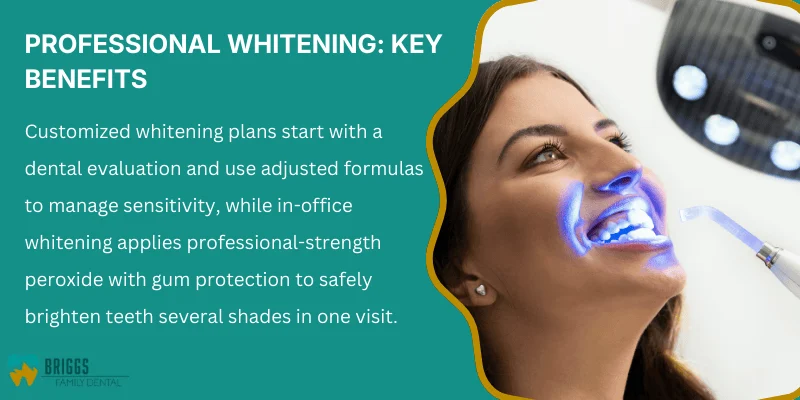
In-office whitening uses stronger peroxide gels than store-bought kits and is applied under dental supervision. The process starts with a gum shield and a high-concentration whitening agent placed on your teeth. Some clinics use LED or laser for a short boost, though the main effect comes from the gel.
You usually see several shades of improvement in one visit. Because the product is professional grade, results last longer when you avoid staining foods and follow care instructions. The dentist monitors for gum irritation and can apply desensitizing agents during or after treatment to reduce discomfort.
For stubborn or deep stains, in-office whitening often works better than OTC products. Your dentist may combine in-office sessions with custom whitening trays for at-home touch-ups to maintain the brightness.
New to Briggs Family Dental? Complete your new patient form online before your first visit to save time and ensure a smooth, convenient experience, ready for your whitening treatment.
Advantages and Limitations of Over-the-Counter Whitening Products
You can get noticeable removal of surface stains without a dentist visit, and many OTC options cost far less than professional whitening. But results, safety, and speed vary a lot depending on the product you pick and how you use it.
Affordability and Accessibility
OTC whitening usually costs a fraction of in-office treatments. Brands sell whitening toothpaste, strips, and kits for under $50, while professional sessions often run hundreds of dollars. That makes OTC teeth whitening a realistic choice if you are on a budget.
You can buy these products at drugstores, supermarkets, or online any time. This wide availability means you can start treatment the same day you decide to whiten. Still, cheaper price often means lower peroxide concentration and slower, less uniform results compared with dentist-led options.
Watch for hidden costs. If you get sensitivity or gum irritation, you may need desensitizing toothpaste or a dental visit. Also, repeated use to chase better results can raise total spending.
Types of OTC Whitening Products
Common OTC whitening products include whitening toothpaste, whitening strips, paint-on gels, and rinses. Toothpaste removes surface stains with abrasives and may contain mild peroxide. Strips usually contain low-concentration peroxide in a thin film that clings to front teeth for better contact.
Rinses and paint-on gels offer simpler use but often give smaller color change because they sit on teeth briefly. Some products use optical agents (like blue dyes) to make teeth look whiter immediately without chemical bleaching.
Each type targets mostly surface stains, not deep intrinsic discoloration. If your teeth are stained from medications, trauma, or internal causes, OTC options may not work well for you.
Convenience and At-Home Use
Using OTC whitening fits into daily routines. Toothpaste replaces your regular paste; strips can be applied while watching TV; rinses add one step to brushing. That ease helps most people stick with the treatment long enough to see some change.
You control timing and frequency. Many products recommend short daily sessions for 1–4 weeks. That gives you flexibility but also means results take longer than a single professional session.
Be careful to follow directions exactly. Overuse or ill-fitting trays can irritate gums and cause sensitivity. If you have existing dental work (crowns, veneers), OTC whitening won’t change their color, and mismatched shades can look uneven.
Safety and Potential Side Effects
Teeth whitening can make your smile brighter, but it can also cause sensitivity, gum irritation, or changes to enamel if not done correctly. Know what risks to watch for and what steps reduce harm.
Gum Irritation and Sensitivity Risks
Whitening gels with hydrogen peroxide or carbamide peroxide can cause temporary gum irritation when they contact soft tissues. If a tray or strips fit poorly, the gel can touch your gums and cause redness, burning, or mild swelling. These reactions usually ease within a few days after stopping treatment.
You may feel sharp or throbbing tooth sensitivity during or after whitening. This happens because peroxide reaches dentin and affects the nerve; sensitivity often peaks in the first 24–48 hours. To reduce discomfort, use lower-concentration products, shorten daily wear time, or switch to every-other-day use.
Desensitizing agents such as potassium nitrate or fluoride gels can help before and after whitening. Many dentists provide or recommend a sensitivity toothpaste or a short in-office fluoride or desensitizing treatment to lower nerve response.
If sensitivity is severe or lasts more than a week, stop treatment and contact your dentist.
Enamel Protection and Damage Prevention
High-peroxide, long-duration treatments can raise the risk of enamel surface changes like increased roughness or minor mineral loss. These changes make teeth feel slightly porous and can affect how restorations bond later. Avoid using unregulated or overly strong OTC products for extended periods.
Protect enamel by following product instructions and using products with proven peroxide limits. Brush gently with a soft brush and use fluoride toothpaste to help remineralize enamel. Professional-strength gels used in-office are applied under control, reducing the chance of misuse that can harm enamel.
If you have existing restorations, remember whitening does not change their color. Uneven results can make crowns or fillings look mismatched. Discuss restoration plans with your dentist before whitening so you can coordinate possible replacement or shade matching after treatment.
Importance of Professional Supervision
A dental exam before whitening checks for cavities, gum disease, or cracked teeth that could worsen with bleaching. Your dentist measures sensitivity, examines restorations, and recommends the safest product and protocol for your teeth. This lowers risk of complications.
Professional whitening gives controlled peroxide placement and monitored exposure time, which reduces gum contact and limits nerve irritation. Dentists can provide in-office desensitizing treatments and custom trays for safer at-home use. They also advise on follow-up care to protect enamel and manage sensitivity.
If you use OTC products, tell your dentist first. They can advise safe concentrations and schedules, and they can treat any side effects that develop.
Effectiveness and Longevity of Whitening Results
Teeth whitening lifts surface stains and can significantly brighten your smile. How long results last depends on the type of stain, the whitening method you choose, and your daily habits.
Dealing with Intrinsic and Deep Stains
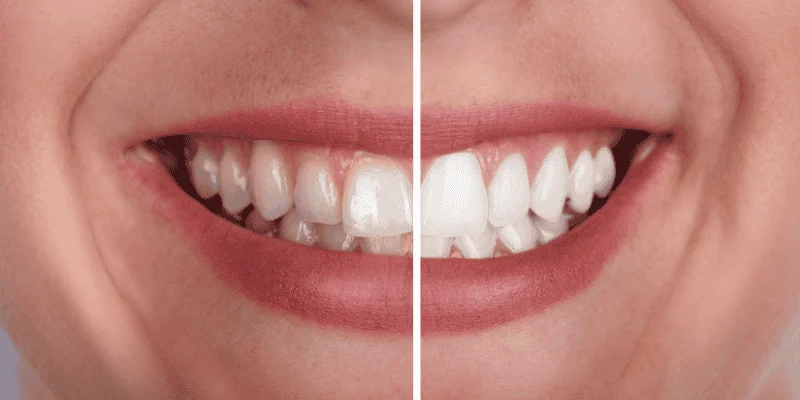
Intrinsic stains sit inside the tooth, below the enamel, and often come from aging, trauma, or certain medications. These deep stains usually do not respond well to whitening toothpastes or strips. You’ll get the best results with professional treatments that use higher peroxide concentrations or specialized procedures a dentist can perform.
If you have deep staining, expect your dentist to assess whether bleaching will help or whether alternatives like veneers or bonding may be better. Professional bleaching can lighten many intrinsic stains, but it may take multiple sessions and careful monitoring to avoid sensitivity or enamel damage.
Over-the-counter (OTC) products mostly target surface stains and will have limited effect on deep discoloration.
Long-Term Maintenance and Whitening Durability
How long whitening lasts often falls into clear ranges: in-office treatments can last about 1–3 years, take-home dentist kits often last 6–24 months, and OTC options typically last a few months. These are averages; your results will vary based on diet and habits.
To extend results, avoid heavy staining foods and drinks like coffee, red wine, and dark berries. Quit tobacco if you use it. Brush twice daily, floss, and use a whitening toothpaste occasionally to slow staining.
Schedule regular cleanings with your dentist to remove new surface stains and consider touch-up treatments when you notice fading.
Making the Right Choice for Your Smile
Decide based on how quickly you want results, how much you can spend, and whether you have dental issues that need care first. Think about sensitivity, the cause of staining, and how long you want the results to last.
Assessing Your Needs and Goals
Start by naming what you want: a quick, dramatic change for an event, or gradual whitening over months? If you want fast, noticeable brightening, professional whitening in-office often lightens teeth more and faster than over-the-counter products.
If cost matters or you prefer at-home convenience, take-home trays from a dentist or OTC strips may fit better.
Check your teeth for fillings, crowns, or deep stains. Whitening gels don’t change the color of restorations, so whitening could make natural teeth look different from crowns. If you have thin enamel or frequent sensitivity, lower-strength at-home options or dentist-supervised treatment reduce pain risk.
List your timeline, budget, and tolerance for sensitivity. That list helps you compare professional whitening, dentist-provided take-home kits, and OTC strips or pastes. Choose the option that matches those clear needs.
When to Consult a Dental Professional
See a dentist before whitening if you have active tooth decay, gum disease, or many dental restorations. A dentist can examine your mouth, find the cause of discoloration, and tell you whether whitening will help or if other cosmetic dentistry, like veneers, makes more sense.
Ask for a professional exam if you’ve had strong staining from antibiotics or fluorosis. These causes often respond poorly to OTC products, and a dentist can offer medical-grade treatments or alternative cosmetic options. Dental supervision also lets your provider control gel strength and protect gums to lower sensitivity.
If you want the fastest, safest result, consider in-office whitening or a dentist-made take-home kit. Both give you guidance, custom trays, and follow-up care, important when you care about appearance and tooth health.
Stop relying on over-the-counter solutions that may take longer. Contact Briggs Family Dental in New Market, VA, and enjoy expert care for noticeable, lasting results.
Frequently Asked Questions
You’ll find clear, direct answers about how professional whitening and over-the-counter (OTC) kits differ, safety concerns, how long results last, risks, cost, and what to weigh when choosing a path. Each answer focuses on the practical facts you need to decide.
What are the main differences between professional teeth whitening and at-home kits?
Professional whitening uses stronger peroxide gels and is applied or supervised by a dentist, giving faster, more uniform brightening. At-home kits and OTC strips use lower-strength agents and take longer to show results.
A dentist can customize trays or adjust treatment to match your tooth shade and sensitivity. OTC products offer convenience and lower upfront cost, but results are usually milder and less predictable.
Can over-the-counter teeth whitening products be harmful to my enamel?
Most OTC whitening products are safe if you follow package directions and use them for the recommended time. Overuse, misuse, or abrasive whitening toothpaste can increase tooth sensitivity and may wear enamel over time.
If you already have thin enamel, cavities, or gum recession, OTC peroxide products can irritate nerves or gums. Check with your dentist before starting if you have dental work or existing oral health issues.
How long do the results from a professional teeth whitening service typically last?
Professional whitening commonly lasts from about six months up to two years, depending on your habits and maintenance. Avoiding staining foods and drinks, quitting smoking, and good oral hygiene extend results.
You may need touch-ups once or twice a year, or use take-home maintenance trays a few times annually to keep the shade you want.
Are there any risks associated with professional teeth whitening treatments?
The main risks are temporary tooth sensitivity and gum irritation, which most people experience briefly after treatment. A dentist supervises the process and can use protective measures to reduce sensitivity and avoid gum contact.
Professional treatments do not change the color of crowns, veneers, or fillings. Your dentist can advise whether whitening suits your overall dental plan.
What should I consider when choosing between DIY whitening and seeing a dentist?
Consider the level of whitening you want, your budget, and any existing tooth sensitivity or restorations. Choose a dentist if you want faster, more even results or if you have dental work that won’t respond to bleaching.
Pick OTC options for mild surface stains, lower cost, and convenience, but plan for slower, less consistent results and potential sensitivity.
How does the cost of professional whitening compare to over-the-counter options?
Professional whitening typically costs more up front because it uses higher-strength materials, clinical time, and custom trays or in-office procedures. OTC products cost much less per package but may need repeated purchases to maintain results.
Factor in potential touch-ups and the longevity of professional treatment when comparing overall value. For many people, stronger, longer-lasting results justify the higher initial cost.