




Walking into the dentist’s office with more than one problem can feel overwhelming. Maybe you have a toothache, some cavities that need filling, and you’ve been thinking about straightening your teeth too.
When several issues show up at once, you might wonder which one gets fixed first and why.
Dentists follow a clear system to decide treatment order: they handle pain and infections first, control disease next, restore function third, and save cosmetic work for last.
This approach protects your oral health and makes sure earlier treatments don’t get damaged by work done later.
Understanding how dentists prioritize treatment helps you feel more confident about your dental treatment plan.
Your dentist looks at several factors during your dental appointment. They check your pain level, look for signs of infection, examine your gums and bone health, and test how well you can chew.
Once they see the full picture, they can schedule a consultation to walk you through each step. This organized approach takes the guesswork out of the process and helps reduce dental anxiety by giving you a clear roadmap forward.
Key Takeaways
- Dentists treat urgent problems like pain and infections before moving on to restorative or cosmetic procedures
- A complete exam helps your dentist create a phased plan that addresses disease control before rebuilding teeth
- Treatment plans are built around your specific needs, budget, and schedule to make care manageable
Learn how comprehensive dental treatment planning can guide your next steps toward healthier teeth.
Initial Assessment: Comprehensive Diagnosis and Problem List
When you visit the dentist with multiple concerns, the first step involves gathering complete information about your oral health through exams, imaging, and reviewing your history.
This initial assessment creates a full picture of all existing problems so your dentist can build an effective treatment plan.
Full Oral Exam and X-Rays

Your dentist will examine every part of your mouth during the oral exam. This includes checking each tooth for decay, cracks, or damage.
Your gums get examined for signs of swelling, bleeding, or gum disease. The dentist also looks at your tongue, cheeks, and throat for any abnormalities.
X-rays show what’s happening beneath the surface. They reveal cavities between teeth, infections at tooth roots, bone loss, and problems with existing dental work.
Different types of x-rays capture different views, and your dentist chooses which ones you need based on your symptoms.
The exam also checks your bite and jaw alignment. Your dentist watches how your teeth come together and looks for signs of grinding or clenching. This helps identify bite issues that might be causing pain or tooth damage.
Medical and Dental History Review
Your medical history affects your dental treatment. Certain conditions like diabetes, heart disease, or a weakened immune system change how your dentist approaches care.
Some medications cause dry mouth or bleeding problems that impact treatment timing.
Your dentist needs to know about any allergies to medications or materials. This prevents complications during procedures. Be honest about any anxiety or past negative dental experiences so your team can help you feel comfortable.
Your dental history matters too. When did symptoms start? What treatments have you had before? Do you have pain when eating or drinking?
These details help your dentist understand which problems developed first and how they might be connected.
Identifying Urgent Versus Non-Urgent Issues
Not all dental problems need immediate attention. Your dentist sorts your issues into categories based on urgency.
Dental emergencies include severe pain, infections, abscesses, or trauma that affects your ability to eat or threatens your overall health. These get addressed first during acute phase treatment.
Non-urgent issues include cosmetic concerns, minor wear, or early cavities that aren’t causing symptoms. These can wait while more serious problems get fixed.
Your dentist considers health risks and how each problem might get worse over time.
This sorting process helps you understand what needs attention right away and what can be part of a longer-term plan. When you schedule a consultation, your dentist will discuss this prioritization with you at your dental appointment.
Schedule a consultation in New Market, VA to review your dental concerns and treatment options.
Sequencing Care: The Phased Treatment Approach
Dentists organize your care into distinct phases that address the most critical issues first, then move toward long-term stability and improvements.
This structured sequence of procedures ensures each step builds on the previous one for better outcomes.
Acute and Emergency Interventions
Your dentist addresses painful or urgent problems before anything else. A cracked tooth, broken filling, or severe infection needs immediate attention to prevent further damage.
Emergency care might include temporary fillings to seal cavities, draining an abscess, or performing a root canal treatment to save a tooth.
If you have a knocked-out tooth or severe gum inflammation causing pain, these get handled right away.
Common emergency treatments include:
- Pain relief and infection control
- Temporary repairs to broken or damaged teeth
- Extraction of teeth that cannot be saved
- Treatment for dental trauma or injury
Your comfort and safety come first. Once acute problems are resolved, your dentist can move forward with a complete treatment plan.
Control and Stabilization of Disease
After emergencies are handled, your dentist focuses on controlling disease and establishing stability. This phase prevents existing problems from getting worse while creating a healthy foundation for future work.
Periodontal therapy treats gum disease, which might involve deep cleaning below the gum line. If you have bleeding gums or active gum inflammation, these issues need to be controlled before placing crowns or other restorations.
Treating tooth decay is another priority. Your dentist fills cavities to stop them from spreading deeper into your teeth. This phase also includes improving your oral hygiene habits and preventive care routines.
Stabilization creates the right conditions for long-term success. Your dentist might recommend more frequent cleaning appointments or special rinses to maintain gum health during this period.
Functional Restoration and Replacements
Once your mouth is stable and disease-free, your dentist restores proper function. This means replacing missing teeth and repairing damaged ones so you can chew comfortably and speak clearly.
Dental implants require several months to complete since the implant must fuse with your jawbone. Your dentist plans the timing carefully, often coordinating with other treatments.
Functional restorations typically include:
- Crowns for teeth with large fillings or cracks
- Bridges or dental implants for missing tooth replacement
- Root canal treatment followed by permanent crowns
- Rebuilding worn or broken teeth
Your bite relationship matters during this phase. Your dentist ensures all restorations work together properly so your jaw functions without stress or discomfort.
This careful treatment planning protects your investment and prevents future problems.
Cosmetic and Elective Treatments
Cosmetic improvements come last in the phased treatment plan. Veneers, teeth whitening, and smile enhancements are scheduled after your oral health is fully restored.
Your dentist needs a stable, healthy foundation before adding cosmetic work. Placing veneers on teeth with untreated gum disease or active decay would lead to failure and wasted money.
Elective treatments improve appearance but do not address urgent health needs. These procedures give you confidence in your smile once all functional and health concerns are resolved.
Your dentist discusses timing based on your treatment priority list and budget considerations.
Visit Briggs Family Dental in New Market, VA to discuss your personalized care plan.
Addressing Disease and Ensuring Stability
After dealing with emergencies, dentists focus on controlling active infections and disease before moving to restorative work. This phase targets gum disease, tooth decay, and damaged teeth that could worsen without treatment.
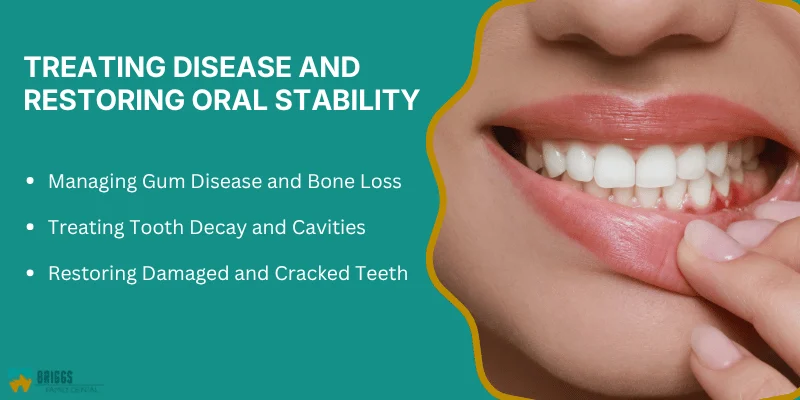
Managing Gum Disease and Bone Loss
Gum disease needs attention early because it can lead to bone loss and tooth loss if left untreated. Your dentist will likely recommend periodontal therapy to control the infection and inflammation in your gums.
Common signs that need treatment:
- Bleeding gums when brushing or flossing
- Swollen or red gum tissue
- Gum inflammation that doesn’t go away
- Pockets forming between teeth and gums
The treatment usually starts with a deep cleaning that removes plaque and tartar below the gum line. This process helps your gums heal and reattach to your teeth.
If you have bone loss, your dentist may suggest more advanced periodontal therapy to prevent further damage.
Getting gum disease under control protects your teeth and makes future dental work more successful.
Treating Tooth Decay and Cavities
Tooth decay and cavities come next because they continue to grow and damage your teeth over time. Your dentist will fill cavities to stop decay from spreading deeper into the tooth structure.
Small cavities get simple fillings that restore the tooth shape and function.
Larger areas of decay might need more extensive work. If you have a broken filling, replacing it becomes a priority since exposed tooth structure is vulnerable to new decay.
Your oral hygiene routine plays a big role in preventing new cavities while existing ones get fixed. Brushing twice daily and flossing helps protect treated teeth.
Restoring Damaged and Cracked Teeth
Damaged teeth like a cracked tooth need repair to prevent further breakdown and protect the inner tooth structure. Cracks can let bacteria in and cause pain or infection if not treated.
Your dentist will check how severe the damage is before choosing the right treatment. Minor cracks might need bonding or a filling, while deeper cracks often require crowns for protection.
Teeth with old or failing restorations get fixed during this phase too.
Restoring these teeth before doing cosmetic work ensures your mouth has a stable foundation for any future dental treatments.
Restoring Function: Prioritizing Long-Term Oral Health
After handling emergencies and stabilizing disease, dentists focus on rebuilding your ability to chew comfortably and protecting teeth from future damage.
This phase includes replacing missing teeth, repairing damaged ones, and teaching you how to maintain results at home.
Replacing Missing Teeth and Restoring Bites
Missing teeth do more than create gaps in your smile. They affect how you chew and can cause remaining teeth to shift over time.
Your dentist may recommend dental implants, bridges, or partial dentures depending on your situation. Dental implants act as replacement tooth roots and support crowns that function like natural teeth.
Bridges attach to neighboring teeth to fill the gap left by a missing tooth.
Bite issues can also develop when teeth don’t come together properly. This can lead to jaw pain, uneven tooth wear, and headaches.
Your dentist may use orthodontics or restorations to correct alignment problems and restore balanced chewing force across all your teeth.
Functional Restoration with Crowns, Fillings, and Implants
Damaged or decayed teeth need repair to work properly again. The type of restoration depends on how much tooth structure remains.
Fillings restore teeth with minor to moderate decay. Crowns cover the entire visible portion of a tooth when damage is more extensive or when a tooth has had root canal treatment.
Your dentist shapes the crown to match your bite so you can chew without discomfort.
Functional restoration may also include dental implants for missing teeth or veneers for teeth that are worn down or damaged. Each option serves a specific purpose in rebuilding your ability to eat comfortably and protecting your long-term oral health.
Preventive Care and Oral Hygiene Education
Restorations only last when you take care of them. Your dentist will show you the best ways to clean around crowns, implants, and other dental work.
Daily brushing removes plaque from tooth surfaces. Cleaning between teeth with floss or interdental brushes reaches areas your toothbrush can’t. These habits prevent new cavities and gum disease from developing around your restorations.
Regular dental visits are part of preventive care too. Your hygienist removes hardened plaque that builds up even with good home cleaning.
Your dentist checks for early signs of problems before they need major treatment. This approach protects both your natural teeth and any dental work you’ve had done.
Patient-Centered Planning: Communication, Consent, and Practical Realities
Your dentist needs to explain why certain treatments come first and work with you on a plan that fits your budget, schedule, and comfort level.
Good dental care means addressing your fears about treatment and finding ways to spread out procedures when needed.
Discussing Treatment Priorities and Informed Consent
Your dentist should explain each problem in your mouth and why some issues need fixing before others. Effective dentist-patient communication helps you understand what’s happening and make better decisions about your care.
During treatment planning, your dentist will show you what each procedure involves and what happens if you wait. You’ll learn about different options for fixing each problem.
Some treatments have alternatives, while others are more urgent and limited in choice.
Informed consent means you understand the risks and benefits before agreeing to treatment. Your dentist should use simple words and visual aids to explain procedures. You have the right to ask questions until everything makes sense.
Patient-centered care puts your needs and preferences at the center of your dental treatment plan. Your dentist should listen to your concerns and work with you to create a plan you feel good about.
Managing Dental Anxiety and Financial Concerns

Many people feel nervous about dental work. Tell your dentist if you feel anxious so they can help you stay comfortable during treatment. Options include taking breaks, using numbing medicine, or offering sedation for bigger procedures.
Common ways to manage dental anxiety:
- Scheduling morning appointments when you’re less stressed
- Bringing headphones to listen to music
- Using hand signals to pause treatment
- Trying relaxation breathing techniques
Money concerns affect which treatments you can afford right now. Most dental offices offer several payment options to help you get the care you need. Ask about dental financing plans that let you pay over time instead of all at once.
Your dentist can adjust the treatment plan based on what you can afford. Some offices work with insurance companies to maximize your benefits. Others offer discounts for paying upfront or provide in-house payment plans.
Timing and Phasing for Comfort and Convenience
Phased treatment spreads procedures across multiple visits instead of doing everything at once. This approach works well when you have several problems that don’t all need immediate attention.
Your dentist creates a schedule that handles urgent issues first while planning future appointments for other work.
Benefits of phased treatment:
- Easier on your schedule and time off work
- Less overwhelming physically and mentally
- More manageable financially
- Allows healing time between procedures
Your dentist considers your daily life when planning appointment times. If you travel for work or have family commitments, they can space out visits accordingly.
Some procedures need healing time before the next step, which naturally creates gaps in your schedule.
You can schedule a consultation to review your complete dental treatment plan and decide how to space out the work. Your dentist will mark which appointments are flexible and which dates work best for specific procedures.
Frequently Asked Questions
Dentists weigh urgency, infection risk, and structural stability when deciding treatment order. Pain relief and disease control come before cosmetic improvements in nearly all cases.
How does a dentist decide which issue to treat first when there are several problems at once?
Your dentist looks at which problems pose the biggest threat to your health and teeth first. Active infections, severe pain, and bleeding are handled immediately because they can spread or cause more damage quickly.
After emergency issues are resolved, your dentist treats active disease like cavities and gum disease. These need to be controlled before any restorative or cosmetic work begins.
Once your mouth is stable and disease-free, broken or missing teeth get restored, followed by cosmetic improvements last.
What dental problems are considered emergencies and need immediate attention?
Dental abscesses are always treated as emergencies because infections can spread to other parts of your body. Severe toothaches that prevent you from sleeping or eating also require urgent care.
Heavy bleeding from your gums or a knocked-out tooth need same-day treatment.
Broken teeth with sharp edges that cut your tongue or cheek are treated quickly to prevent injury. Swelling in your face or jaw is another red flag that needs immediate evaluation.
Will pain always be treated before cosmetic concerns during a treatment plan?
Yes, pain relief is prioritized over cosmetic work in every treatment plan. You cannot safely whiten teeth or place veneers while dealing with an infected tooth or abscess. Pain signals that something needs immediate attention to protect your health.
Cosmetic treatments work best on a healthy, stable mouth. Trying to do cosmetic work before addressing pain or disease often leads to failed procedures or the need to redo work later.
How do dentists balance treating cavities, gum disease, and broken teeth in the same visit?
Most dentists handle these issues across multiple visits rather than all at once. Gum disease treatment usually happens first because healthy gums provide the foundation for all other dental work.
Active cavities are filled before placing crowns or doing major restorative work on broken teeth.
In some cases, your dentist might treat a few small cavities during the same appointment as a cleaning. However, extensive gum disease and multiple broken teeth typically require separate visits to allow proper healing time between procedures.
Can multiple dental treatments be done in one appointment, and what factors affect that decision?
Multiple treatments in one visit depend on how much time you can spend in the chair and how well you handle dental work.
Your dentist also considers whether the procedures affect the same area of your mouth or different areas. Two fillings on opposite sides of your mouth are easier to do together than fillings and a root canal.
Some treatments cannot be combined because one needs to heal before the other can start. For example, gum disease must be controlled before placing dental implants or doing major cosmetic work.
Your overall health, medications, and ability to numb properly also affect whether multiple treatments can happen in one appointment.
What should I tell my dentist to help them prioritize my treatment the best way?
Tell your dentist about any pain, sensitivity, or changes you have noticed in your mouth. Be specific about when the pain started, what makes it worse, and whether it keeps you awake at night.
This information helps your dentist identify urgent issues that need immediate care.
Share your budget concerns and insurance coverage upfront so your dentist can build a realistic plan. Let them know about any upcoming events, work schedules, or health conditions that might affect treatment timing.
If you have dental anxiety or prefer shorter appointments, mention that too so your dentist can adjust the plan to fit your needs.