




Getting a dental crown can feel like a big step toward fixing your tooth problem, but then your tooth starts hurting afterward. You might wonder if something went wrong or if this pain is normal.
Some discomfort after getting a crown is common and usually goes away within two weeks, but persistent or worsening pain needs attention from your dentist.
The crown procedure involves removing some tooth structure and placing a new cap, which can make your tooth feel sensitive to hot, cold, or pressure. Your mouth needs time to adjust to the changes.
Understanding what’s normal and what’s not can help you feel more confident about your recovery.
This guide will walk you through the causes of crown sensitivity, when you should worry, and how to find relief so you can get back to eating and drinking without discomfort.
Key Takeaways
- Most tooth sensitivity after crown placement is temporary and should improve within two weeks
- Pain can result from normal healing, tooth decay under the crown, infection, or an improper fit
- You should contact your dentist if pain worsens, lasts beyond two weeks, or comes with swelling and fever
Learn about tooth pain after a crown and how we can help relieve your discomfort.
Understanding Dental Crowns and Their Role
A dental crown acts as a protective cap that covers a damaged tooth, restoring its function and appearance. These restorations use different materials and serve multiple purposes in protecting your oral health.
What Is a Dental Crown?
A dental crown is a cap that’s placed over a damaged tooth and cemented into place. It covers the visible part of your tooth above the gum line.
The crown’s main job is to restore your tooth’s original size and shape while providing protection. It works like a helmet for your tooth, keeping it safe from further damage.
Once cemented, the crown becomes a permanent part of your smile. You care for it the same way you care for your natural teeth through brushing and flossing.
Reasons for Needing a Dental Crown
You might need a crown after a root canal procedure to protect the weakened tooth. Your dentist may also recommend a crown if you have a large cavity that’s too big to repair with a regular filling.
Dental crowns help repair cracked or weakened teeth that need extra support. They also restore teeth that are discolored or misshapen.
Crowns play a role in supporting dental implants and bridges. When you have a missing tooth, crowns on either side can hold a bridge in place. A dental implant uses a crown as the visible tooth portion attached to the implant post.
Materials Used for Dental Crowns
Dental crowns come in several different materials to match your needs. The most common options include porcelain, ceramic, and metal.
Porcelain and ceramic crowns look most like natural teeth, making them popular for front teeth. They match the color of your surrounding teeth closely.
Metal crowns are extremely durable and resist wear well. They work best for back teeth where strength matters more than appearance. Some crowns combine metal with porcelain to offer both strength and a natural look.
Schedule an appointment in New Market, VA for your tooth pain after crown issues.
Typical Post-Crown Sensitivity
Most people experience some level of discomfort after getting a dental crown, but this usually goes away as your mouth adjusts to the restoration. The key is knowing what sensations are normal and how long they should last.
Normal Healing Timeline
Sensitivity after crown placement typically resolves within a few days to two weeks. Your tooth needs time to adjust to the new restoration, and the surrounding gum tissue and nerves often react during this period.
The first few days usually bring the most discomfort. You might notice heightened sensitivity when eating or drinking during this time.
Most patients see improvement within the first week. By week two, the majority of sensitivity symptoms should fade significantly.
If you’re still experiencing dental crown pain after two weeks, this suggests something beyond normal healing. Contact your dentist for an evaluation.
Symptoms to Expect After Placement
You’ll likely notice sensitivity to hot and cold temperatures when you drink coffee or eat ice cream. This happens because the exposed dentin or nerves near the crown are adjusting to the new coverage.
Pressure sensitivity is also common. Biting down on the crowned tooth might feel uncomfortable at first.
Some gum tenderness around the crown site is normal. The tissue was likely manipulated during the procedure and needs time to heal.
You might experience mild throbbing that comes and goes. This shouldn’t be constant or intense.
Brief sharp sensations when chewing certain foods are typical during the adjustment period. These should decrease each day.
Difference Between Sensitivity and Pain

Sensitivity feels like a quick, sharp sensation that goes away quickly. It’s usually triggered by something specific like cold water or biting pressure.
Pain after a dental crown is more intense and persistent. It throbs, aches, or causes constant discomfort even without triggers.
Normal sensitivity:
- Lasts seconds, not minutes
- Improves over time
- Only occurs with specific triggers
- Manageable with desensitizing toothpaste
Concerning pain:
- Persists beyond two weeks
- Gets worse instead of better
- Keeps you awake at night
- Comes with swelling or fever
Common Causes of Tooth Pain After a Dental Crown
Pain after crown placement can stem from several issues related to the tooth structure, your bite, or the surrounding gum tissue. These problems may develop immediately after the procedure or months later.
Exposed Dentin and Nerve Irritation
When your dentist prepares a tooth for a crown, they remove some of the outer enamel layer. This process can expose the underlying dentin, which contains tiny tubes that lead to the nerve inside your tooth.
The exposed dentin makes your tooth more sensitive to hot and cold temperatures.
Nerve irritation can occur when the crown puts pressure on a traumatized nerve. Sometimes old fillings underneath the crown can leak bacteria that reaches the nerve and causes infection.
You might feel sharp pain when you bite down or experience sensitivity that lingers after eating or drinking.
The trauma from crown preparation can also inflame the nerve temporarily. This type of dental crown pain usually goes away within a few weeks as your tooth adjusts to the new crown.
Bite Misalignment and Occlusal Trauma
If your crown sits too high, it can throw off your bite alignment. This means your crowned tooth hits before your other teeth when you close your mouth. The extra pressure on that one tooth causes pain and discomfort.
Occlusal trauma happens when your bite forces aren’t distributed evenly across all your teeth. You might notice jaw pain, headaches, or soreness in the crowned tooth.
The constant pressure can also damage the tooth structure under the crown over time.
Bruxism makes this problem worse. If you grind your teeth at night, you put even more force on your crown. This grinding can cause persistent pain and may even crack the crown or the tooth underneath it.
Gum Recession and Gum Disease
Gum recession exposes the root surface of your tooth near the crown margin. The root doesn’t have a protective enamel layer, so it’s very sensitive to temperature changes and pressure. You might feel sharp pain when you brush or eat cold foods.
Gum disease around a crowned tooth develops when plaque builds up at the edge where your crown meets your gum line. The bacteria in plaque cause inflammation and infection. Your gums may look red, feel swollen, or bleed when you brush.
Poor oral hygiene after getting a crown increases your risk of gum problems. The gap between your crown and gum tissue can trap food particles and bacteria if you don’t clean the area properly.
Serious Signs: When Pain Signals a Problem
Some pain after getting a dental crown is normal, but certain symptoms mean you need to call your dentist right away.
Sharp pain that gets worse over time, crowns that feel loose, or signs of infection require professional attention to prevent bigger problems.
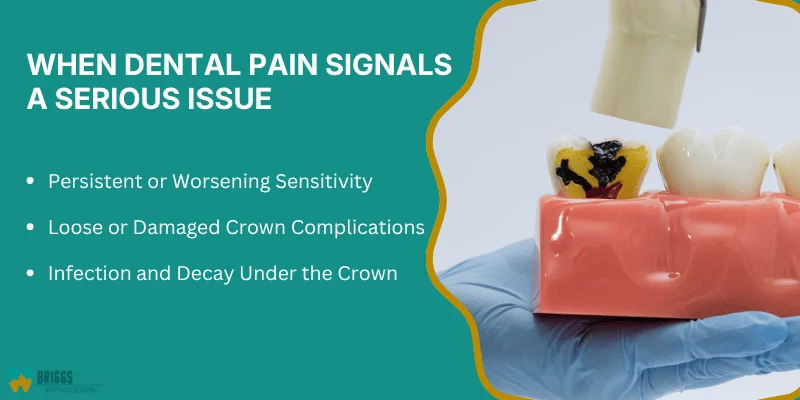
Persistent or Worsening Sensitivity
If your tooth sensitivity doesn’t improve after a few weeks, something might be wrong with your dental crown.
Normal sensitivity should gradually fade as your tooth adjusts to the new crown. Pain that continues beyond two to four weeks or becomes more intense needs evaluation.
Watch for these warning signs:
- Sharp pain when biting down that doesn’t go away
- Increased sensitivity to hot or cold after the first month
- Throbbing pain that keeps you awake at night
- Pain that spreads to other teeth or your jaw
Worsening dental crown pain often means the crown isn’t fitting properly or there’s an issue with the tooth underneath. The crown might be too high, causing your bite to feel off.
This puts extra pressure on the tooth and can damage it over time.
Loose or Damaged Crown Complications
A loose crown is a dental emergency that needs quick attention. You might notice the crown moving when you touch it with your tongue or feel a gap between the crown and your gum line.
Sometimes a loose crown falls off completely when you’re eating.
Damaged crowns can crack or chip, exposing the tooth underneath. This leaves your tooth vulnerable to bacteria and decay. If you feel any movement in your dental crown, contact your dentist within 24 hours.
Don’t try to reattach a loose crown yourself with regular glue. Keep the crown safe and clean if it falls out. Your dentist can properly recement it or make a new one if needed.
Infection and Decay Under the Crown
Infections under dental crowns cause severe pain, swelling, and sometimes fever. You might notice a bad taste in your mouth or see pus around your gum line. Gum disease can develop around poorly fitted crowns that trap food and bacteria.
Signs of infection include:
- Red, swollen gums around the crown
- A bump or abscess on your gum
- Foul smell or taste coming from the crowned tooth
- Fever or general feeling of being unwell
Decay can form under a crown if bacteria get through small gaps. This happens when the seal between your tooth and crown breaks down over time. The decay spreads inside your tooth where you can’t see it, causing pain as it gets worse.
Home Remedies and Professional Treatments for Relief
You can manage crown-related tooth pain through several at-home strategies and professional interventions. Desensitizing products, proper cleaning habits, and protective devices address different causes of discomfort after crown placement.
Using Desensitizing Toothpaste and Agents
Desensitizing toothpaste works by blocking the tiny tubes in your tooth that connect to nerves. You should brush with this special toothpaste twice daily for at least two weeks to see results.
The active ingredients in these products include potassium nitrate or stannous fluoride. These compounds calm nerve signals and reduce your tooth’s reaction to hot, cold, or sweet foods.
Your dentist can also apply professional-grade topical desensitizing agents directly to sensitive areas. These treatments contain higher concentrations of active ingredients than store-bought options. They form a protective barrier over exposed tooth surfaces.
For best results, you need to use desensitizing toothpaste consistently. Many people notice improvement within one to two weeks of regular use.
Importance of Proper Oral Hygiene
Good oral hygiene protects your crowned tooth from decay and infection that can cause pain. You should brush twice daily and floss around the crown carefully to remove food particles and bacteria.
Pay special attention to the area where your crown meets your natural tooth. Plaque can build up along this border and lead to cavities or gum inflammation.
Key oral hygiene practices include:
- Brushing for two minutes with a soft-bristled toothbrush
- Flossing gently between teeth once per day
- Rinsing with an antimicrobial mouthwash
- Visiting your dentist every six months for checkups
Avoid brushing too aggressively, as this can cause your gums to recede and expose sensitive root surfaces.
Role of Night Guards for Bruxism
A night guard cushions your teeth if you grind or clench while sleeping. Bruxism puts excessive pressure on your crown and can cause ongoing pain or damage.
Your dentist can create a custom-fitted night guard from an impression of your teeth. These guards distribute bite force evenly and prevent your upper and lower teeth from grinding together.
Over-the-counter guards are available but often don’t fit as well. A poorly fitting guard can shift during sleep and may not provide adequate protection. Custom guards typically last longer and offer better treatment for bruxism.
You’ll wear the guard every night to protect your crown and reduce jaw tension. Most people adjust to wearing one within a few nights.
How to Prevent Future Crown-Related Tooth Pain
Taking steps to protect your crowned tooth can help you avoid discomfort and costly repairs. Simple daily habits and regular dental care make a big difference in keeping your crown healthy for years to come.
Regular Dental Checkups

Visiting your dentist every six months lets them catch problems before they become painful. During these checkups, your dentist examines the area around your crown for signs of decay or gum disease.
They can also check if your crown still fits properly or if it has loosened over time.
Your dentist uses special tools to look for cavities that might be forming at the edge where your crown meets your natural tooth. This border area is vulnerable to bacteria buildup.
Professional cleanings remove plaque and tartar that regular brushing might miss, especially around dental crowns.
X-rays taken during routine visits help your dentist see what’s happening beneath the crown. They can spot infections or bone loss early. If you notice any sensitivity or pain between appointments, schedule a visit right away instead of waiting.
Good Oral Hygiene Habits
Brushing twice daily and flossing protects both your crown and the tooth underneath it. Use a soft-bristled toothbrush and gentle circular motions around the crowned tooth.
Harsh brushing can cause your gums to recede and expose sensitive areas.
Flossing around your dental crown removes food particles and bacteria that cause decay. Slide the floss gently down between your teeth and curve it around the base of the crown. Be careful not to pull up too hard, which could loosen the crown.
Daily oral hygiene tasks include:
- Brushing for two minutes twice per day
- Flossing once daily around all teeth, including crowned ones
- Using an antimicrobial mouthwash to reduce bacteria
- Rinsing with warm salt water if you notice any inflammation
Avoid sticky foods like caramel and taffy that can pull on your crown. Stay away from chewing ice or hard candies that might crack it.
Protecting Crowns from Damage
If you grind your teeth at night, you need protection for your crown. Bruxism puts pressure on dental crowns and can cause cracks or loosening. A night guard creates a barrier between your upper and lower teeth while you sleep.
Your dentist can make a custom night guard that fits your mouth perfectly. These guards are more comfortable and effective than over-the-counter options. Wearing your night guard every night prevents wear on your crown and reduces jaw pain.
Don’t use your teeth as tools to open packages or bottles. This puts unnecessary stress on your crown. If you play contact sports, wear a mouthguard to protect your crowned teeth from impact.
Taking these precautions helps your crown last 10 to 15 years or longer.
Frequently Asked Questions
Pain and sensitivity after getting a crown can raise many questions. Most discomfort is temporary and goes away within two weeks, but some situations need attention from your dentist.
How long should sensitivity last after getting a crown?
Temporary sensitivity is common after getting a crown. Your tooth needs time to adjust to the new restoration.
Most people notice their discomfort gets better within two weeks. The pain should decrease over time, not get worse.
If your pain continues beyond two weeks or gets more intense, you should contact your dentist. This could mean something needs to be adjusted or checked.
Why does my crowned tooth hurt when I bite down or chew?
Pain when biting down usually means the crown is too high on the tooth. Your crown should fit into your bite just like your other teeth.
If the crown sits too high, it takes more pressure than it should when you chew. This can cause pain and discomfort every time you eat.
Your dentist can adjust the crown to fix this problem. The adjustment is quick and can bring immediate relief.
What could cause throbbing pain in a tooth after a crown is placed?
Throbbing pain often signals an infection. Sometimes the crown puts pressure on a traumatized nerve, which can lead to infection.
Old fillings under the crown might leak bacteria that infects the nerve. You might also notice swelling in your gums, sensitivity to hot or cold, or fever along with the pain.
A large cavity under the crown can also cause throbbing pain if it reaches the nerve. You need to see your dentist right away if you have throbbing pain.
Why is my crowned tooth suddenly sensitive again after feeling fine?
A new cavity can form at the border between your tooth and crown. Tooth decay under the crown leads to persistent pain in the area.
Your gums might have receded and exposed part of the tooth’s root. When gums pull back, the exposed area becomes sensitive to temperature and touch.
A crack in either the crown or the tooth underneath can cause sudden sensitivity. You might also grind your teeth at night without realizing it, which puts pressure on the crown.
Is it normal for a crown to be sensitive to cold weeks or months later?
Tooth sensitivity months after getting a crown is not normal. Sensitivity should improve over time, not appear later.
Late-developing sensitivity often points to a problem that needs treatment. A crack, decay, or receding gums could be the cause.
Schedule an appointment with your dentist to find out what’s causing the sensitivity. The sooner you address it, the easier it is to treat.
What can I do to reduce or fix sensitivity after a crown?
You can rinse your mouth with warm salt water several times a day to reduce inflammation. Mix half a teaspoon of salt with warm water and swish it around for about 30 seconds.
Over-the-counter pain relievers like ibuprofen or acetaminophen can provide temporary relief. Avoid very hot, cold, sticky, sweet, or hard foods that might trigger pain.
If the sensitivity doesn’t go away within two weeks, you need to see your dentist. They can check if the crown needs adjustment, if you have decay, or if you need other treatment like a root canal.