



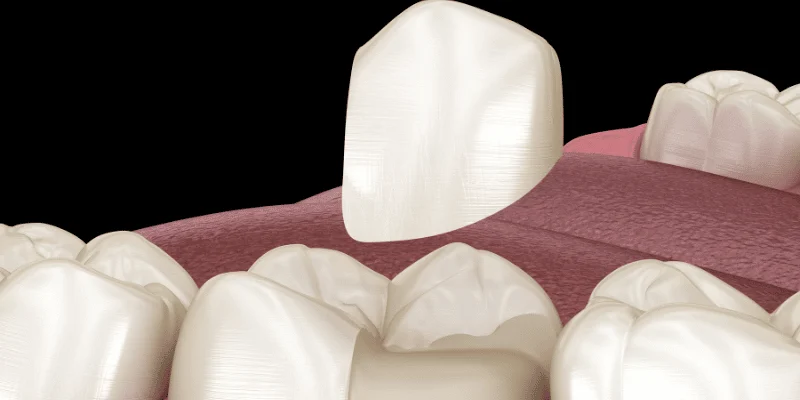
When you have a large cavity, your dentist might tell you that a regular filling isn’t the best choice.
Large fillings can weaken your tooth structure over time, making inlays and onlays a stronger and more durable option for restoring damaged teeth.
These custom-made dental restorations fit perfectly into your tooth and provide better support than traditional fillings.
You might wonder what makes inlays and onlays different from the fillings you’re used to. Unlike regular fillings that are placed directly into your tooth, inlays sit within the grooves while onlays extend over the cusps for more coverage.
They’re made from strong materials like porcelain or composite resin and are created in a dental lab to match your natural teeth.
Understanding your options for dental restorations helps you make better decisions about your oral health.
When tooth decay has caused significant damage, choosing the right treatment can mean the difference between a repair that lasts a few years and one that protects your tooth for decades.
Key Takeaways
- Inlays and onlays strengthen teeth better than large fillings and can last up to 30 years with proper care
- These custom restorations preserve more of your natural tooth structure while providing a perfect fit
- Though they cost more upfront, inlays and onlays are a better long-term investment than replacing failed fillings
Table of Content
- The Limitations of Large Fillings
- How Inlays and Onlays Offer Better Support
- Materials and Options for Inlays and Onlays
- Comparing Inlays, Onlays, and Crowns
- Longevity, Care, and Investment
- Frequently Asked Questions
The Limitations of Large Fillings
Traditional fillings work well for small cavities, but they have real limitations when tooth decay spreads to larger areas. The material can weaken over time, and the tooth structure around it becomes more vulnerable to cracks and future damage.
Why Fillings Fail in Larger Cavities
When you have a cavity that affects a significant portion of your tooth, a standard dental filling may not provide enough support.
Large fillings can weaken the remaining tooth structure, making it more likely to break or crack under normal chewing pressure.
Composite fillings and other traditional filling materials don’t bond to your tooth in the same way that inlays do. They fill the space but don’t reinforce the walls of your tooth.
Over time, the filling material can shrink slightly, creating tiny gaps where bacteria can enter and cause new decay.
Your back teeth handle intense pressure every time you chew. When too much of the natural tooth is gone and replaced with filling material, that pressure concentrates on thin walls of enamel.
This often leads to fractures that require more extensive treatment.
Risks of Repeated or Oversized Fillings
Each time you need to replace a dental filling, your dentist must remove some additional tooth structure. This cycle weakens your tooth more with each replacement.
Eventually, you might not have enough healthy tooth left to support another filling.
Oversized fillings create another problem. A big filling may even crack the tooth because the filling material expands and contracts differently than your natural enamel when exposed to hot and cold temperatures.
These repeated stress cycles can cause the tooth to split.
Poor oral hygiene around large fillings increases your risk of secondary decay. The edges where the filling meets your tooth become weak spots where plaque and bacteria accumulate.
Common Signs a Filling Should Be Replaced
You should watch for several warning signs that indicate your filling is failing:
- Sensitivity to temperature when drinking hot or cold beverages
- Pain when biting down or chewing on that tooth
- Visible cracks or chips in the filling material
- Dark lines around the edges of the filling
- Food getting stuck in the same spot repeatedly
A filling that feels rough or has sharp edges against your tongue also needs attention.
These changes mean the seal between your tooth and the filling has broken down, allowing bacteria to cause new tooth decay underneath.
Schedule a consultation in New Market, VA to find the right restoration for your damaged tooth.
How Inlays and Onlays Offer Better Support
Inlays and onlays provide stronger, more reliable support than large fillings because they’re custom-made to fit your exact tooth shape and bonded securely in place.
They protect weakened areas while keeping more of your natural tooth intact.

Custom Fit and Strength
When you need to repair a damaged tooth, dental inlays and onlays are created specifically for your tooth using precise measurements. This custom approach means they fit perfectly into the prepared space.
Unlike regular fillings that are packed into your tooth while soft, inlays and onlays are made in a dental lab before being bonded to your tooth.
The materials used (like porcelain or composite resin) are much harder than standard filling materials once they’re set.
A dental onlay works like a partial crown that covers one or more cusps of your tooth. This design distributes biting forces across a larger surface area.
The strong bond between the restoration and your tooth actually reinforces the remaining structure, making it more resistant to future breaks or cracks.
Enhanced Protection for Damaged Teeth
Large fillings can leave thin walls of tooth structure that flex and crack over time. Onlays cover these vulnerable areas completely.
When you bite down, onlays absorb forces and protect weakened cuspal walls better than fillings can. They’re especially helpful for back teeth that handle heavy chewing pressure every day.
The benefits of inlays and onlays include better performance under stress. If you have one or two damaged cusps, an onlay shields them from breaking further.
Inlays work well for damage within the tooth’s cusps, providing solid support without covering the entire biting surface.
Preservation of Tooth Structure
One of the key benefits of inlays is that they require less removal of healthy tooth material compared to crowns. Your dentist prepares just the damaged area.
Inlays and onlays preserve the healthy portion of the tooth while replacing only what’s compromised. This conservative approach in restorative dentistry keeps your natural tooth structure intact for as long as possible.
Traditional large fillings often need more tooth removal to create retention. With dental inlays and dental onlays, the restoration bonds directly to your enamel and dentin, so less drilling is needed.
This leaves your tooth stronger overall and better able to withstand normal use for years to come.
Materials and Options for Inlays and Onlays
When you need an inlay or onlay, you have several material choices that affect how your restoration looks, feels, and performs. Each material offers different benefits for strength, appearance, and cost.
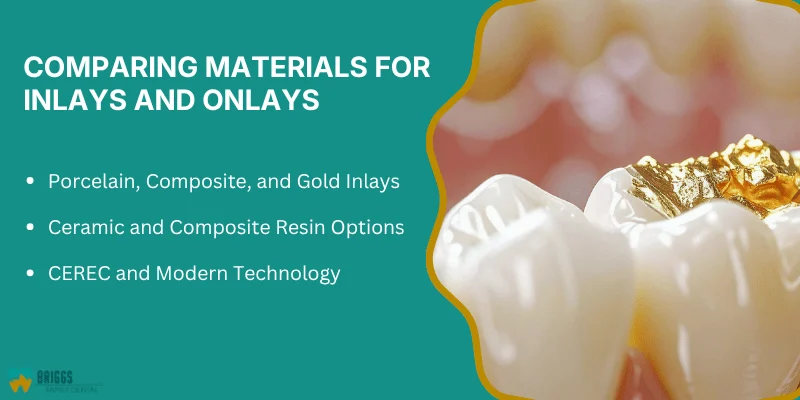
Porcelain, Composite, and Gold Inlays
Porcelain inlays give you excellent natural appearance because they match your tooth color closely. The ceramic material resists staining from coffee, tea, and other foods better than natural teeth.
Porcelain works well when you need an inlay in visible areas of your mouth.
Gold inlays have been used successfully for many decades.
They’re extremely durable and gentle on opposing teeth when you bite down. Gold requires less tooth removal than other materials because it can be cast into thin sections while maintaining strength.
Many dentists still recommend gold for back teeth where appearance matters less than durability.
Composite resin inlays provide a tooth-colored option at a lower cost than porcelain. The material gets “super cured” in a lab using heat, pressure, or intense light.
This extra curing makes composite inlays stronger and more wear-resistant than regular fillings you get in one visit.
Ceramic and Composite Resin Options
Ceramic inlays and onlays handle compression well but can crack under tension. They’re harder than composite materials and resist wear better over time. However, ceramic can sometimes wear down the teeth that bite against it if the glaze gets scratched or adjusted.
Composite resin options don’t fit as precisely as ceramic or gold. They may also absorb stains from your diet after several years, which affects how they look.
The main advantage is that composite bonds more easily to the cement that holds your restoration in place.
Ceramic materials need more tooth structure removed because they require greater thickness for strength. Your dentist will need to create more tapered walls in your tooth preparation compared to gold.
CEREC and Modern Technology
CEREC technology lets your dentist design and create your ceramic inlay or onlay in a single visit. A digital scanner captures images of your prepared tooth without messy impressions.
The computer then guides a milling machine to carve your restoration from a ceramic block.
CAD-CAM systems produce restorations that fit within a few microns of accuracy. You can get your tooth restored in one appointment instead of waiting weeks for a lab to make it.
This means no temporary restoration and fewer trips to the dental office.
The milled restoration gets adjusted and polished to match your bite perfectly before being cemented. Many dental offices now offer this chairside technology as part of their cosmetic dentistry services.
![[Briggs Family Dental] Cosmetic Dentistry - NPG Magazine + Gift Card](https://www.briggsfamilydental.com/wp-content/uploads/Briggs-Family-Dental-Cosmetic-Dentistry-NPG-Magazine-Gift-Card-1024x853-1.webp)
Comparing Inlays, Onlays, and Crowns
Understanding the differences between these restorations helps you make better decisions about your dental care. Each option covers different amounts of your tooth and works best for specific types of damage.
Difference Between Inlays and Onlays
The main difference comes down to coverage area on your tooth’s chewing surface.
Inlays fit between the cusps of your tooth. These are the pointed peaks you see on top of your back teeth. Think of an inlay as a puzzle piece that fits snugly in the space between these peaks.
Your dentist uses inlays when decay or damage stays within the center portion of your tooth.
Onlays cover one or more of these cusps plus the area between them. They’re bigger than inlays because they extend over the top of at least one cusp.
You need an onlay when damage reaches or weakens the cusps themselves.
Both porcelain inlays and onlays preserve more of your natural tooth than crowns do. Your dentist only removes the damaged parts. The healthy tooth structure stays intact.
When to Choose a Partial Crown
A partial crown is another name for an onlay. Dentists use this term because onlays cover part of your tooth like a crown does, but not the entire tooth.
You need a partial crown when one or more cusps are cracked, weakened, or worn down. This happens often with old large fillings that have made the surrounding tooth structure fragile over time.
Your tooth might also need a partial crown after a root canal if enough healthy structure remains. The partial crown protects the weakened cusps from breaking while keeping more of your natural tooth than a full crown would.
Grinding your teeth at night can also make partial crowns necessary. The constant pressure weakens cusps even if you don’t have decay.
Onlays vs Dental Crowns
The choice between these two depends on how much tooth structure you have left.
Dental crowns cover your entire tooth above the gum line. Your dentist needs to reduce the whole tooth – top and all sides – to make room for the crown. This removes about 63-73% of your tooth structure.
Onlays only cover the damaged portions. The sides of your tooth stay mostly untouched. This means you keep more of your natural tooth, which is always stronger than any restoration material.
Here’s when each makes sense:
| Choose an Onlay When: | Choose a Crown When: |
| One or two cusps are damaged | Three or more cusps are damaged |
| Tooth sides are healthy | Decay extends down the sides |
| Enough structure remains for support | Very little tooth structure left |
| You want to preserve more natural tooth | The tooth needs full protection |
Crowns cost more and take away more tooth structure. But sometimes they’re necessary because your tooth is too damaged for partial coverage to work long-term.
Longevity, Care, and Investment
Inlays and onlays require an upfront commitment, but they deliver years of reliable performance when properly maintained.
Understanding their lifespan, care requirements, and long-term value helps you make an informed decision about your dental restoration.

How Long Do Inlays and Onlays Last?
Inlays typically last 10 to 15 years, while onlays can last 15 to 30 years because they cover more of your tooth’s surface. This is much longer than traditional fillings, which usually need replacement every 5 to 10 years.
The lifespan of your restoration depends on several factors. Your bite force affects how quickly the material wears down. The location of the restoration matters too, since back teeth handle more pressure than front teeth.
Your oral hygiene habits play a major role in how long your inlay or onlay lasts. Good care can extend the life of your restoration well beyond average timeframes.
Tips for Maintenance and Oral Hygiene
Taking care of your inlay or onlay is straightforward. Brush twice daily with fluoride toothpaste and floss once a day around the restoration. This proper care is essential to ensure its longevity and maintain your oral health.
Key maintenance steps include:
- Visit your dentist every six months for checkups
- Avoid chewing ice or hard candies
- Wear a nightguard if you grind your teeth
- Report any sensitivity or discomfort right away
You’ll receive a temporary restoration during your first visit while your permanent inlay or onlay is being made. Be extra gentle with this temporary piece since it’s not as strong as your final restoration.
Cost vs Value Over Time
Fillings are generally more affordable but may need to be replaced more frequently than inlays and onlays. While an inlay or onlay costs more initially, you avoid the repeated expense of replacing failed fillings.
When fillings fail, they can crack, leak, or wear out. This leads to additional costs for replacements or more serious procedures like root canals and crowns.
Inlays and onlays are generally a wiser financial investment when you consider long-term oral health rather than just short-term repair.
The value becomes clear over decades. A restoration that lasts 20 years costs less per year than replacing a filling every 7 years.
Frequently Asked Questions
Large fillings can fail when they experience wear and stress over time, and understanding when to consider inlays or onlays helps you make informed decisions about your dental health.
These custom restorations offer specific advantages in durability and tooth preservation that traditional fillings may not provide.
How do I know when a large filling is no longer the best option for my tooth?
You may need to consider alternatives to a large filling when the cavity or damage is too extensive for a regular filling to handle effectively.
Inlays and onlays are recommended when damage is too large for a filling but not severe enough to require a full crown.
Your dentist will evaluate the size of the affected area and how much healthy tooth structure remains. If a filling would require removing too much of your natural tooth, an inlay or onlay preserves more of the healthy portion.
Large fillings can also weaken the remaining tooth structure over time.
When your dentist notices cracks forming around an existing filling or sees that the filling takes up most of your tooth, they might suggest upgrading to a more durable restoration.
What’s the difference between an inlay and an onlay, and which one might I need?
An inlay fits within the grooves of your tooth between the raised points called cusps. An onlay covers one or more cusps to address more extensive damage.
Think of an inlay as filling the valley inside your tooth, while an onlay extends over the hills. Your dentist chooses based on how much of your tooth needs repair.
If the damage is contained within the center of your tooth, an inlay works well. When the damage extends to the outer edges or the biting surface is compromised, an onlay provides better coverage and protection.
Why can big fillings crack or leak over time, even if they looked fine at first?
Traditional fillings experience constant pressure from chewing and can wear down over the years. The material used in fillings expands and contracts slightly with temperature changes from hot and cold foods, which creates stress.
Over time, this repeated stress causes the filling material to separate from the tooth structure. Small gaps develop where bacteria can enter, leading to decay underneath the filling.
Large fillings also remove more tooth structure, which leaves thinner walls around the filling. These weakened walls are more likely to crack under pressure. Traditional fillings typically last around ten years before they need replacement.
Can an inlay or onlay help prevent a tooth from breaking compared with a regular filling?
Yes, inlays and onlays strengthen your tooth better than large fillings do. They’re custom-made to fit your tooth precisely and bond to the entire surface area, which distributes chewing forces more evenly.
Inlays and onlays preserve more natural tooth structure than conventional fillings require. This means your tooth retains more of its original strength.
The materials used in inlays and onlays are also stronger than standard filling materials. They hold up better under the pressure of chewing hard foods and can support the remaining tooth structure more effectively.
What materials are inlays and onlays made from, and how do they affect appearance and durability?
Inlays and onlays are commonly made from porcelain or composite resin, both of which match the natural color of your teeth. Porcelain and composite resin materials offer durability and a tooth-colored finish that blends seamlessly with your smile.
Some dental offices also offer gold inlays and onlays, which are extremely durable but more noticeable. Gold restorations can last for decades and work well for back teeth where appearance is less of a concern.
Porcelain is highly stain-resistant and maintains its color over time. With proper care, inlays and onlays can last up to 30 years, significantly longer than traditional fillings.
How many dental visits does an inlay or onlay take, and what should I expect during the process?
You’ll typically need two appointments to complete an inlay or onlay. During your first visit, your dentist removes any decay and takes an impression of your tooth.
This impression goes to a dental lab where technicians create your custom restoration. You’ll receive a temporary filling to protect your tooth while the lab works on your permanent restoration.
At your second appointment, your dentist removes the temporary filling and bonds the custom inlay or onlay to your tooth. The procedure uses numbing medication to keep you comfortable during treatment, so you shouldn’t feel pain.