


You’re brushing your child’s teeth one evening when you notice something unusual, a chalky white spot that wasn’t there before. It’s natural to feel concerned and wonder if it’s serious or just a normal part of tooth development.
White spots on a child’s tooth can signal several different issues, from early tooth decay and enamel defects to excess fluoride exposure, and understanding what causes white spots on kids’ teeth helps you know when to take action.
The good news is that many cases are treatable, especially when caught early. The appearance, location, and texture of these spots offer important clues about what’s happening beneath the surface.
White spots don’t always mean there’s a serious problem, but they do deserve your attention.
Whether these marks appeared suddenly or you’ve just noticed them, learning what they mean and what steps to take next can help protect your child’s smile for years to come.
Key Takeaways
- White spots can indicate early decay, enamel defects, or fluorosis, and a dentist can determine the exact cause
- Early detection and treatment prevent white spots from worsening and protect developing teeth
- Proper brushing habits, fluoride management, and regular dental visits help prevent white spots from forming
Understanding White Spots on Children’s Teeth
White spots on teeth can look different depending on what causes them, and the location matters whether they appear on baby teeth or permanent teeth. Tooth enamel plays a key role in protecting teeth, so understanding how these spots form helps you know what to watch for.
What Do White Spots Look Like?
White spots on teeth can show up in different ways. Some appear as chalky patches near the gum line, while others look like faint streaks across the tooth surface.
White spot lesions from early decay often have a dull, matte finish. They may feel rough when you run your tongue over them. These spots usually show up where plaque builds up the most.
Fluorosis spots tend to be bright white and smooth. They often appear as horizontal lines or small specks scattered across the tooth.
These spots are typically symmetrical, showing up on both sides of the mouth in similar patterns.
Enamel hypoplasia creates spots that may be white, yellow, or brown. The tooth surface might look pitted or uneven in these areas.
You might notice grooves or indentations where the enamel didn’t form properly.
Why Tooth Enamel Matters
Tooth enamel is the hard outer layer that protects your child’s teeth from decay and damage. It’s the strongest substance in the human body, but it can’t repair itself once it’s damaged.
When enamel becomes weak or thin, teeth become more vulnerable to cavities. Thin enamel allows bacteria and acids to reach the softer layers underneath more easily.
This is why white spots can signal increased cavity risk.
Enamel weakness can also cause tooth sensitivity. Your child might complain that hot, cold, or sweet foods bother their teeth.
This happens because the protective barrier isn’t doing its job properly.
Healthy enamel looks smooth and has a consistent color. It should have a slight shine to it. Any changes in color or texture can mean something has affected the enamel’s strength.
Spotting White Spots on Baby vs. Permanent Teeth
White spots on baby teeth (also called milk teeth) can appear for the same reasons as on permanent teeth. However, baby teeth have thinner enamel naturally, which makes them more prone to rapid decay.
If you see white spots on your child’s baby teeth, don’t assume they’re not important just because those teeth will fall out. Decay in milk teeth can spread to permanent teeth developing underneath. It can also cause pain and infection.
Permanent teeth are more likely to show fluorosis because this condition develops while teeth are forming under the gums.
Most fluorosis happens before age 8 when permanent teeth are still developing. Once these teeth come in, the white spots from fluorosis won’t get worse.
White spots from enamel hypoplasia can appear on both baby and permanent teeth.
The timing depends on when the disruption happened during tooth development. Illness or nutritional problems during pregnancy or early childhood can affect baby teeth, while later issues impact permanent teeth.
Root Causes: Decay, Enamel Defects, and Fluorosis Explained
White spots on your child’s teeth typically stem from three main issues: minerals leaving the enamel surface, too much fluoride during tooth development, or problems with how the enamel formed.
Poor brushing can make some of these problems worse by letting plaque sit on teeth.
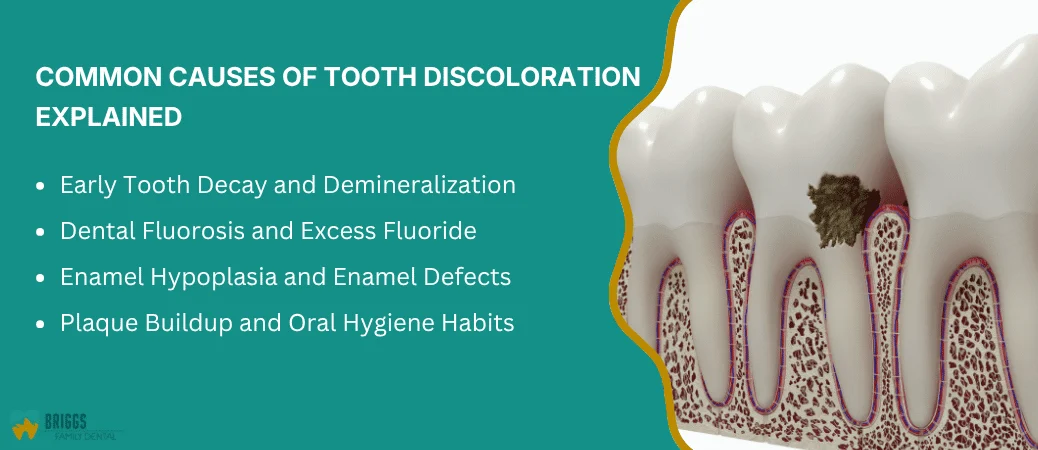
Early Tooth Decay and Demineralization
White spot lesions are often the first sign of tooth decay you can see. These spots appear when acids from bacteria remove minerals from your child’s enamel in a process called demineralization.
The white color shows that the enamel has lost calcium and phosphate. This happens before a cavity forms. At this stage, the damage can still be reversed.
Decalcification creates a chalky white appearance on the tooth surface. You’ll usually spot these spots near the gum line or between teeth where plaque builds up easily.
Common signs include:
- Dull, chalky white patches
- Rough texture when you touch them
- Spots that appear near brackets if your child has braces
- Areas that look different from the natural shine of teeth
Catching early tooth decay at this stage gives you the best chance to save the enamel.
Your dentist can apply fluoride treatments or recommend remineralization therapy to help restore lost minerals.
Dental Fluorosis and Excess Fluoride
Dental fluorosis happens when your child takes in too much fluoride while their teeth are still forming under the gums.
Only young children can develop dental fluorosis because the enamel of permanent teeth is fully formed by about age 8.
The condition creates white flecks, spots, or lines on the outer enamel layer. In most cases in the U.S., the fluorosis is mild and only affects appearance.
Fluoride sources that contribute to excess fluoride include:
- Swallowing toothpaste during brushing
- Fluoride supplements
- Well water with high natural fluoride levels
- Drinking water with fluoride levels above recommended amounts
Mild fluorosis appears as faint white streaks or spots. Severe fluorosis is rare but can cause brown stains and pitted enamel.
The severity depends on how much fluoride your child consumed and for how long during tooth development.
Your child’s fluoride intake from all sources matters. Check your water’s fluoride level and use only a pea-sized amount of toothpaste for kids ages 3 to 6, or a rice grain-sized smear for younger children.
Enamel Hypoplasia and Enamel Defects
Enamel hypoplasia means your child’s teeth have less enamel than normal or the enamel didn’t form correctly. This creates white spots among other enamel defects that are present when teeth first come in.
Unlike decay or fluorosis, these defects formed while teeth were developing. The enamel is thinner or has weak spots from the start.
Causes of enamel hypoplasia include:
- Nutritional deficiencies during pregnancy or infancy
- Premature birth or low birth weight
- Childhood illnesses with high fever
- Trauma to baby teeth affecting permanent teeth underneath
- Certain medications taken during tooth development
Weak enamel from hypoplasia makes teeth more likely to get cavities. The thin or missing enamel can’t protect teeth as well as healthy enamel.
These spots won’t go away on their own because the enamel was never fully formed in the first place.
Your dentist can apply sealants or other protective treatments to strengthen areas with enamel defects.
Plaque Buildup and Oral Hygiene Habits
Poor brushing habits let plaque sit on your child’s teeth longer than it should. This sticky film contains bacteria that produce acids, which pull minerals out of enamel and create white spots.
Plaque buildup around the gum line is especially common when kids don’t brush thoroughly. The bacteria in plaque work constantly to break down enamel, starting the decay process that shows up as white patches.
Poor oral hygiene habits that lead to white spots:
- Brushing less than twice daily
- Not brushing for a full two minutes
- Missing the areas near gums and between teeth
- Skipping flossing
- Eating sugary snacks throughout the day without brushing
Children with braces face extra challenges. Plaque gets trapped around brackets and wires more easily, which is why white spots are common after braces come off if brushing wasn’t good enough.
Teaching your child proper brushing technique helps prevent new white spots from forming. Regular dental cleanings remove plaque that brushing misses, protecting enamel before demineralization starts.
When and Why to See a Pediatric Dentist
Not every white spot requires immediate action, but knowing when to schedule a visit can protect your child’s teeth from further damage.
A pediatric dentist can identify whether the spot is harmless or needs treatment right away.
Signs the White Spot Needs Attention
You should book a pediatric dental evaluation if you notice certain warning signs. New white spots that appear suddenly or grow larger over time need professional assessment.
If your child complains of tooth sensitivity to hot, cold, or sweet foods, this suggests the spot might be early decay.
White spots that appear along the gumline or between teeth require attention because these areas are harder to clean and more prone to cavities.
You should also see a dentist if the white spots have a chalky texture or rough feel when you touch them gently.
Changes in your child’s smile or visible discoloration that makes them self-conscious warrants a visit. Any white spots accompanied by pain, swelling, or bleeding gums need immediate care.
What to Expect at a Pediatric Dental Evaluation

During your visit, the dentist will examine your child’s teeth thoroughly to determine what caused the white spots.
They’ll ask about your child’s diet, brushing habits, and fluoride exposure from toothpaste and drinking water.
The dentist may use special tools or lights to check if the spots are early decay, fluorosis, or enamel defects.
They’ll assess whether the enamel is weak or damaged in those areas. Based on their findings, they’ll explain treatment options that match your child’s specific situation.
Treatment might include fluoride varnish to strengthen weak enamel, dietary changes to prevent decay, or improved brushing techniques.
For more serious cases, the dentist might recommend fillings or other restorative work. They’ll create a personalized plan to stop the spots from getting worse.
Special Considerations for Ongoing Monitoring
Some white spots need regular checkups even after initial treatment. Your dentist will schedule follow-up visits to track whether the spots are stable or changing.
Children with fluorosis or enamel hypoplasia often need monitoring as their permanent teeth come in.
If your child has multiple white spots, the dentist will watch for patterns that suggest ongoing issues with fluoride intake or oral hygiene.
They may recommend more frequent cleanings every three to four months instead of the standard six months.
Your dentist will also guide you on preventive care at home between visits. This includes proper brushing supervision, appropriate fluoride use, and dietary adjustments to protect developing teeth.
Treatment Options for White Spots
Treatment depends on what caused the white spots and how severe they are. Your dentist will start with the least invasive option and only recommend more advanced treatments if needed.
Remineralizing Therapies and Fluoride Treatments
If the white spots come from early decay or weak enamel, your dentist may suggest remineralizing treatments to strengthen the tooth. These treatments help rebuild the minerals in your child’s enamel.
Fluoride toothpaste with higher concentrations than regular toothpaste can help remineralize teeth. Your dentist might prescribe a special prescription-strength fluoride toothpaste for home use.
Professional fluoride treatments applied at the dental office every few months can reduce cavities by up to 40%.
Remineralizing pastes contain calcium and phosphate that work to repair weak spots on teeth. These pastes are applied either at home or in the dental office.
Some products combine fluoride with other minerals to make enamel stronger and more resistant to decay.
Your dentist will monitor the white spots over time to see if these treatments are working.
Dental Sealants and Microabrasion
For white spots that don’t improve with remineralizing treatments, your dentist has other options. Dental sealants are thin protective coatings painted onto the tooth surface.
They can cover white spots while also protecting teeth from future decay.
Microabrasion involves gently removing the outer layer of enamel to reduce the appearance of white spots. Think of it like carefully polishing the tooth surface to even out the color.
This treatment works best for mild cases of discoloration and doesn’t require removing much tooth structure.
The procedure is quick and usually painless. Your dentist uses a mild abrasive material to buff away the affected enamel layer.
Addressing Severe or Permanent Spots
When white spots are severe or other treatments haven’t worked, cosmetic options may be needed. Dental bonding uses tooth-colored composite resin to cover white spots and typically lasts about five years.
Veneers are thin coverings placed over the front of teeth. They’re usually reserved for older children and teenagers with permanent teeth.
Porcelain veneers can last 10-15 years but cost between £400-£1,000 per tooth.
Teeth whitening might help in some mild cases by lightening the surrounding tooth color.
However, whitening can sometimes make white spots more noticeable, so you should consult your dentist first before trying this approach.
How to Prevent White Spots and Strengthen Enamel
Good oral care habits and smart dietary choices work together to protect your child’s teeth from white spots.
Regular brushing with the right amount of fluoride and limiting sugary foods can keep enamel strong and healthy.

Building Healthy Brushing Habits
Your child needs to brush twice a day for two minutes each time. Use a soft-bristled toothbrush that fits comfortably in their mouth.
Make sure your child brushes all tooth surfaces, including the areas near the gums where plaque builds up. The back teeth need extra attention since food gets stuck there easily.
You can make brushing fun by playing a two-minute song or using a timer with their favorite character.
Replace toothbrushes every three months or sooner if the bristles look worn. Worn bristles don’t clean as well and can miss spots where white spots on teeth can develop.
Teaching proper technique matters just as much as frequency. Show your child how to hold the brush at a 45-degree angle and use gentle circular motions.
Balancing Fluoride Use
Fluoride strengthens enamel and helps prevent white spot lesions from forming. Children under three need just a smear of fluoride toothpaste the size of a grain of rice.
Kids ages three to six should use a pea-sized amount of fluoride toothpaste. Too much fluoride can cause fluorosis, which creates different types of white spots on teeth.
Watch your child while they brush to make sure they spit out the toothpaste instead of swallowing it.
Your dentist might recommend fluoride treatments during checkups if your child has a higher risk of cavities. Ask about your local water supply since some areas have fluoridated water and others don’t.
This affects how much additional fluoride your child needs from toothpaste and treatments.
Dietary Tips for Stronger Teeth
Limit sugary snacks and drinks between meals. Bacteria in your child’s mouth feed on sugar and create acids that weaken enamel.
Water should be your child’s main drink throughout the day. Milk and cheese provide calcium and phosphate that help rebuild enamel.
Crunchy fruits and vegetables like apples and carrots naturally clean teeth while your child chews them.
Foods that strengthen enamel:
- Dairy products (milk, cheese, yogurt)
- Leafy greens
- Nuts and seeds
- Fish
Avoid giving your child sticky candies or letting them sip on juice boxes for long periods. If they do eat something sugary, have them rinse with water afterward. Timing matters too, serving treats with meals is better than as standalone snacks because saliva production increases during meals and helps wash away sugars.
Supervising and Supporting Your Child’s Oral Care
Children under eight need help brushing their teeth properly. Supervise brushing every time until your child shows they can do a thorough job on their own.
Stand behind your child so you can see their mouth from the same angle as they do. This makes it easier to guide their hand and check if they missed any spots.
You can also take turns, let them brush first, then you finish up to make sure all surfaces are clean.
Schedule dental visits every six months for professional cleanings and checkups. Your dentist can spot early signs of problems and apply preventive treatments.
Between visits, watch for any changes in your child’s teeth and bring up concerns right away.
Frequently Asked Questions
White spots on children’s teeth can stem from several causes, including too much fluoride exposure, enamel that didn’t form properly, or early stages of tooth decay.
Some spots can be treated and improved, while others may need ongoing dental care.
What can cause a white spot to appear on my child’s tooth?
White spots on your child’s teeth can come from different causes, and figuring out which one matters for treatment.
The most common reason is early tooth decay, which happens when plaque builds up and strips minerals from the enamel.
Another cause is dental fluorosis. This occurs when your child gets too much fluoride while their teeth are still developing, usually before age 8.
Enamel hypoplasia is a third possibility. This condition means the enamel didn’t form properly due to poor nutrition, illness during early childhood, premature birth, or genetics.
Are white spots on a toddler’s teeth a sign of early tooth decay?
White spots on baby teeth are often one of the first signs that alert you to potential dental problems. They can be chalky, pale, or look like opaque patches on your toddler’s teeth.
Early tooth decay shows up as dull, chalky white spots that often appear near the gumline or on the front teeth. These spots have a matte finish rather than a shiny one.
However, not all white spots mean decay. Some are developmental or cosmetic issues like fluorosis.
A dentist can examine your toddler’s teeth and tell you exactly what’s causing the spots.
Can white spots on kids’ teeth be reversed or improved over time?
Early decay-related white spots can often be remineralized with fluoride or calcium-phosphate treatments. Your dentist might recommend special toothpaste or rinses to help rebuild the enamel.
The success of treatment depends on what caused the spots. If they’re from early decay, catching them quickly gives you the best chance of reversing the damage.
Fluorosis spots are usually permanent but mainly cosmetic. Your dentist can offer aesthetic treatments for permanent teeth if the appearance bothers your child as they get older.
Do white spots on a child’s teeth go away on their own?
White spots typically don’t disappear without treatment. Some spots are permanent, while others can improve with remineralization.
If the spots are from early decay, they need professional care and better oral hygiene to prevent them from turning into cavities. Without treatment, these spots usually get worse over time.
Fluorosis spots won’t go away because they’re part of how the enamel formed. Enamel hypoplasia is also permanent since the enamel was already affected during tooth development.
How can I safely reduce or remove white spots on my child’s teeth at home?
You can help prevent white spots from getting worse by improving your child’s oral hygiene routine. Brush their teeth twice daily with a fluoride toothpaste appropriate for their age.
Cut back on sugary snacks and drinks, especially between meals. Sugar feeds the bacteria that cause decay and create white spots.
Make sure your child drinks plenty of water throughout the day. Water helps wash away food particles and keeps their mouth clean.
Don’t try to scrub the spots away or use harsh whitening products on your child’s teeth. These approaches won’t work and could damage their enamel even more.
When should I take my child to the dentist for a white spot on a tooth?
You should schedule a pediatric dentist visit if the spots are growing, darkening, or changing. These changes suggest the problem is getting worse.
Take your child to the dentist if they have tooth sensitivity or pain along with the white spots. Discomfort often means the decay has progressed beyond the surface.
Even if the spots aren’t changing, see a dentist if you’re unsure what’s causing them. A white spot is an early signal that allows you to take action before more serious problems develop.
Your dentist can determine whether it’s decay, fluorosis, or hypoplasia and recommend the right treatment.