




Missing a tooth can change how you eat, speak, and smile. You want a fix that feels stable and looks natural while supporting your oral health. Dental bridges offer a proven way to close the gap and restore everyday comfort.
Dental bridges replace one or more missing teeth by anchoring an artificial tooth to nearby teeth or dental implants.
Each type of dental bridge works in a different way, and the right choice depends on your mouth, your goals, and long-term tooth replacement needs.
When you understand how dental bridges differ, you gain control over your care. This guide helps you feel prepared to talk with your dentist and choose an option that fits your life.
Key Takeaways
- Dental bridges restore missing teeth and support daily function.
- Different bridge types suit different tooth replacement needs.
- Good care helps protect long-term oral health.
What Are Dental Bridges?
Dental bridges are fixed prosthetic devices that replace missing teeth and restore the appearance and function of your mouth. They fill the gap left by one or more missing teeth, using nearby teeth or implants for support.
How Dental Bridges Work
A dental bridge uses one or more artificial teeth, called pontics, to close a gap. The pontic fills the gap and matches the shape and color of your natural teeth.
The bridge stays in place with support from abutment teeth, which sit on each side of the gap. Your dentist places crowns on these teeth or secures the bridge to dental implants. This design keeps the bridge stable during chewing and speaking.
Because dental bridges are a fixed prosthetic, you do not remove them for cleaning. With daily brushing, flossing, and regular dental visits, bridges can stay secure and functional for many years.
Reasons for Dental Bridge Placement
Dentists place dental bridges to fix problems caused by missing teeth. Gaps can make chewing harder and affect how clearly you speak. Over time, nearby teeth may shift into the empty space and change your bite.
A bridge helps keep your remaining teeth in the right position. It also spreads chewing pressure more evenly across your mouth. This support protects your jaw and surrounding teeth.
Many people also choose bridges to improve appearance. Replacing missing teeth can help you feel more confident when you smile and talk.
Common reasons include:
- Difficulty chewing food
- Changes in speech
- Shifting or tilting teeth
- Noticeable gaps when smiling
Who Is a Candidate for Dental Bridges
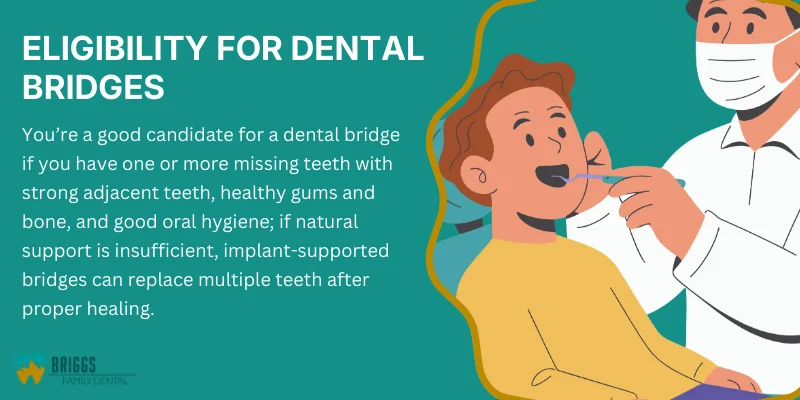
You may be a good candidate if you have one or more missing teeth and healthy teeth on either side of the gap. These teeth must be strong enough to support the bridge.
Your dentist will check your gums, bone health, and bite. People with good oral hygiene and regular dental care often do well with bridges. If nearby teeth are weak or missing, implants may support the bridge instead.
The implant-supported bridges can replace several missing teeth in a row once the implants have fully healed and bonded to the jawbone, typically after a few months. This option works well when natural support teeth are not available.
Considering dental bridges in New Market, VA? Contact Briggs Family Dental to explore the best type for your smile.
Types of Dental Bridges
Different bridge types replace missing teeth in specific ways. Each option uses nearby teeth or dental implants for support and differs in strength, cost, and preparation. Knowing how each one works helps you choose a bridge that fits your mouth and daily needs.
Traditional Dental Bridge vs. Cantilever Dental Bridge
A traditional dental bridge, also called a traditional fixed bridge, replaces one or more missing teeth when you have healthy teeth on both sides of the gap. Your dentist places dental crowns on those teeth to hold the false tooth in place.
This bridge type is well-suited for back teeth because it provides strong support. It also requires removing some enamel, which is permanent.
A cantilever dental bridge works when you have a tooth on only one side of the gap. The bridge anchors to that single tooth. Dentists often avoid cantilever dental bridges in high-bite areas because uneven pressure can cause damage. This option fits limited cases and needs careful planning.
Key differences at a glance:
| Feature | Traditional Bridge | Cantilever Bridge |
| Support | Two teeth | One tooth |
| Best for | Back teeth | Low-bite areas |
| Risk level | Moderate | Higher stress |
Maryland Dental Bridge Overview
A Maryland dental bridge, also called a Maryland bonded bridge or resin-bonded bridge, replaces front teeth with less tooth removal.
The false tooth attaches to nearby teeth using thin metal or porcelain wings bonded to the back surfaces. Dentists often choose this option when nearby teeth remain healthy and largely intact.
Maryland dental bridges work best for light biting. They may loosen over time, especially on molars.
Why people choose it:
- No crowns needed
- Less enamel removal
- Best for front teeth
Implant-Supported Dental Bridge Basics
An implant-supported dental bridge uses dental implants instead of natural teeth for support. Each implant acts like an artificial root placed in your jaw. After healing, the dentist attaches a bridge on top. This option works well when you miss several teeth in a row and want strong, long-term support.
Implant-supported bridges feel stable and help protect your jawbone. The process takes longer because the implants must bond with the bone first. Compared to a partial denture, this bridge stays fixed in place and does not move when you eat or speak.
Comparing Key Features of Each Dental Bridge Type
Dental bridges vary in strength, lifespan, and placement. Knowing how they handle chewing forces, where they work best, and which bridge materials they use helps you choose the right dental restoration for your needs.
Durability and Longevity
When you ask how long dental bridges last, the answer depends on the type and how you care for them. Implant-supported bridges often last the longest because implants anchor them directly in the jaw. Many last 15 years or more with good hygiene and regular dental visits.
Traditional bridges also offer strong support. They rely on nearby teeth, so their lifespan depends on the health of those teeth and the crowns placed on them. Cantilever bridges tend to wear faster because one tooth supports all chewing forces, which limits where dentists place them.
Front teeth replacement usually places less pressure on a bridge. Dentists often recommend them for areas of lower bite stress, not for back teeth.
Best Uses and Limitations
Each bridge type solves a specific problem. Traditional dental bridges work best when you have healthy teeth on both sides of a gap. They restore chewing function well but require reshaping the supporting teeth, which can increase the risk of tooth decay if hygiene slips.
- Cantilever bridges fit spaces with only one nearby tooth. Dentists limit their use because uneven chewing forces can strain that single tooth over time.
- Maryland bonded bridges preserve more natural tooth structure. Dentists often use them for front teeth replacement, where appearance matters more than heavy biting.
- Implant-supported bridges avoid stress on natural teeth. They need enough bone and cost more, but many patients choose them for long-term stability and easier cleaning.
Have questions about the different types of dental bridges or which option fits your needs? Contact our team to get expert guidance and personalized recommendations.
Materials Used in Dental Bridges
Bridge materials affect strength, appearance, and wear. Porcelain-fused-to-metal bridges combine a metal base with a porcelain coating. This design balances durability with a natural look and suits both front and back teeth.
Zirconia bridges resist cracks and handle strong chewing forces. Dentists often choose them when you grind your teeth or need a long span bridge.
Composite resin bridges cost less and blend well with teeth. They work best for small gaps and lighter use.
The table below shows common options:
| Material | Strength | Best Use |
| Porcelain-fused-to-metal | High | Back or front teeth |
| Zirconia | Very high | Heavy bite areas |
| Composite resin | Moderate | Small, visible gaps |
Fill out new patient forms online before their visit to streamline your consultation and discuss customized bridge solutions for lasting oral health.
Process of Getting a Dental Bridge
Getting a dental bridge usually takes a few visits spread over several weeks. Your dentist prepares nearby teeth, protects the area with a temporary bridge, and then places the final bridge once it fits well and feels comfortable.
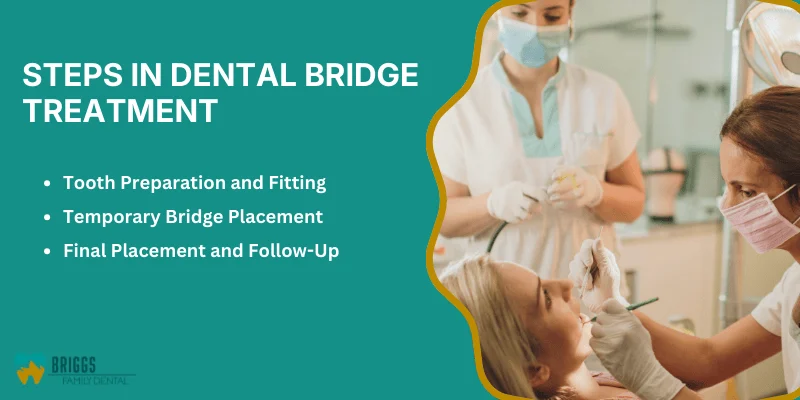
Tooth Preparation and Fitting
Your dentist starts by shaping the teeth next to the gap. This tooth preparation removes a small amount of enamel so crowns can fit over the teeth. You receive local anesthesia, so you stay comfortable during the visit.
After shaping, your dentist takes impressions or digital scans. These records help create a bridge that matches your bite and tooth color. The lab uses this information to build your custom bridge. The process follows the standard steps described in the dental bridge procedure process.
You may notice mild sensitivity after this visit. It usually fades within a few days with normal care.
Temporary Bridge Placement
Before you leave, your dentist places a temporary bridge. This bridge protects the prepared teeth and keeps them from shifting. It also helps you chew and speak while the lab makes your final bridge.
Temporary bridges need gentle care. Avoid sticky or hard foods, and chew on the other side when possible. Clean the area daily, but slide floss out from the side instead of pulling it up.
This short-term step matters. A poor fit or damage can affect the final result, as explained in guides on getting a dental bridge.
Final Placement and Follow-Up
At your next visit, your dentist will remove the temporary bridge and check the fit of the final bridge. They look at bite alignment, comfort, and color. Small adjustments ensure the bridge feels natural before cementing it in place.
Once set, you can resume eating normally. Keep the bridge clean with daily brushing and floss tools made for bridges. Schedule dental check-ups and professional cleanings to protect the bridge and nearby teeth.
Caring for Dental Bridges and Oral Health
Good care keeps your dental bridge stable and protects the teeth and gums that support it. Daily cleaning, the right tools, and quick action when problems start all help your bridge last longer and feel comfortable.
Daily Oral Hygiene Tips
You need strong oral hygiene habits to protect your bridge and nearby teeth. Brush twice a day using a soft-bristled toothbrush. Aim the bristles along the gumline to remove plaque where gum disease often begins.
Use fluoride toothpaste to lower the risk of tooth decay on the teeth that hold the bridge in place. Brush all sides of each tooth, not just the bridge.
Floss every day, even though bridges make flossing harder. A floss threader helps you guide floss under the false tooth and along the gums. Move the floss gently to avoid hurting the tissue.
Rinse with an alcohol-free mouthwash if your dentist recommends one. It can help reduce bacteria and keep your breath fresh.
Special Tools for Cleaning Bridges
Some tools make bridge care easier and more effective. An interdental brush cleans tight spaces around the bridge where a regular brush cannot reach. Choose a size that fits without forcing it.
A floss threader works well for cleaning under the bridge. You slide the stiff end through the gap, then move the floss back and forth to clear food and plaque.
Many people also use water flossers. These devices spray water to clean under and around bridges. They help, but they do not replace flossing.
Helpful tools at a glance:
| Tool | What it does |
| Floss threader | Cleans under the bridge |
| Interdental brush | Cleans small gaps |
| Water flosser | Rinses hard-to-reach areas |
Signs of Bridge Problems
Monitor changes in how your bridge feels. Soreness, swelling, or bleeding gums may indicate periodontal disease around the bridge.
Watch for bad smells or a bad taste that does not go away. These signs may indicate trapped food or plaque buildup, which increases the risk of tooth decay.
A loose bridge, pain when biting, or cracks in the material require prompt attention. Do not ignore these signs, even if the pain feels mild.
Call your dentist if you notice redness, pus, or ongoing discomfort. Quick treatment helps protect your bridge and the natural teeth that support it.
Choosing the Right Tooth Replacement Option
You have several tooth-replacement options, and each affects how you chew, speak, and protect your oral health. Your choice depends on your budget and how long you want the result to last.
Comparing Dental Bridges and Implants
Dental bridges and implants both replace missing teeth, but they work in different ways. A bridge fills the gap by attaching to nearby teeth. An implant replaces the tooth root and stands on its own in the jawbone.
A bridge often costs less and finishes faster. An implant takes longer because it needs healing time. Implants help protect jawbone strength, while bridges rely on support teeth.
You may prefer a bridge if you want a fixed option without surgery. You may prefer an implant if you want a single-tooth solution that does not affect nearby teeth.
Many people compare these options when reviewing dental implants, bridges, and other tooth replacement options.
| Feature | Dental Bridge | Dental Implant |
| Surgery needed | No | Yes |
| Treatment time | Weeks | Months |
| Affects nearby teeth | Yes | No |
Factors in Bridge Selection
Choosing the right dental bridge starts with your oral health. Your dentist checks the strength of nearby teeth, gum health, and bite alignment. Healthy support teeth matter because they hold the bridge in place.
The location of the missing tooth also matters. Front teeth may work well with resin-bonded bridges. Back teeth often need stronger fixed bridges to handle chewing force.
Other factors include cost, daily care, and how long you want the bridge to last. You may be a good candidate for a dental bridge if you want a fixed solution and have stable nearby teeth. Detailed guides on tooth replacement options often explain these trade-offs clearly.
Restoring Your Smile and Confidence

Replacing a missing tooth does more than fill a gap. It helps you chew and speak clearly and keeps nearby teeth from shifting. A well-fitted bridge supports proper bite alignment and reduces strain on your jaw.
Many people feel more comfortable smiling after treatment. Eating becomes easier, and speech often sounds more natural. These changes can improve daily comfort without drawing attention to the dental work.
Regular brushing, flossing under the bridge, and dental visits help protect your investment. With proper care, a bridge can support your oral health and help restore your smile in a natural, reliable way.
Call us today to schedule your visit and learn which dental bridge option is best for restoring your smile and oral health.
Frequently Asked Questions
Dental bridges come in several forms, each with different support methods, materials, costs, and lifespans. These answers explain how the options compare so you can understand what may fit your dental needs and budget.
What are the different types of dental bridges available?
You can choose from four main types of dental bridges: traditional, cantilever, Maryland, and implant-supported bridges. Each type is best suited to specific situations based on tooth location and support needs.
Traditional bridges use crowns on both sides of a missing tooth and remain the most common option. These dental bridges replace missing teeth, restoring chewing function and appearance.
Maryland bridges attach to the back of nearby teeth and work best for front teeth. Implant-supported bridges use dental implants in place of natural teeth and provide strong support for larger gaps.
How much does a dental bridge typically cost?
The cost of a dental bridge depends on the type, material, and number of missing teeth. Prices often range from several hundred to several thousand dollars.
Traditional and Maryland bridges usually cost less than implant-supported bridges. Implant-supported options cost more because they require surgery and additional appointments.
What are the distinctions between a dental bridge and an implant?
A dental bridge uses nearby teeth or implants to support a false tooth. A dental implant replaces the tooth root and stands on its own.
Bridges typically take less time to complete and do not require surgery. Implants take longer but help preserve jawbone and do not rely on neighboring teeth for support.
How long can I expect my dental bridge to last?
Most dental bridges last between five and ten years with proper care. Daily brushing, flossing, and regular dental visits help extend their lifespan.
Some bridges last longer when you avoid hard or sticky foods. Implant-supported bridges often last longer due to their stable support.
Can you explain the cost differences between the various dental bridge materials?
Dental bridge materials include metal alloys, porcelain, ceramic, and combinations of these materials. Metal bridges usually cost less but look less natural. Porcelain and ceramic bridges cost more because they match your natural teeth better.
What are the pros and cons of porcelain vs. plastic bridges?
Porcelain bridges look natural and resist stains, making them a popular choice for visible teeth. They cost more but offer better appearance and durability.
Plastic bridges cost less and work well as temporary solutions. They wear down faster and do not match natural teeth as closely as porcelain.