



You can fix chips, close small gaps, and brighten teeth quickly and without major dental work.
Cosmetic bonding uses tooth-colored resin to reshape and repair teeth in a single visit, giving you a natural look with minimal drilling and little recovery time.
You’ll learn the benefits of cosmetic bonding, how the procedure works, why it suits many people with minor flaws, and what to expect during and after treatment. This simple option can save time and money while still making a real change in your smile.
Key Takeaways
- Bonding can correct small cosmetic issues fast and with little tooth removal.
- The treatment usually finishes in one appointment and looks natural.
- Proper care helps bonded teeth last longer and keeps your smile healthy.
How Cosmetic Bonding Enhances Your Smile
Cosmetic bonding fixes common flaws with one visit and little tooth removal. It gives you natural-looking results that match your tooth shape and color.
Repairing Chips and Cracks
If you have a small chip or a hairline crack, cosmetic bonding uses tooth-colored resin to rebuild the missing part. Your dentist will roughen the tooth surface, apply a bonding agent, then shape the composite resin to match your tooth’s original contour.
The resin hardens under a curing light in minutes, so you leave with a stronger tooth and a seamless look.
Bonding works best for minor damage. It avoids crowns or veneers when the tooth structure is mostly intact. You should avoid biting very hard objects and grinders may need a night guard to protect the bonded area.
Closing Gaps Between Teeth
Bonding can close small to moderate gaps (diastemas) by adding resin to the sides of teeth. The dentist selects a shade that blends with your enamel and sculpts the resin to create even spacing. This keeps the result subtle and natural-looking.
The procedure is quick and reversible compared with permanent restorations. It also costs less than veneers. For wider spaces or major bite issues, a dentist may recommend orthodontics first, but bonding still serves as a fast cosmetic fix for many gap concerns.
Improving Tooth Color and Discoloration
If one or more teeth look stained or discolored and whitening won’t help, bonding can cover those spots with composite that matches your brightened teeth. The dentist roughens and bonds the surface, then layers the composite to mimic enamel translucency and shine.
Bonding resists many stains but not all; tobacco and strong pigments can dull it over time. You can polish or replace the bonded material later to maintain color. This makes bonding a practical option when you want targeted color improvements without full crowns.
Reshaping Misshapen Teeth
Bonding lets your dentist alter the length, contour, or angles of teeth so your smile looks more even. The resin fills narrow or worn areas and can lengthen short front teeth. Your dentist sculpts and polishes the composite to match nearby teeth for a balanced, natural-looking smile.
This approach preserves most of your healthy tooth and keeps the process minimally invasive. It’s ideal for mild alignment or shape flaws that don’t need braces or extensive crowns. If you want a preview, many practices offer mock-ups or temporary models so you can see the expected change before the final bonding.
Considering cosmetic bonding in New Market, VA? Contact us to learn how this minimally invasive treatment can enhance your smile safely and effectively.
Cosmetic Bonding Procedure: Step-by-Step
You will see how the dentist picks the right color, prepares the tooth with minimal changes, applies and sculpts the tooth-colored resin, then hardens and polishes the bonded tooth for a natural look. Each step focuses on predictable, practical actions you can expect during a single visit.
Shade Selection and Shade Guide
Your dentist starts by choosing a shade that matches your nearby teeth. They use a shade guide, a set of tooth samples, to compare directly against your enamel under natural light. Tell the dentist if you plan to whiten later; matching now to unwhitened teeth can affect final color.
The team may take photos or use digital shade-matching tools for more precision. They note subtle variations like translucency at the edges and darker areas near the gumline. This reduces the chance your bonded tooth will stand out. A good match improves how long the composite resin looks natural.
Tooth Preparation and Minimal Tooth Preparation
You usually won’t need much tooth removal. The dentist cleans the tooth, then roughens the surface slightly with an etching gel or a micro-roughening tool to help the composite resin bond. If there’s decay, they remove it first, but for purely cosmetic fixes, they keep changes minimal.
No anesthesia is common unless you have sensitivity or a cavity. The goal is to preserve as much natural enamel as possible. That minimal tooth preparation protects the tooth and makes future repairs easier if the bonded area chips.
Composite Application and Sculpting
The dentist applies a tooth-colored composite resin in thin layers. Each layer lets the dentist shape the tooth step by step, building up chips, closing small gaps, or changing contours. You’ll see the dentist check shape and bite as they sculpt so your bonded teeth feel natural when you close.
They pick composite shades to mimic the tooth’s inner and outer tones, blending several if needed. The material is moldable like putty, which helps create smooth transitions between the natural tooth and the bonded area. This careful sculpting reduces visible borders and improves durability.
Curing Light and Finishing Touches
After sculpting each layer, the dentist uses a curing light to harden the composite resin. The light activates the resin’s chemicals and sets the material in seconds. They cure in stages to avoid stress and to ensure each layer bonds fully.
Once hardened, the dentist trims, shapes, and polishes the bonded tooth. Polishing matches the sheen of adjacent teeth and smooths edges so the bonded tooth resists stains. The final checks include bite alignment and comfort. They may give care tips to help your bonded teeth last longer.
Advantages of Cosmetic Bonding Over Other Treatments
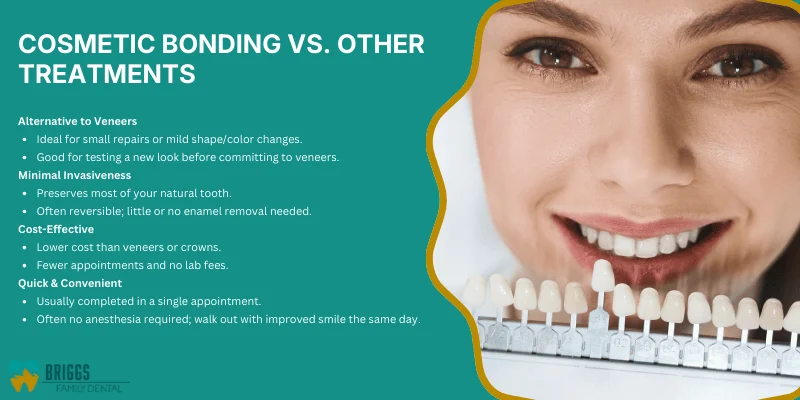
Cosmetic bonding fixes chips, gaps, and stains with tooth-colored composite in one visit. It usually needs little or no enamel removal, costs less than many options, and can be done quickly in the dental chair.
Alternative to Veneers
If you want to change the look of one or two front teeth, bonding often replaces veneers. Veneers require shaping the tooth and making a lab-made shell. Bonding uses a tooth-colored composite applied directly to your tooth, so you avoid waiting for lab work and temporary veneers.
Bonding works best for small repairs and mild shape or color changes. It won’t match veneers for major reshaping or hiding large stains, but it lets you test a new look without committing to permanent changes. If you later choose veneers, your dentist can usually do them after bonding.
Minimal Invasiveness
You keep more of your natural tooth with bonding than with many other cosmetic dental procedures. Often the dentist only roughens the surface or removes a tiny amount of enamel. That preserves tooth strength and sensitivity.
This minimal tooth preparation means bonding can be reversible in some cases. You avoid more aggressive drilling or crowns unless the tooth needs structural repair. For many people this lowers anxiety and keeps future options open.
Quick and Convenient
Most bonding treatments finish in a single appointment. Your dentist will shape the composite, harden it with a curing light, and polish it, often within an hour for a single tooth. You walk out with an improved smile the same day.
You usually do not need anesthesia for purely cosmetic work. That makes the visit faster and simpler. If you have several teeth to treat, your dentist can plan staged visits to keep each visit short.
Cost-Effectiveness
Bonding costs much less than veneers or crowns for similar minor fixes. You save on lab fees and multiple appointments that veneers often require. For budget-conscious patients, bonding gives visible results without large upfront expense.
Remember bonded composite can stain or wear sooner than porcelain, so plan for possible touch-ups or replacements every few years. Still, the lower initial cost and simpler care make bonding a practical choice for many people who want fast, affordable cosmetic improvement.
New to Briggs Family Dental? Complete your new patient forms online before your visit to save time and ensure a smooth cosmetic bonding consultation.
Caring for Bonded Teeth and Longevity
Good daily care, smart habits, and regular dental visits keep bonding strong and stain-free. Small changes, like using the right toothpaste and wearing a nightguard, make the biggest difference in how long your bonding lasts.
Oral Hygiene Tips
Brush twice daily with a soft-bristled brush and a non-abrasive toothpaste to avoid scratching the composite. Use gentle circular strokes and spend at least two minutes, paying close attention to the edges where the bonding meets natural tooth.
Floss every day to stop decay from forming at the bonded margins. If flossing lifts at the bonding edge, slide rather than snap the floss through to avoid catching and weakening the material.
Add a water flosser for extra cleaning around gumlines and tight spaces. Rinse with plain water after staining drinks, and schedule professional cleanings every 3–6 months, depending on how prone your teeth are to stains.
Habits to Avoid
Avoid biting hard objects like ice, pens, or fingernails; these cause chips and cracks in the composite. Do not use your teeth to open packages or cut thread.
Cut back on frequent coffee, red wine, dark sodas, and strongly pigmented foods that can stain composite. When you do consume them, drink water afterward or use a straw for front teeth.
If you grind or clench, get a custom nightguard. Untreated bruxism causes wear and small fractures that shorten bonding life. Also avoid highly abrasive whitening toothpastes and aggressive brushing that dull the finish.
Expected Lifespan and Maintenance
Bonding usually lasts several years, commonly 5–10 years, depending on location, bite forces, and care. Front teeth subjected to biting and staining may need touch-ups sooner than back teeth.
Plan on routine maintenance: polish or repair small chips during hygiene visits. If color change or rough edges appear, your dentist can recontour or add new composite in a single appointment most of the time.
Keep regular dental check-ups so your provider can spot early wear, check margins for decay, and recommend cleaning frequency. Timely, simple repairs often prevent larger restorations later.
For more detailed care steps, see a practical guide on keeping bonded teeth long-lasting at Coastal Dental Arts.
Who Should Consider Cosmetic Bonding?
Cosmetic bonding can fix small chips, close narrow gaps, hide stains, or reshape a single tooth quickly and with minimal cost. It uses tooth-colored composite resin and usually works in one visit, making it a practical choice for targeted smile fixes.
Ideal Candidates

You are a good candidate if you have small chips, minor cracks, or gaps under about 2–3 mm that bother you. Composite resin bonds well to enamel, so if your tooth structure is mostly healthy, bonding can restore shape and color without cutting away much tooth. It also fits if you have stains that don’t respond to whitening or want to change one tooth to match the rest.
If you want a fast, lower-cost cosmetic dental procedure and can avoid habits like chewing ice or biting pens, bonding usually lasts 5–10 years with normal care. People who need a single-tooth fix or want a reversible option before choosing veneers or crowns often pick bonding first.
Limitations and When to Consider Alternatives
Bonding is not ideal for large broken areas or teeth with heavy decay. If most of the tooth needs rebuilding, a crown gives stronger protection. Bonding can stain over time from coffee, wine, or tobacco because composite resin is more porous than porcelain.
If you grind your teeth or have severe bite problems, talk to your dentist about nightguards or orthodontics first. For long-term color stability, veneers or porcelain crowns resist stains better and last longer, though they require more tooth removal and cost more.
If you need extensive orthodontic alignment, braces or clear aligners will address position issues that bonding alone cannot fix.
Have questions about cosmetic bonding or want to schedule treatment? Visit us at Briggs Family Dental to speak with our friendly dental team.
Frequently Asked Questions
This section answers common questions about fixing chips, gaps, stains, and shape issues with tooth-colored resin. You will learn how the procedure works, what it can and can’t do, and how it compares to veneers.
What are the benefits of composite bonding for my smile?
Composite bonding hides chips, closes small gaps, and covers surface stains with material matched to your tooth color.
It usually takes one visit and costs less than veneers or crowns.
Bonding preserves more of your natural tooth because little or no enamel needs removal.
You can also get quick touch-ups if the resin chips or stains over time.
How does the process of getting teeth bonded work?
Your dentist cleans and roughens the tooth surface, then applies a tooth-colored resin.
They shape the resin, cure it with a special light, and polish it to match the rest of your teeth.
Most cases finish in 30–60 minutes per tooth.
You usually leave the office with the finished result and no need for lab work.
Can cosmetic bonding enhance the strength of my teeth?
Bonding can restore minor chips and protect the exposed area, which may reduce the chance of further damage.
It does not make a weak tooth as strong as a crown or onlay would.
Avoid biting hard objects and use a non-abrasive toothpaste to help the bonded area last longer.
If you grind your teeth, your dentist may recommend a night guard.
What differences should I expect between veneers and bonding?
Bonding uses composite resin applied directly to your teeth in one visit. Veneers are thin porcelain shells made in a lab and bonded to the tooth.
Veneers usually last longer and resist stains better, while bonding is cheaper and easier to repair.
Veneers often require removing more enamel. Bonding keeps more of your natural tooth.
If you want a quick, low-cost fix, bonding is a good choice; if you need a durable, stain-resistant result, ask about veneers.
What imperfections can be fixed with dental bonding?
Bonding works well for small chips, minor gaps, uneven edges, and surface discoloration.
It can also reshape slightly misshapen teeth and lengthen short teeth in some cases.
Bonding cannot correct major alignment problems or large structural damage.
For severe wear, deep decay, or major bite issues, other treatments may be better.
Is dental bonding a good alternative for a full veneer procedure?
Bonding can be a good alternative when you want a lower-cost, less invasive option for minor cosmetic issues.
It often suits people who want a temporary or test change before committing to veneers.
If you need long-term stain resistance, very precise color matching, or major shape changes, veneers may be the better choice.
Talk with your dentist about durability, cost, and how much tooth preparation each option requires.