


You want a straight smile that fits your life, not just the best-looking option. If your goal is speed and low visibility, clear aligners often win; if you have complex tooth movement or big bite problems, braces usually work better.
Bold choice: Choose aligners for convenience and subtlety, choose braces for tougher corrections and more control.
When deciding between invisalign vs braces, consider how long you’ll wear the device, how often you can visit the orthodontist, and whether visible hardware matters. Your lifestyle, the severity of your tooth issues, and your budget will decide what actually works for you.
Key Takeaways
- Aligners suit busy lives and people who want less noticeability.
- Braces handle more complex or severe tooth and bite problems.
- Cost, appointments, and how much effort you’ll commit affect the best choice for you.
Comparing Invisalign and Braces: Key Differences
Both options move teeth by applying steady pressure, but they differ in how that pressure is made and how you live with the device day to day. Key differences include how each works, how noticeable they are, and who they work best for.
How Each Treatment Works
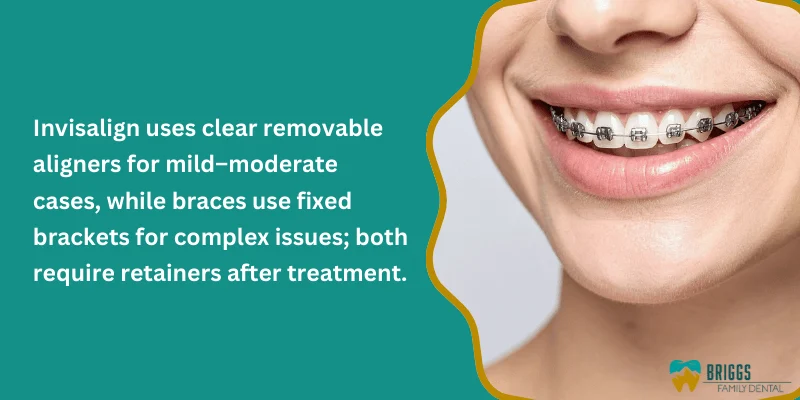
Invisalign uses a series of clear plastic trays called aligners that you switch every 1–3 weeks. Each tray shifts certain teeth a small amount. You typically wear aligners about 22 hours per day and remove them to eat and clean your teeth.
Your orthodontist or dentist will create a digital plan and may add small tooth-colored attachments to help the aligners grip and move teeth.
Traditional braces use brackets bonded to teeth and a wire that a clinician tightens or adjusts at visits. Braces can apply more complex forces and move teeth in multiple directions at once. You’ll visit the orthodontist regularly for adjustments, and brackets stay on until treatment finishes.
Both approaches require a retainer afterward to keep teeth in their new positions.
Aesthetics and Visibility
Clear aligners like Invisalign are nearly invisible from a short distance. That makes them popular if you want to keep a low profile at work, school, or social situations. The smooth plastic is less likely to irritate your lips and cheeks than metal brackets.
Metal braces are more visible, though ceramic or tooth-colored brackets reduce noticeability. Braces let you add colored bands, which some people like. Because braces are fixed, you don’t remove them for photos or events, so they’re always working even when you might forget to wear removable aligners.
Eligibility for Invisalign vs Braces
Invisalign works best for mild to moderate issues: small gaps, minor crowding, or mild bite problems. Complex cases, severe crowding, large rotations, big bite corrections, or teeth that need to be moved vertically, often need traditional braces for predictable results. Your orthodontist will evaluate X-rays, photos, and scans to decide.
Age and compliance matter. Teens and adults who reliably wear aligners suit Invisalign. If you’re unlikely to wear trays 22 hours a day, braces may be better. Prior orthodontic work, missing teeth, or certain jaw issues also steer the choice toward braces.
For a personalized recommendation, ask your orthodontist to compare treatment plans side by side.
Looking for the best teeth-straightening option in New Market, VA? Schedule a consultation today and let our orthodontic experts help you decide between Invisalign vs braces for your smile.
Effectiveness and Suitability for Different Dental Issues
Both clear aligners and braces can move teeth, but they work better for different problems. Think about how much tooth rotation, bite change, or space closure you need when choosing a treatment.
Treating Mild to Moderate Cases
If you have mild crowding, small gaps, or a simple overbite, Invisalign and other clear aligners often handle these well. Aligners move teeth with a series of custom plastic trays you wear most of the day. This works best when teeth need limited rotation or sliding rather than major tipping or vertical movement.
You’ll usually need good compliance: wear aligners about 22 hours daily for steady progress. Aligners are less visible and let you remove them to eat and clean, which helps oral hygiene during treatment.
Ask your orthodontist if your malocclusion is described as mild to moderate. They’ll check for rotated teeth, small crossbites, or minor misaligned teeth and confirm whether aligners can reach the movements needed.
Managing Complex Orthodontic Cases
Braces still lead for complex orthodontic issues like severe crowding, large rotations, open bite, or significant overbite/underbite correction. Fixed brackets and wires give precise control over each tooth’s angle, root position, and vertical movement. This helps when you need tooth extrusion, intrusion, or major bite changes.
Complex cases often need extra appliances (elastics, springs, or temporary anchors) that work better with braces. These tools let your orthodontist correct jaw relationships and shift difficult teeth more predictably than aligners in many situations.
If your case involves large gaps, severely rotated teeth, or a crossbite that affects jaw alignment, plan for more frequent office visits and a treatment timeline your orthodontist explains. Braces may also pair with surgery or other treatments when jaw correction is needed.
Comfort, Lifestyle, and Day-to-Day Experience
You will trade some daily habits for different comforts depending on whether you choose removable clear aligners or fixed braces. Think about how often you want to remove your appliance, how you clean your teeth, and what you can eat.
Wearing Aligners and Braces
If you choose Invisalign clear aligners, you wear them about 20–22 hours per day. You take them out to eat and to brush and floss, which makes oral health care easier because you can clean your teeth normally.
Aligners made with SmartTrack material fit snugly and feel smooth on your cheeks and lips. You may feel pressure for a day or two after changing sets.
With fixed braces, brackets and wires stay on your teeth the whole time. You cannot remove them, so you need special brushing and flossing tools and more time to avoid plaque buildup.
Self-ligating braces reduce friction and can be more comfortable for some people, but metal or clear braces can still rub against your lips. Adjustments can cause soreness for a few days after each visit.
Dietary Restrictions and Eating Habits
With aligners you remove trays for every meal and snack. That means you can eat normally, but you must brush before putting aligners back in to avoid trapping food, which can harm oral health. Avoid very hot drinks while wearing aligners because heat can warp the plastic.
With fixed braces you must avoid hard, sticky, or crunchy foods that can break brackets and bend wires. Examples to skip: popcorn, hard candy, chewy caramels, and whole apples (cut them instead).
Clear braces look less noticeable than metal, but they still need the same food care. Overall, braces demand more long-term changes to your eating habits than removable aligners.
Treatment Process and Maintenance
You will learn what happens before treatment, how to keep your teeth clean during treatment, and when to see your orthodontist. Expect planning steps, daily cleaning needs, and regular checkups to keep progress on track.
Consultation and Planning
Your first visit includes a full exam, X-rays, and photos so the orthodontist can measure tooth movement. They will discuss whether braces or Invisalign fit your case, show a treatment timeline, and give a written cost estimate.
If you choose Invisalign, the office will take a digital scan or impression to create a 3D plan and a sequence of aligners. You usually get your first few aligners at delivery and instructions to wear them 20–22 hours daily.
If you choose braces, the orthodontist will place brackets and wires in one appointment and explain expected wire changes. You will also learn about retainer use after active treatment ends and how long retention might last.
Oral Hygiene and Cleaning
With Invisalign, remove aligners before eating and brush your teeth before putting them back on. Clean aligners daily with a soft brush and mild soap or a manufacturer cleaner to avoid odor and staining.
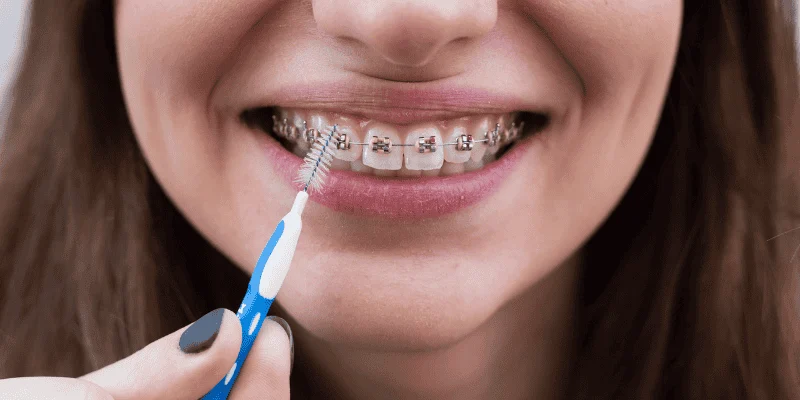
With braces, use a soft-bristle brush, interdental brushes, and floss threaders to clean around brackets and wires. Brush after every meal when possible to remove trapped food and reduce plaque buildup.
Keep seeing your general dentist for regular cleanings and checkups every six months, or more often if the orthodontist recommends it. Good oral hygiene helps prevent cavities, gum inflammation, and treatment delays.
New to Briggs Family Dental? Complete your new patient forms online before your first visit to save time and prepare for your Invisalign or braces consultation.
Orthodontist Visits and Adjustments
You will visit the orthodontist every 4–8 weeks for braces adjustments or progress checks on Invisalign. For braces, the orthodontist tightens or changes wires and may add elastic bands to correct bite alignment.
For Invisalign, visits confirm teeth follow the planned movement. The orthodontist may order refinement scans if teeth stall or shift differently than planned, and will prescribe new aligners as needed.
After active treatment ends, you will get retainers. Wear them as instructed, often full-time for months then nights only, to keep teeth from drifting. The orthodontist will check retainers and tooth position at follow-up visits.
Costs, Insurance, and Payment Options
You’ll see a wide price range for straightening teeth, and your insurance and payment plan can cut what you pay. Know typical price brackets, how insurance usually helps, and common financing choices so you can plan the total cost.
Braces Cost vs Invisalign Cost
Traditional braces often cost between about $3,000 and $7,500 depending on complexity, materials, and location. Metal braces are usually at the lower end; ceramic or lingual braces sit higher because they take more time and skill to place.
Invisalign and other clear aligners generally range from about $2,000 to $8,000. Your final price depends on how many aligner sets you need, any refinements, and whether your case needs attachments or additional procedures.
Ask your orthodontist for a written estimate that lists initial fees, adjustment visits, and retention (like a retainer). Get a second opinion if estimates differ a lot. Compare total treatment length and included services when you weigh braces versus clear aligners.
Insurance Coverage
Many dental plans cover orthodontic treatment partly and treat Invisalign the same as braces. Typical coverage caps are around $1,000–$3,000 lifetime for orthodontics, but check your individual plan for exact limits and age restrictions.
Coverage can be a percentage (for example, 50% up to a cap) or a fixed dollar amount. Some plans require a waiting period or only cover treatment started before a certain age. Ask your insurer whether they cover diagnostic records, X-rays, or retainers, these are sometimes excluded.
Get a pre-treatment estimate from your insurer and a written treatment plan from your orthodontist to speed approval. If your plan pays directly to you instead of the provider, factor that into how you handle monthly payments.
Financing and Payment Plans
Many orthodontists offer interest-free monthly plans that split the total into equal payments over the treatment time. Typical down payments range from $0 to $1,000, followed by monthly installments until treatment ends.
Third-party medical financing lets you choose longer terms, sometimes with interest. Compare APR, fees, and early-payoff penalties. At-home aligner companies usually offer lower upfront prices and their own payment plans, but they may not include in-person checks.
Ask for a clear payment schedule in writing. Check whether the plan covers mid-treatment changes, lost aligners, or emergency visits. If you have flexible spending (FSA) or health savings (HSA) accounts, you can often use those funds for braces or Invisalign.
Choosing the Best Teeth Straightening Option for You
You’ll weigh appearance, cost, treatment time, and how much daily care the option needs. Think about how visible the appliance will be, how often you can visit the clinic, and whether you can follow strict wearing rules.
Personal and Professional Considerations
Decide what matters most for your life. If you work in a client-facing job or are self-conscious about metal, clear aligners like Invisalign offer low visibility. If your case has severe crowding or complex bite issues, fixed braces give your orthodontist more precise control.
Talk to an orthodontist about time and costs. Ask for estimated months of treatment, number of office visits, and total fees. Check whether your dentist or orthodontist includes digital scans, X-rays, or retainers in the price.
Think about daily habits. Aligners require you to wear them 20–22 hours a day and remove them for eating and brushing. Braces mean no removal but need careful cleaning and food limits. Choose the option you can follow consistently.
Long-Term Results and Aftercare
Ask how each option protects your oral health after active treatment. Retainers are essential to keep your teeth from shifting back. Most patients wear a removable retainer nightly long term or a bonded retainer on the inside of the teeth for several years.
Find out who will manage follow-up care. Your orthodontist should set a retainer schedule, check for relapse, and treat gum or enamel issues that appear during or after treatment. Good aftercare protects your investment in straight teeth.
Check how each method affects hygiene. Aligners let you brush and floss normally, which lowers risk of cavities and gum problems. Braces require extra tools, floss threaders or interdental brushes, and more frequent cleanings to prevent plaque buildup.
Don’t settle for guesswork when choosing teeth-straightening treatments. Learn more about Invisalign vs braces at Briggs Family Dental, New Market, VA for expert guidance and personalized care.
Frequently Asked Questions
This section answers common questions about clear aligners and metal braces. You’ll find specific trade-offs on comfort, cost, treatment time, effectiveness, and real patient results.
What are the advantages and disadvantages of Invisalign compared to braces?
Invisalign is nearly invisible and removable. That makes eating and brushing easier and often causes less mouth irritation.
Braces work for complex tooth and jaw issues and don’t rely on patient discipline. They can irritate cheeks and require food limits.
Invisalign can be less effective for severe rotations, large bite changes, or teeth with crowns and bridges. Braces treat those cases reliably.
Braces are fixed, so you don’t risk losing or forgetting to wear them. However, cleaning around brackets and wires takes more time.
How do the costs of Invisalign and braces compare?
Clear aligner treatment often costs similarly to mid-range braces. Costs vary with case complexity and provider experience.
Traditional metal braces can be cheaper for simple cases but may cost more for specialty brackets. Insurance and payment plans can change your out-of-pocket amount.
Ask your orthodontist for a written estimate and what’s included, such as retainers, follow-up visits, or repair fees.
What is the typical duration of treatment for Invisalign versus braces?
Invisalign often completes mild to moderate cases in 6–18 months. You must wear aligners about 20–22 hours per day.
Braces typically take 12–36 months depending on complexity. Fixed hardware can move teeth in ways aligners sometimes cannot, which can lengthen or shorten treatment.
Your exact timeline depends on how severe the misalignment is and how well you follow instructions.
Can you share before and after experiences of Invisalign and traditional braces?
Many people report less mouth soreness and faster social comfort with Invisalign after a few weeks. You remove aligners to eat, which feels normal for daily life.
Braces users often note steady progress and success with tougher cases, but they may face food limits and occasional broken brackets. Results can be dramatic for complex corrections.
Ask your provider for before-and-after photos of cases like yours and patient testimonials to see realistic outcomes.
Which is more effective for teeth straightening, Invisalign or braces?
For mild to moderate alignment problems, Invisalign and braces can both be very effective. Success depends on the treatment plan and how consistently you follow it.
For severe crowding, large bite shifts, or complicated tooth movements, braces are generally more reliable. Aligners have improved but still have limits for some movements.
Talk with an orthodontist who can assess your bite and show which method will reach your goals.
What reasons might an orthodontist have for preferring traditional braces over Invisalign?
An orthodontist may choose braces when you need complex tooth rotation, vertical movement, or large bite correction. Braces give more control for those movements.
They may also prefer braces if you have crowns, bridges, or poor compliance with removable devices. Fixed appliances remove the risk of missed wear time.
Cost, habit, and clinical training can also influence the choice, as some providers have more experience with bracket-based systems.