



Skipping dental visits might seem like a way to save money now, but it often leads to bigger bills later.
Regular preventive dental care, including checkups and cleanings every six months, can help you avoid expensive treatments like root canals, crowns, and extractions by catching problems early when they’re easier and cheaper to fix.
Every dollar you spend on preventive care can save you between $8 and $50 on emergency or restorative procedures later.
Think of preventive dentistry as an investment in your health that pays off over time. Small cavities that could be fixed with a simple filling can turn into painful root canals if left untreated. Gum irritation that gets ignored can develop into gum disease that requires surgery.
Taking care of your teeth today means fewer dental emergencies and preventive dentistry cost savings.
Your oral health also affects your whole body. Problems like gum disease have been linked to heart disease and diabetes, while tooth pain can make it hard to eat well or feel confident. By staying on top of your dental care, you protect both your smile and your overall health.
Key Takeaways
- Regular dental visits help catch problems early, when treatments are simpler and less expensive
- Preventive car,e like cleanings and sealants, can stop cavities and gum disease before they require costly procedures
- Good daily oral hygiene habits combined with professional care protect your teeth and save money over your lifetime
How Preventive Dentistry Reduces Long-Term Costs
Regular dental visits and good oral hygiene habits protect your wallet by catching problems when they’re small and easy to fix. When you invest in routine dental care now, you avoid the need for expensive treatments like root canals, crowns, and emergency procedures later.
Early Detection Prevents Expensive Treatments
Your dentist can spot tiny cavities, gum disease, and other issues during preventive dental visits before they turn into major problems. A small cavity caught early might only need a simple filling that costs around $150 to $300. Wait too long, and that same tooth could need a root canal and crown costing $2,000 or more.
Dental exams also include X-rays that reveal problems hidden beneath your gums. Your dentist checks for early signs of gum disease, which is much easier and cheaper to treat in its beginning stages. Advanced gum disease requires deep cleanings, surgery, and sometimes tooth replacement.
Regular checkups let your dentist track changes in your mouth over time. They can identify weak spots in your enamel or areas where plaque builds up easily. This information helps you adjust your home care routine before damage occurs.
Avoiding Dental Emergencies and Unplanned Expenses
Preventive care keeps you away from emergency dental visits that disrupt your schedule and drain your bank account. Dental emergencies often happen at the worst times and require immediate attention that costs significantly more than routine care.
When you skip regular cleanings, plaque hardens into tartar that irritates your gums and weakens your teeth. This leads to infections, abscesses, and sudden tooth pain that sends you to the emergency dentist. Emergency visits typically cost 2 to 3 times more than scheduled appointments.
Preventive dental care also includes protective treatments like fluoride applications and dental sealants. These shield your teeth from decay and reduce your risk of sudden problems. Many dental insurance plans cover these preventive treatments at 100%, making them essentially free.
Reducing the Need for Restorative Procedures
Restorative dentistry procedures like crowns and bridges become necessary when teeth suffer significant damage or decay. These treatments are expensive and time-consuming compared to simple preventive care. A single dental crown can cost between $1,000 and $3,500, while a routine cleaning costs around $75 to $200.
Your preventive dental checkups include professional cleanings that remove buildup your toothbrush can’t reach. This protects your tooth enamel and prevents the decay that leads to fillings, crowns, and extractions.
Here’s how preventive care costs compare to restorative treatments:
| Preventive Service | Average Cost | Restorative Treatment | Average Cost |
| Routine cleaning | $75-$200 | Root canal | $800-$1,500 |
| Dental exam | $50-$150 | Crown | $1,000-$3,500 |
| Fluoride treatment | $20-$50 | Bridge | $2,000-$5,000 |
The money you spend on preventive dentistry today protects your long-term oral health and keeps your natural teeth strong for decades. Two cleanings and exams per year cost far less than one major restorative procedure.
Core Preventive Dentistry Services That Save Money
Preventive dental services form the foundation of affordable oral care by catching problems early and stopping them before they require expensive fixes.
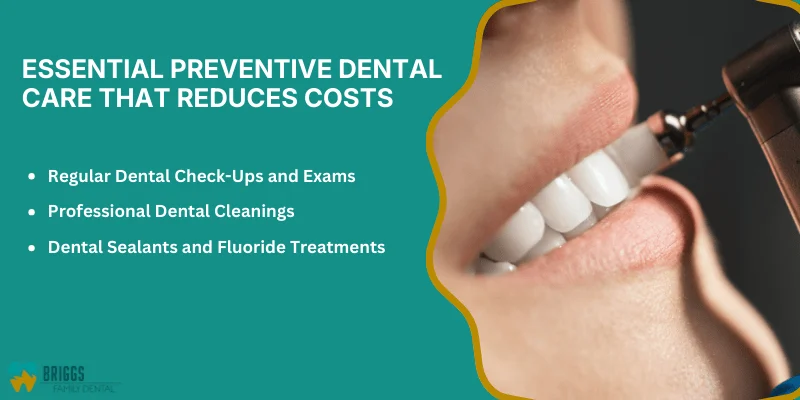
Dental insurance plans cover up to 100% of preventive dental care visits, making these services accessible and cost-effective for most patients.
Regular Dental Check-Ups and Exams
Your regular dental check-ups are essential for spotting issues before they turn into painful and expensive problems. During these visits, your dentist examines your teeth, gums, and mouth for signs of decay, gum disease, and oral cancer.
Early detection saves you money in these ways:
- Cavities caught early need simple fillings instead of root canals
- Gum disease treated in early stages prevents tooth loss
- Oral cancer screening can save your life and avoid costly treatments
Most dentists recommend dental exams every six months. Digital x-rays taken during these appointments show problems hiding between teeth and below the gum line. These images use less radiation than traditional x-rays and provide immediate results.
Dental checkups cost much less than emergency treatments. A routine exam might cost $50 to $150, while a root canal can run $800 to $1,500 per tooth.
Professional Dental Cleanings
Professional teeth cleaning removes plaque and tartar that your toothbrush cannot reach at home. Regular cleanings reduce dental problems and keep your teeth healthy between dental check-ups.
During a professional dental cleaning, your hygienist will:
- Remove hardened plaque (tartar) from your teeth
- Polish your teeth to remove surface stains
- Floss between all your teeth
- Apply fluoride treatment if needed
The cost of regular cleanings is minimal compared to treating gum disease or tooth decay. A cleaning typically costs $75 to $200, while treating advanced gum disease can cost thousands of dollars. Many insurance plans fully cover two cleanings per year.
Dental Sealants and Fluoride Treatments
Dental sealants and fluoride treatments provide extra protection against cavities, especially for children and adults prone to decay. These preventive dentistry services create barriers that shield your teeth from harmful bacteria.
Dental sealants are thin plastic coatings painted onto the chewing surfaces of back teeth. They fill in the grooves where food and bacteria often get trapped. Sealants can last up to 10 years and are particularly effective for children’s molars.
Fluoride treatment strengthens your tooth enamel and makes it more resistant to acid attacks from bacteria. While fluoride toothpaste helps at home, professional fluoride applications deliver concentrated protection.
Fluoride applications and dental sealants significantly reduce the risk of cavities, making them valuable investments.
These treatments cost $30 to $75 each, far less than filling a cavity at $150 to $450 per tooth.
Have questions about preventive dentistry? Contact our team in New Market, VA, to learn how professional care can maximize preventive dentistry cost savings for your family.
Daily Oral Hygiene: Key Habits for Cost Savings
Your daily oral hygiene habits have a direct impact on your wallet. Simple practices like brushing with fluoride toothpaste and flossing daily can prevent cavities and gum disease before they require expensive treatments.
Brushing and Flossing Effectively
Brushing twice a day for two minutes each time removes plaque and bacteria that cause tooth decay. You should use a soft-bristled toothbrush and replace it every three to four months.
The technique matters just as much as frequency. Hold your toothbrush at a 45-degree angle to your gums and use gentle circular motions. Don’t forget to brush your tongue to remove bacteria.
Flossing daily reaches the 40% of tooth surfaces your toothbrush can’t clean. When you floss, you remove food particles and plaque from between your teeth, where cavities often start. These preventive dentistry habits help you avoid fillings, crowns, and root canals, which can cost hundreds or thousands of dollars.
Many people skip flossing because they think brushing is enough. However, regular brushing and flossing together create a complete defense against oral health problems.
Using Fluoride Products
Fluoride strengthens your tooth enamel and makes it more resistant to acid attacks from bacteria. Using fluoride toothpaste twice daily is one of the easiest ways to prevent cavities.
Most dentists recommend toothpaste with at least 1,000 parts per million of fluoride for adults. Children under six should use a pea-sized amount to get the benefits while minimizing swallowing.
You might also benefit from fluoride mouthwash if you’re at higher risk for cavities. Your dentist can apply professional fluoride treatments during checkups for added protection. These treatments cost much less than filling cavities or treating decay.
Limiting Sugar and Eating for Oral Health
Sugar feeds the bacteria in your mouth that produce acid and cause tooth decay. Every time you eat or drink something sugary, your teeth face an acid attack that lasts about 20 minutes.
Limiting sugary snacks and drinks reduces how often your teeth are exposed to these attacks. When you do eat sugar, try to consume it with meals rather than throughout the day.
Foods that support oral health include:
- Cheese and dairy products that neutralize acid
- Crunchy vegetables that clean teeth naturally
- Water that rinses away food particles
- Nuts that provide minerals for strong teeth
Drinking water after meals helps wash away food debris and keeps your mouth hydrated. A diet that supports your oral hygiene routine helps you maintain your natural teeth and avoid expensive dental work.
Preventing Gum Disease and Preserving Gum Health
Taking care of your gums protects you from costly dental treatments down the road. Simple daily habits and regular checkups can stop gum disease before it damages your teeth and wallet.
Gum Disease Prevention Strategies
Brushing your teeth after meals removes food debris and plaque that can lead to gum disease. You should brush for two minutes twice daily, making sure to clean along the gum line where bacteria tend to gather.
Flossing once a day reaches the spaces between your teeth where your toothbrush can’t go. This step is vital for preventing gum disease because it removes plaque from areas that often develop into problem spots.
Many people skip this step, but it takes less than two minutes and can save you from expensive treatments later.
Using an antibacterial mouthwash adds another layer of protection. It helps reduce plaque and kills bacteria that brushing and flossing might miss.
Getting a comprehensive periodontal evaluation each year allows your dentist to check your teeth, gums, bite, and bone structure. Identifying symptoms of gum disease early helps you avoid serious issues like periodontitis, which can lead to tooth loss and require surgery or other intensive treatments.
Link Between Gum Health and Overall Costs
Gum disease starts small but can become expensive fast. When you ignore early signs like bleeding gums, the condition can progress to periodontitis, which damages the bone supporting your teeth.
Preventive dental care saves time, money, and stress by stopping problems before they get worse. A simple cleaning costs much less than treating advanced gum disease, which might require multiple appointments, deep cleanings, antibiotics, or even surgery.
Your gums also affect your overall health. Poor gum health has been linked to diabetes complications, heart problems, and other medical conditions that drive up healthcare costs.
By maintaining healthy gums through routine dental services and practices, you protect both your mouth and your body from expensive medical bills.
New to our practice? Complete your new patient forms online before your visit to streamline your first preventive care appointment and begin saving on future dental costs.
Family and Lifelong Benefits of Preventive Dentistry
Preventive care works differently at each stage of life, from protecting developing teeth in childhood to preserving natural teeth in retirement. Building comprehensive preventive services into your family’s routine creates habits that reduce dental costs across decades.

Preventive Dentistry for Children and Teens
Starting dental visits early sets the foundation for your child’s oral health. Your dentist should see your child by their first birthday or when their first tooth appears.
Key preventive services for young patients include:
- Dental sealants to protect permanent molars from decay
- Fluoride treatments to strengthen developing enamel
- Regular cleanings every six months
- Education on proper brushing and flossing techniques
Sealants can prevent cavities in the deep grooves of back teeth where food gets trapped easily. This simple treatment costs much less than filling multiple cavities later. Teaching your kids good habits now means they’ll need fewer fillings, crowns, and root canals as adults.
Teens face unique challenges like wisdom teeth development and increased cavity risk from sugary drinks. Regular checkups catch these issues before they become expensive problems.
Maintaining Oral Health in Adulthood

Your adult years bring different dental concerns that preventive care addresses before they escalate. Work stress, dietary changes, and busy schedules can lead to neglected oral health.
Regular cleanings remove tartar buildup that brushing alone can’t eliminate. Your hygienist can spot early gum disease when it’s still reversible with improved home care. Catching a small cavity early means a simple filling instead of a root canal and crown months later.
Adults also benefit from screenings for oral cancer, teeth grinding, and jaw problems. Your dentist can recommend a nightguard if you grind your teeth, preventing thousands of dollars in repair work. Long-term oral health depends on addressing these issues promptly.
Many adults skip dental visits when they feel fine, but problems develop silently. Gum disease and decay often don’t hurt until they’re advanced and costly to treat.
Senior-Specific Preventive Strategies
Your dental needs change as you age, making preventive care even more valuable. Seniors face higher risks for gum disease, tooth loss, and oral cancer.
Dry mouth from medications reduces your natural protection against cavities. Your dentist can recommend special rinses and treatments to combat this issue. Regular cleanings become more important because gum recession exposes tooth roots that decay more easily.
Important preventive measures for seniors:
- More frequent cleanings if you have gum disease
- Fluoride treatments to protect exposed roots
- Oral cancer screenings at every visit
- Denture care and adjustments
Keeping your natural teeth saves you from expensive implants or dentures. Even if you have some missing teeth, family dentistry practices can help you maintain what remains. Preventive care helps you avoid the health complications and costs that come with extensive tooth loss.
Insurance, Affordability, and Getting the Most from Preventive Dentistry
Most dental insurance plans cover preventive care at high rates, and understanding your benefits helps you take full advantage of routine services while keeping costs low.
Understanding Insurance Coverage for Preventive Care
Many dental insurance plans cover up to 100% of preventive dental care visits. This typically includes your twice-yearly checkups and cleanings.
Your preventive care coverage usually includes:
- Routine exams – Comprehensive oral health evaluations
- Professional cleanings – Removal of plaque and tartar buildup
- X-rays – Diagnostic imaging to detect hidden problems
- Fluoride treatments – Protective applications for cavity prevention
- Dental sealants – Protective coatings for back teeth
Most dental insurance plans provide comprehensive coverage for these services with little to no out-of-pocket expense. You should check your specific plan details to understand your benefits. Some plans may have waiting periods or limitations on certain services.
Maximizing Value from Preventive Dental Services
You get the most value when you use all the preventive benefits your insurance provides each year. Schedule your two covered cleanings and exams to catch problems early.
Ask your dentist about additional preventive treatments that fit your specific needs. Fluoride applications and sealants can significantly reduce your cavity risk. These small investments in preventive treatments reduce the risk of cavities and more expensive procedures later.
Keep track of when your benefits renew each year. Many people miss out on covered services simply because they forget to schedule appointments. Set reminders for your six-month checkups to stay on track.
Making Prevention Affordable for Everyone
Even without insurance, preventive care costs less than treating dental problems after they develop. A cleaning and exam typically costs between $75 and $200, while a root canal can cost $700 to $1,500.
Many dental offices offer payment plans or membership programs for patients without insurance. These programs often provide discounts on preventive services in exchange for an annual fee. Some dentists also offer sliding scale fees based on income.
Community health centers and dental schools provide affordable preventive dental care options. You can receive quality cleanings and exams at reduced rates while still maintaining your oral health.
Looking to save on long-term dental expenses in New Market? Schedule a preventive care appointment with Briggs Family Dental today.
Frequently Asked Questions
Regular dental visits and good home care habits can lower your dental bills by catching problems early. Simple steps like brushing properly and choosing tooth-friendly foods protect your wallet just as much as your smile.
What are the long-term cost advantages of regular dental check-ups?
Regular dental check-ups help you avoid expensive treatments later. When you visit your dentist every six months, they can spot small problems like cavities or gum disease before they get worse.
A small filling might cost $150 to $300. But if you skip check-ups and that cavity grows, you might need a root canal and crown that costs $2,000 or more. Preventive dental care helps identify potential issues early and stops them from becoming major problems.
Your dentist can also catch signs of oral cancer, infections, and other health issues during routine exams. Finding these early means simpler and cheaper treatment options.
How does practicing good oral hygiene at home contribute to cost savings?
Brushing twice a day and flossing daily keeps your teeth healthy between dental visits. These simple habits remove plaque and food particles that cause cavities and gum disease.
Good home care costs very little. A toothbrush, toothpaste, and floss might run you $20 per month. Compare that to treating gum disease, which can cost thousands of dollars for deep cleanings and other procedures.
When you take care of your teeth at home, you need fewer fillings and other dental work. Your regular cleanings also go faster and cost less because your teeth stay in better shape.
Can early detection and treatment of dental issues help reduce future expenses?
Catching dental problems early saves you money and prevents pain. A dentist can fix a small cavity in one visit with a simple filling.
If you wait, that same cavity can reach the tooth’s nerve. Then you need a root canal, which takes multiple visits and costs much more. The tooth might even need to be pulled and replaced with an implant.
Preventive care helps you avoid the discomfort and costs associated with major dental issues. Early treatment means less time in the dental chair and more money in your pocket.
Are there financial benefits to getting professional dental cleanings regularly?
Professional cleanings remove tartar and plaque that you can’t get rid of at home. This hard buildup can only be removed with special dental tools.
Without regular cleanings, tartar builds up and causes gum disease. Treating gum disease requires deep cleanings that cost two to four times more than regular cleanings. You might also need medications or even surgery.
Most dental insurance plans cover two cleanings per year at little or no cost to you. Taking advantage of these covered visits helps you avoid costly treatments down the road.
How can investing in dental sealants and fluoride treatments impact overall dental costs?
Dental sealants are thin coatings that protect your back teeth from cavities. They cost about $30 to $60 per tooth but can last up to ten years.
Sealants block out food and bacteria that cause decay. Kids and teens benefit most from sealants, but adults with deep grooves in their teeth can use them too.
Fluoride treatments strengthen your tooth enamel and help prevent cavities. These treatments cost $20 to $50 per visit but can save you hundreds on fillings. Many insurance plans cover fluoride for children, and some cover adults at higher risk for cavities.
What role does a healthy diet play in minimizing dental expenses over time?
What you eat affects your dental health and your wallet. Sugary and acidic foods feed the bacteria that cause cavities.
Drinking water instead of soda protects your teeth from decay and saves you money on drinks. Crunchy fruits and vegetables like apples and carrots help clean your teeth naturally.
Limiting snacks between meals gives your teeth time to recover from acid attacks. When you do snack, choose cheese, nuts, or vegetables instead of candy or chips. Maintaining optimal oral health through diet reduces your need for dental work and keeps your bills lower.