



Many parents wonder when they should start taking their child to the dentist. The answer might surprise you.
Children should visit a dentist by their first birthday or within six months of their first tooth, whichever occurs first.
Starting dental care early helps your child avoid problems like cavities and tooth decay. It also helps them feel comfortable with dentists as they grow up. Early dental visits allow dentists to monitor how your child’s teeth develop and identify issues before they become bigger problems.
You play a big role in your child’s dental health. Teaching good brushing habits and making dental visits a normal part of life sets your child up for a lifetime of healthy teeth.
This guide shares practical pediatric dentistry tips to help you start your child’s dental care the right way from the very beginning.
Key Takeaways
- Schedule your child’s first dental visit by age one or when their first tooth appears
- Regular checkups and good home care habits prevent cavities and other dental problems
- Working with a pediatric dentist and teaching your child proper oral hygiene creates lifelong healthy habits
Why Early Dental Care Is Essential
Starting dental care when your child is young helps prevent cavities and tooth decay while building habits that last a lifetime. Baby teeth play a bigger role than you might think in your child’s growth and development.

Building Lifelong Oral Health Habits
The habits your child learns early shape how they care for their teeth as adults. When you start dental visits by age one, your child becomes comfortable with the dentist and learns that oral care is a normal part of life.
Early pediatric dental care helps children develop routines like brushing twice daily and flossing. These practices become second nature when introduced young. Your pediatric dentist can teach age-appropriate techniques that make brushing fun rather than a chore.
Regular checkups also help you spot problems with thumb sucking or pacifier use. A pediatric dentist can offer gentle ways to help your child stop these habits before they affect tooth alignment. When children see dental care as positive from the start, they’re more likely to maintain good habits throughout their lives.
Role of Baby Teeth in Development
Baby teeth do much more than hold space for permanent teeth. They help your child chew food properly, which supports good nutrition and digestion. These first teeth also guide speech development and help your child pronounce words correctly.
Each baby tooth holds the spot where a permanent tooth will eventually grow. If a baby tooth falls out too early from decay or injury, nearby teeth can shift into that space. This creates crowding problems when the permanent tooth erupts.
Key functions of baby teeth:
- Help children eat a variety of foods
- Support clear speech and language skills
- Guide jaw growth and facial structure
- Save space for adult teeth
Healthy baby teeth also boost your child’s confidence. Kids with painful or decayed teeth may avoid smiling or have trouble eating with friends.
Preventing Early Childhood Caries (ECC)
Early childhood caries is one of the most common diseases in young children. This severe tooth decay can start as soon as teeth appear and spreads quickly in baby teeth.
Cavity prevention starts with understanding what causes decay. Bacteria in the mouth feed on sugar and produce acid that eats away at tooth enamel.
Babies who fall asleep with bottles of milk or juice are at high risk because sugary liquids pool around their teeth.
Your dentist can apply fluoride treatments to strengthen enamel and make teeth more resistant to decay. They’ll also check for early signs of cavities when they’re easier to treat. Simple changes like wiping your baby’s gums after feeding and avoiding sugary drinks between meals make a big difference.
Children with untreated cavities may experience pain, infections, and trouble eating. Early dental visits catch these problems before they become serious.
New to our practice? Complete your new patient forms online before your visit to make your child’s first appointment smooth, simple, and stress-free.
Reducing Dental Anxiety in Children
Children who visit the dentist early are less likely to fear dental appointments later. When dental checkups start before any problems occur, your child associates the dentist with positive experiences rather than pain or stress.
Pediatric dentists create child-friendly environments with toys, colorful decorations, and staff trained to work with young patients. These visits focus on making your child comfortable and building trust. The dentist explains procedures in simple terms and moves at your child’s pace.
Starting visits when your child is a baby means they grow up seeing the dental office as a normal, safe place. By the time they need actual treatment, they already know and trust their dentist. This comfort level leads to better cooperation during appointments and less anxiety about oral health throughout life.
When and How to Begin Your Child’s Dental Care
Starting dental care early helps your child develop healthy habits and prevents problems before they begin. Your child should see a dentist by their first birthday, but oral care at home starts even before that first tooth appears.
When to Start Dental Care
Your child should visit the dentist by their first birthday or within six months of their first tooth coming in. The American Academy of Pediatric Dentistry recommends this early timing to catch potential issues before they become serious.
Don’t wait until you notice a problem. Early dental visits help your dentist monitor how your child’s teeth and jaw are developing.
After that first visit, schedule checkups every six months. These regular appointments let your dentist track your child’s oral health and teach you proper care techniques. Starting visits when your child is young also helps them feel comfortable at the dentist’s office.
Dental Care Before First Tooth
Oral care begins before teeth appear. Clean your baby’s gums with a soft, damp cloth after feedings. This removes bacteria and gets your baby used to having their mouth cleaned.
Wipe gently along the gum line and inside the cheeks. Do this twice a day, especially before bedtime. These early cleaning sessions create a routine that makes toothbrushing easier later.
Avoid putting your baby to bed with a bottle of milk or juice. Sugars from these drinks sit on the gums and can cause decay once teeth come in.
Transition to Toothbrushing
Once the first tooth appears, switch to an infant toothbrush with soft bristles. Use a tiny smear of fluoride toothpaste about the size of a grain of rice. Brush twice daily, focusing on all tooth surfaces.
When your child turns three, increase the toothpaste amount to a pea-sized portion. Teach your child to spit out the toothpaste rather than swallow it.
You’ll need to brush your child’s teeth for them until they’re around six or seven years old. Even after they start brushing independently, supervise to make sure they’re doing it correctly.
Establishing a Dental Home
A dental home is a place where your child receives all their dental care. Establishing a dental home early creates consistency and helps your child build trust with their dentist.
Choose a pediatric dentist who specializes in treating children. These dentists create a fun, comfortable environment and know how to work with young patients. They can also guide you through teething, diet choices, and habits like thumb-sucking.
Having one consistent dentist means complete dental records in one place. Your dentist will know your child’s history and can spot changes or problems quickly.
What to Expect at the First Dental Visit
The first dental visit typically includes a gentle oral exam, a cleaning if needed, and helpful guidance for parents on caring for their child’s teeth at home. Your pediatric dentist will focus on making the experience positive and stress-free for both you and your child.
Preparing for Your Child’s First Visit
You can help make your child’s first dental visit easier by talking about it in positive terms. Say things like “The dentist helps keep your teeth happy and healthy” instead of mentioning pain or scary words.
Reading books or watching videos about visiting the dentist can help your child know what to expect. You can also play pretend dentist at home using a mirror and toothbrush to make the real visit feel familiar.
Schedule the appointment when your child is well-rested and fed. Bring their complete health history, including any medical conditions or medications. If your child tends to be anxious or fearful in new situations, let the dentist know ahead of time so they can adjust their approach.
Key Steps in the Initial Examination
The exam room will have a child-friendly atmosphere with toys and colorful decorations to help your child feel comfortable. Your pediatric dentist will check your child’s teeth and gum development, looking for any signs of cavities or bite issues.
A gentle cleaning might be done to remove minor plaque and introduce your child to dental tools. Some dentists offer a fluoride treatment to strengthen tooth enamel if appropriate for your child’s age.
The exam typically includes:
- Checking tooth eruption patterns
- Looking for white or brown spots on teeth
- Examining gum health
- Assessing bite alignment
- Identifying any future orthodontic concerns
Most pediatric dental services keep the first visit short, usually 30 to 45 minutes. Your dentist will work at your child’s pace and use gentle, playful strategies if your child feels nervous.
Visit Briggs Family Dental to learn more about our pediatric services and how we support children’s oral health from their very first dental visit.
Parental Education and Guidance
Your pediatric dentist will teach you proper brushing techniques for small children. You’ll learn to use a soft-bristled brush with a tiny smear of fluoride toothpaste and supervise brushing until your child is around 6 to 7 years old.
You’ll receive specific advice about your child’s diet and how certain foods affect teeth. The dentist will explain which snacks to limit, such as sticky candies and sweet drinks, and recommend healthier alternatives.
Your dentist will also discuss oral habits like thumb-sucking, pacifier use, and teething concerns. They’ll schedule follow-up visits every six months to monitor your child’s dental development and prevent problems before they start.
Preventing Cavities and Common Dental Issues
Cavities are one of the most common health problems children face, but they’re largely preventable with the right approach. Fluoride treatments strengthen teeth, managing sugar intake reduces decay risk, and addressing oral habits protects developing smiles.
The Importance of Fluoride Treatments
Fluoride plays a vital role in protecting your child’s teeth from decay. This natural mineral strengthens tooth enamel and makes it more resistant to acid attacks from bacteria and sugars.
Fluoride varnish can prevent one-third of cavities in baby teeth. Your dentist can apply this treatment as soon as your child’s first tooth appears. The process takes just minutes and provides long-lasting protection.
You should also brush your child’s teeth twice daily with fluoride toothpaste. For children under 2 years, check with your dentist first about using fluoride toothpaste. Once approved, use just a smear of toothpaste for kids under 3.
Children over 3 years need a pea-sized amount of fluoride toothpaste. Make sure they spit it out rather than swallow it. Drinking fluoridated tap water also helps reduce cavity risk throughout the day.
Limiting Sugary Snacks and Drinks

Sugar feeds the bacteria in your child’s mouth that cause cavities. Every time your child eats or drinks something sweet, these bacteria produce acids that attack tooth enamel for up to 20 minutes.
Foods and drinks to limit include:
- Candy and cookies
- Fruit juice and soda
- Sports drinks
- Sticky foods like gummies and dried fruit
Baby bottle tooth decay is a serious concern for infants and toddlers. This condition, also called ECC (early childhood caries), happens when babies are put to bed with bottles containing milk, formula, or juice. The sugars pool around teeth during sleep and cause rapid decay.
Never let your baby fall asleep with a bottle containing anything but water. If your child needs comfort at bedtime, offer a pacifier or water instead. Wean your child from the bottle by their first birthday to reduce decay risk.
Managing Pacifier Use and Thumb-Sucking
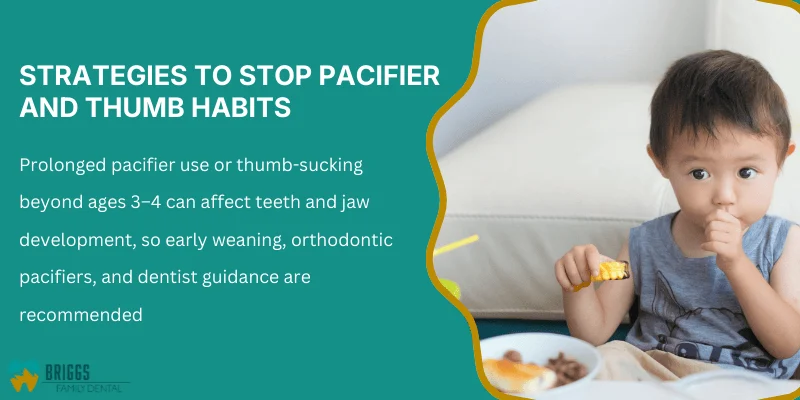
Pacifier use and thumb-sucking are normal self-soothing behaviors for young children. Most kids naturally give up these habits between ages 2 and 4 without any problems.
However, prolonged thumb-sucking or pacifier use beyond the ages 3 or 4 can affect tooth development. These habits may push front teeth forward or affect jaw development. The intensity and frequency of the habit matter more than the habit itself.
You should try to wean your child from pacifiers by age 2 or 3. Choose orthodontic pacifiers if your baby uses one, as they’re designed to be gentler on developing teeth. Never dip pacifiers in sugar or honey, as this leads to tooth decay.
For thumb-sucking that continues past age 4, talk with your pediatric dentist. They can monitor your child’s dental development and suggest gentle strategies to help break the habit before it causes lasting changes to tooth alignment.
Have questions about early dental care or pediatric dentistry tips? Talk to us today to learn how we help families in New Market, VA, build healthy dental habits for life.
Routine Pediatric Dental Care: Growing With Your Child
Your child’s dental needs change as they grow, so their dental care should evolve accordingly. Regular visits to a pediatric dentist help catch problems early and ensure teeth develop properly at each stage.
Regular Dental Checkups and Cleanings
You should schedule your child’s first dental visit by their first birthday. After that, dental checkups should happen every six months for most children.
These routine visits give your dentist a chance to spot cavities, gum problems, and other issues before they get worse. Your dentist will also clean your child’s teeth to remove plaque and tartar that brushing at home might miss.
During each visit, the dentist examines your child’s teeth, gums, and mouth. They check how teeth are coming in and look for any signs of decay or damage. Many kids feel more comfortable with these regular visits when they start young, since the dental office becomes a familiar place rather than something scary.
Professional Preventive Services
Pediatric dentists provide fluoride treatments and sealants to protect your child’s teeth from cavities. Fluoride strengthens tooth enamel and makes it harder for decay to develop. Sealants are thin coatings applied to the chewing surfaces of back teeth, where cavities often form.
Your dentist might recommend these treatments based on your child’s cavity risk. Kids who eat a lot of sugary foods or have deep grooves in their teeth often benefit most from sealants.
The dentist will also teach your child proper brushing and flossing techniques during visits. They can demonstrate the right way to clean teeth and explain why each step matters. This hands-on education helps your child develop better habits at home.
Monitoring Growth and Guiding Permanent Teeth
Your dentist watches how your child’s teeth grow and develop over time. They track when baby teeth fall out and when permanent teeth come in. This monitoring helps identify problems like crowding, crooked teeth, or bite issues early.
Pediatric dentists can assess if your child might need braces or other orthodontic treatment. Early evaluations, typically around ages 6 or 7, allow the dentist to identify alignment issues while there’s still time for easier correction.
If your child plays sports, the dentist can provide custom mouthguards to protect their teeth during activities. These fit better than store-bought options and offer more protection against injuries that could damage developing teeth.
The Role of Parents and Pediatric Dentists in Dental Health
Parents set the foundation for dental habits while pediatric dentists provide expert care and guidance. Working together creates a strong support system for your child’s oral health.
Supporting Good Habits at Home
You are your child’s first and most important teacher when it comes to dental care. Kids learn by watching what you do, so practicing good oral care habits yourself shows them what proper dental hygiene looks like.
Daily habits you can build at home:
- Brush together for two minutes, twice a day
- Use a timer or play a two-minute song during brushing
- Floss as a family to make it a normal routine
- Limit sugary drinks like juice and soda
- Offer water after sugary snacks to rinse teeth
Making dental care fun helps kids stay engaged. You can use colorful toothbrushes, kid-friendly toothpaste flavors, and reward charts with stickers. Some families even create notes “from the Tooth Fairy” to praise good brushing habits.
Your food choices matter too. A balanced diet with fruits, vegetables, and whole grains supports strong teeth and gums while reducing cavity risk.
Choosing the Right Dental Professional
Pediatric dentists receive specialized training beyond general dentistry to handle the unique needs of infants, toddlers, children, and teenagers. They understand how primary and permanent teeth develop and can spot problems early.
Look for a dentist who makes your child feel comfortable and safe. The right professional will explain procedures in kid-friendly language and create a welcoming environment.
Questions to ask when choosing:
- What experience do you have with children my child’s age?
- How do you handle anxious or fearful children?
- What preventive services do you offer?
- Are you trained in pediatric dental services?
Starting dental visits by age one helps your child get used to the dentist’s office. Early visits focus on prevention rather than treatment, which builds positive associations.
Collaborating for a Healthy Smile
Your pediatric dentist becomes your partner in protecting your child’s teeth. They provide professional cleanings, fluoride treatments, and sealants while you maintain daily care at home.
Regular check-ups let the dentist track your child’s tooth development and catch issues like cavities or bite problems early. You can ask questions about brushing techniques, nutrition, and any concerns you notice.
Share information about your child’s habits, diet, and any challenges with brushing. This helps the dentist give you personalized advice that works for your family. When your child sees you and the dentist working together, they understand that dental health matters and involves a team effort.
Ready to schedule your child’s first dental visit? Contact our team at Briggs Family Dental to get expert guidance and start your child’s care with confidence.
Frequently Asked Questions
Many parents wonder when to start dental visits and how to make oral care a positive experience for their kids. These common questions cover the basics of early dental care and helpful tips for keeping your child’s teeth healthy.
At what age should I schedule my child’s first dental visit?
You should take your child to see a dentist by their first birthday. Pediatric dentists recommend scheduling the first appointment when the first tooth appears or by age 1, whichever occurs first.
Early dental visits help catch problems before they become serious. Your dentist can check for cavities, tooth decay, and other issues that might affect your baby’s developing teeth.
These first visits also help your child get comfortable with the dentist’s office. Starting early makes future appointments feel less scary and more routine.
What are the best techniques for teaching my child to brush their teeth?
Make brushing fun by letting your child pick out their own toothbrush in a color or character they love. Sing a two-minute song while they brush to help them understand how long to clean their teeth.
Show your child how to brush by doing it together. Demonstrate the circular motions on the front, back, and chewing surfaces of each tooth.
Use a pea-sized amount of fluoride toothpaste for children over three years old. For younger kids, use just a smear the size of a grain of rice.
Let your child practice brushing on their own first, then finish the job yourself. Most kids don’t have the coordination to brush well until they’re around seven or eight years old.
How can I help prevent tooth decay in my child?
Limit sugary drinks and snacks throughout the day. Bacteria in the mouth feed on sugar and create acid that damages tooth enamel.
Don’t put your baby to bed with a bottle of milk, juice, or formula. The sugar in these drinks sits on their teeth all night and causes decay.
Start cleaning your baby’s gums with a soft cloth even before teeth come in. Once teeth appear, brush them twice a day with a soft-bristled toothbrush.
Make sure your child drinks plenty of water, especially if it contains fluoride. Water helps rinse away food particles and keeps the mouth clean between brushings.
What should I do if my child is scared of going to the dentist?
Talk about the dentist visit in a positive way without using scary words like “pain” or “hurt.” Keep your explanations simple and focus on how the dentist helps keep their smile healthy.
Read children’s books about going to the dentist before the appointment. This helps your child know what to expect and makes the experience feel more familiar.
Schedule morning appointments when your child is well-rested and less likely to be cranky. Bring a favorite toy or comfort item to help them feel secure.
Never use the dentist as a threat or punishment. This creates negative associations that can last into adulthood.
How often should my child see the dentist for a check-up?
Your child should visit the dentist every six months for regular check-ups and cleanings. These routine visits help catch small problems before they become bigger issues.
Some children may need to see the dentist more often if they’re at higher risk for cavities. Your dentist will recommend the best schedule based on your child’s individual needs.
Regular visits also help your child build a comfortable relationship with their dentist. This makes it easier to address any problems that come up later.
Are fluoride treatments safe and necessary for my child’s dental health?
Fluoride treatments are safe and help strengthen tooth enamel to prevent cavities. Dentists apply a concentrated fluoride gel or varnish directly to the teeth during check-ups.
These treatments are especially helpful for children at higher risk of tooth decay. Kids with a history of cavities or who don’t get enough fluoride in their drinking water benefit the most.
The amount of fluoride used in dental treatments is carefully controlled and is much higher than that in toothpaste. Your pediatric dentist has specialized training to determine the right fluoride treatment plan for your child’s age and needs.